Table of Contents
- Why Feline Dental Health Matters for Your Cat
- Gathering Supplies: What You’ll Need to Brush a Cat’s Teeth
- How to Get a Cat Used to Having Their Teeth Brushed
- Step-by-Step Guide: How to Brush a Cat’s Teeth for Beginners
How to Brush a Cat’s Teeth for Beginners
Last Updated: July 6, 2026
Why Feline Dental Health Matters for Your Cat
Dental disease affects approximately 90% of cats over the age of four. Plaque and tartar accumulation leads to periodontal disease, which damages gums, teeth, and bone structure. Bacteria from untreated dental disease can enter the bloodstream and affect vital organs like the heart, kidneys, and liver. Regular brushing removes plaque before it hardens into tartar, preventing serious complications.
Bad breath, difficulty eating, excessive drooling, or reluctance to have their face touched are red flags that dental problems may be developing.
Preventing dental disease through regular brushing is far more affordable and less stressful for your cat than treating advanced periodontal disease later.
Gathering Supplies: What You’ll Need to Brush a Cat’s Teeth
Never use human toothpaste, which contains fluoride and xylitol, both toxic to cats. Look for enzymatic toothpaste formulated specifically for felines, as these products break down plaque without requiring aggressive brushing.
Your toolkit should include:
- Finger brush or soft-bristled toothbrush: Finger brushes offer better control and feel less invasive
- Pet-safe toothpaste: Enzymatic formulas are most effective at reducing plaque
- Gauze pad or cloth: Useful for initial desensitization
- Treats or rewards: High-value treats like Churu or cooked chicken
- Towel: Helpful for positioning and comfort
Finger brushes allow better control and are ideal for beginners. Pet-safe toothpaste comes in flavors like chicken, fish, and beef. Enzymatic toothpaste doesn’t require rinsing, which is crucial since most cats dislike water in their mouths.
Start with a finger brush even if you plan to use a traditional toothbrush eventually. The tactile feedback helps you avoid pressing too hard on the gum line.
How to Get a Cat Used to Having Their Teeth Brushed
Introducing your cat to tooth brushing requires patience and gradual desensitization. Rushing this process is the most common reason beginners fail.
Week 1: Mouth Touching
Gently lift your cat’s lip for just a second, then immediately reward with a treat. Do this 2-3 times daily for several days.
Week 2: Introducing the Toothpaste
Let your cat lick a small amount of pet-safe toothpaste from your finger. Place a tiny dab on their canine teeth and let them taste it naturally.
Week 3: Gentle Gum Massage
Using your finger or gauze pad, gently rub your cat’s gums in small circular motions. Focus on the cheek-facing surface of the molars and premolars. Keep sessions to 10-15 seconds and reward immediately.
Week 4: Introducing the Brush
Introduce the finger brush or toothbrush without paste. Let them chew on it gently. Some cats accept it immediately; others need another week of familiarization.
Moving too quickly through desensitization creates lasting negative associations. If your cat shows stress signals, ears back, tail swishing, attempting to escape, slow down and spend another week on the previous step.
Establish a routine where brushing always happens at the same time, followed by playtime or treats. This builds anticipation and makes the process feel rewarding rather than punitive.
Step-by-Step Guide: How to Brush a Cat’s Teeth for Beginners
Once your cat has completed desensitization, actual brushing becomes straightforward. Focus on the gum line rather than tooth surfaces, where plaque accumulates most.
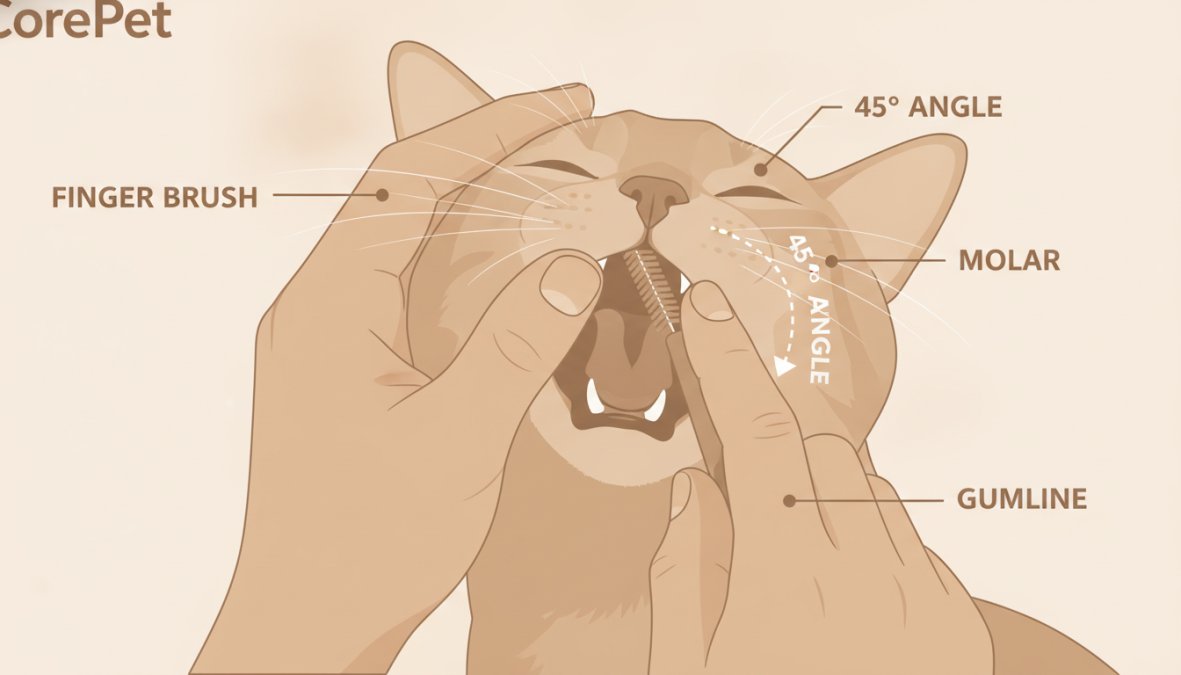
Step 1: Choose the Right Time
Select a calm moment when your cat is relaxed, such as early morning or after playtime. Position yourself comfortably so you can see inside the mouth clearly.
Step 2: Apply Toothpaste
Place a pea-sized amount of enzymatic toothpaste on the brush. Let your cat lick a small amount first so they know what to expect.
Step 3: Lift the Upper Lip Gently
Using your non-dominant hand, gently lift your cat’s upper lip to expose the outer surfaces of the teeth. You’re not prying the mouth open, just creating enough access to see the gum line.
Step 4: Brush at a 45-Degree Angle
Hold the brush at a 45-degree angle where the tooth meets the gum line. Use gentle, short strokes in a circular motion. Focus on the cheek-facing surface of the molars and premolars. Avoid pressing hard on the gum line.
Step 5: Work Systematically
Move from the back molars toward the front canine teeth on one side, then repeat on the other. Most beginners only need to brush outer surfaces; the tongue naturally cleans inner surfaces.
Step 6: Finish with Rewards
Once brushing is complete, immediately offer a high-value treat or playtime. This reinforces the positive association.
If your cat becomes resistant mid-session, stop immediately. Daily 20-second sessions beat sporadic 2-minute marathons. Consistency matters more than duration.
| Brushing Step | Duration | Frequency | Focus Area |
|---|---|---|---|
| Desensitization | 10-15 sec | Daily for 2-4 weeks | Mouth touching, gum massage |
| Toothpaste introduction | 10-20 sec | Daily | Taste acceptance |
| Actual brushing | 30-60 sec | Daily or 5x weekly | Gum line, cheek-facing surface |
| Post-brushing reward | 1-2 min | After every session | Positive reinforcement |
How Often to Brush Cat Teeth
Ideally, cats should have their teeth brushed daily. However, brushing 5-6 times per week provides significant benefits and is realistic for most households. Consistency matters more than perfection; a cat brushed 5 times weekly will have healthier teeth than one brushed intensively twice monthly.
Brushing 5 times weekly captures most health benefits while remaining manageable for busy owners. This frequency prevents serious dental disease without requiring daily commitment.
Track your brushing schedule using a calendar or phone reminder. Setting a specific time, such as right after your morning coffee, makes brushing easier to remember.
Signs of Dental Disease in Cats
Bad breath is often the first indicator of dental problems. Watch for difficulty eating, excessive drooling, swelling around the face or jaw, bleeding or red gums, reluctance to have face touched, and behavioral changes like increased irritability.
Tartar appears as brown or yellow buildup on tooth surfaces, particularly near the gum line. Early tartar is removable through brushing, but once hardened, only professional veterinary cleaning can remove it. If you notice any warning signs, contact a veterinary professional. For cats with advanced dental disease that requires professional intervention, Spay Neuter Dental in Bedford, New Hampshire specializes in surgical dental procedures using advanced techniques to address serious periodontal issues when prevention alone isn’t enough.
Regular tooth brushing is one of the most impactful preventive health measures you can provide for your cat. Start with patience during desensitization, maintain consistency with your brushing schedule, and watch for early warning signs of problems. Your cat’s comfort and longevity depend on the dental care you provide today.
Frequently Asked Questions
Is it really necessary to brush a cat's teeth?
Yes. Without regular brushing, cats develop plaque buildup and tartar accumulation, leading to gingivitis, periodontal disease, and eventually tooth loss. Daily or near-daily brushing is the most effective way to prevent feline dental health problems. Professional dental cleaning by a veterinarian is also important, but home care is the foundation of oral hygiene.
What's the best cat toothpaste for beginners?
Look for enzymatic toothpaste formulated specifically for cats, never use human toothpaste, which contains xylitol and fluoride that are toxic to cats. Pet-safe toothpaste often comes in flavors like poultry or seafood to make brushing more appealing. Start with small amounts and let your cat lick some off to build comfort before brushing. Always verify the product is labeled as safe for feline use.
How often should I brush my cat's teeth?
Daily brushing is ideal for optimal feline dental health, but even 3-4 times per week significantly reduces plaque and tartar accumulation. If your cat resists frequent brushing, start with once or twice weekly and gradually increase frequency as they become comfortable. Consistency matters more than perfection, regular brushing, even if infrequent, is better than sporadic attempts.
What are signs of dental disease in cats?
Watch for bad breath (halitosis), red or swollen gums, visible tartar on teeth, difficulty eating, drooling, or pawing at the mouth. Gum inflammation and bleeding are serious indicators of gingivitis or periodontal disease. If you notice these signs, schedule a veterinary examination promptly. Professional dental cleaning may be necessary to prevent tooth loss and systemic infection.
This article was written using GrandRanker