Table of Contents
- What Is Included in Dog Spay Surgery Cost
- Dog Spay Surgery Cost by Weight
- Large Dog Spay Recovery Time and Post-Operative Care
- Frequently Asked Questions
Last Updated: October 10, 2026
What Is Included in Dog Spay Surgery Cost
Dog spay surgery cost depends on what the veterinary clinic includes: surgical fee, pre-surgical exam, bloodwork, anesthesia, pain medication, and post-operative monitoring. Understanding these components helps you anticipate the full expense.
The pre-surgical exam and bloodwork screen for conditions that could complicate surgery. Anesthesia keeps your dog comfortable, while post-operative pain medication and follow-up care manage recovery and incision healing.
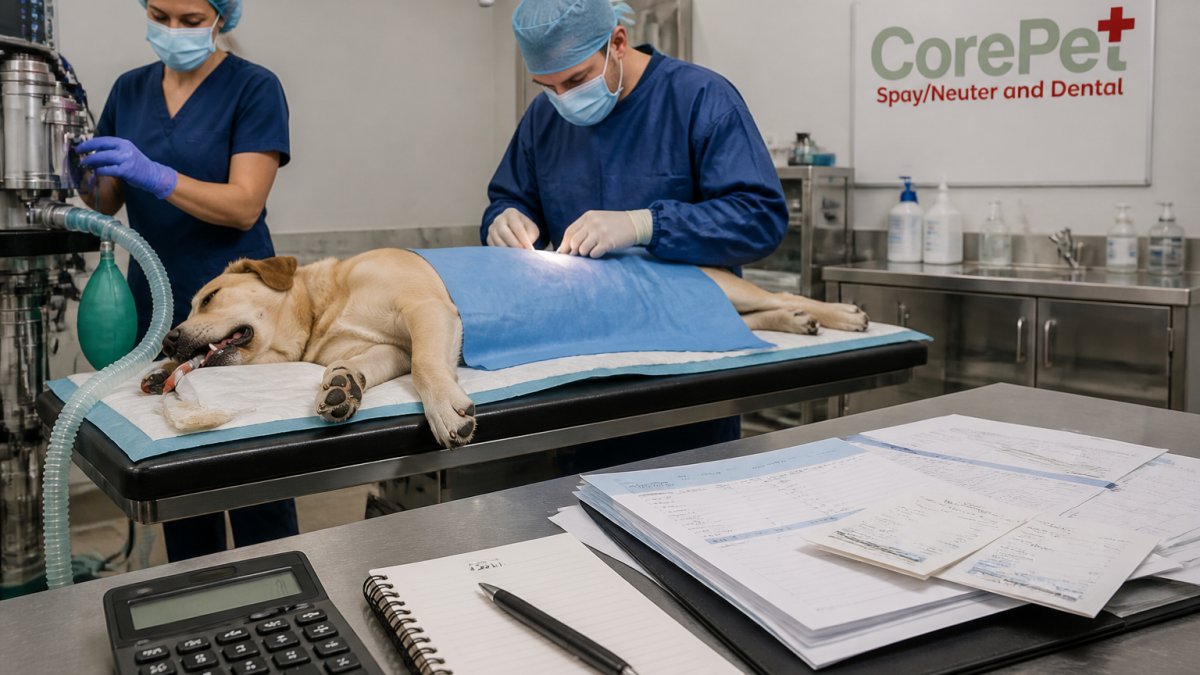
Some clinics bundle services into one price; others itemize each component. Always request a detailed breakdown to see exactly what you’re paying for and prevent confusion.
Request an itemized quote that lists the exam fee, bloodwork cost, anesthesia fee, surgical fee, medication, and any follow-up visit charges separately. This transparency makes it easier to compare quotes between clinics.
Dog Spay Surgery Cost by Weight
Large dogs cost more to spay than small breeds because they require more anesthesia, longer surgical time, and greater monitoring. Weight determines anesthesia dosage and surgical complexity, both of which directly affect the final bill.
Weight and cost are proportional; a 60-pound dog costs more than a 30-pound dog at the same clinic. Some practices use weight brackets to simplify pricing, while others calculate costs individually.
When comparing quotes, always provide your dog’s exact weight to ensure accurate estimates and fair comparisons.
Never assume a low quote applies to your large dog without confirming the weight assumption. A quote given for a 40-pound dog will not reflect the actual cost for your 65-pound dog.
Large Dog Spay Recovery Time and Post-Operative Care
Recovery typically takes 10 to 14 days. During the first week, restrict activity, keep the incision clean and dry, and administer pain medication as prescribed by your veterinarian.
Pain medication usually continues for 7 to 10 days; confirm whether this is included in your surgical package. A cone or protective collar prevents licking and infection, ask your veterinarian about alternatives if your dog struggles with one.
Follow-up visits around day 10 ensure proper healing and suture removal if needed. Confirm whether follow-up visits are included in your surgery cost.
| Recovery Phase | Duration | Key Actions |
|---|---|---|
| Immediate post-op | 24 hours | Rest, monitor incision, pain medication |
| Early recovery | Days 2-7 | Limited activity, keep incision clean, continue medication |
| Late recovery | Days 8-14 | Gradual activity increase, suture removal if needed, final check-up |
Understanding the cost of spay surgery for large dogs requires knowing what services are included and how your dog’s size affects pricing. CorePet focuses on spay, neuter, and dental procedures, delivering safe, individualized care. Ask your veterinary clinic for a detailed, itemized estimate and confirm all services included before proceeding.
Frequently Asked Questions
What’s the average price to get a large female dog spayed?
Cost varies based on your dog’s weight, age, and where you live. Larger dogs typically cost more because they require more anesthesia and longer surgical time. Visit CorePet’s pricing page to see current estimates for your dog’s weight and get a personalized quote based on your location.
Does it cost more to spay a large dog compared to a small dog?
Yes. Large dogs require higher anesthesia doses, longer surgical time, and more monitoring, which increases the overall cost of the spay procedure. A 70-pound dog will cost significantly more than a 20-pound dog. Weight brackets are a key factor in pricing, ask your provider for a breakdown by weight range.
What factors affect the cost of spay surgery for a large dog?
Weight, age, pre-surgical bloodwork requirements, anesthetic monitoring, pain medication, and post-operative follow-up visits all affect pricing. Some providers include bloodwork and pain medication in the surgical fee; others charge separately. Always request an itemized estimate that shows exactly what’s included before scheduling.