Table of Contents
- Why IV Fluids Are Essential During Pet Anesthesia
- IV Fluids for Dogs During Surgery
- IV Fluids for Cats During Anesthesia
- Frequently Asked Questions
Last Updated: October 10, 2026
Why IV Fluids Are Essential During Pet Anesthesia
IV fluids pet anesthesia counteract dangerous physiological changes, dropping blood pressure, irregular heart rate, and reduced kidney blood flow, by maintaining circulating blood volume and ensuring vital organs receive oxygen-rich blood throughout the procedure.
Anesthesia depresses the cardiovascular system, and without IV fluid support, pets can develop dangerous hypotension within minutes. IV fluids maintain cardiac output and organ perfusion, reducing the risk of organ damage during surgery or dental work.
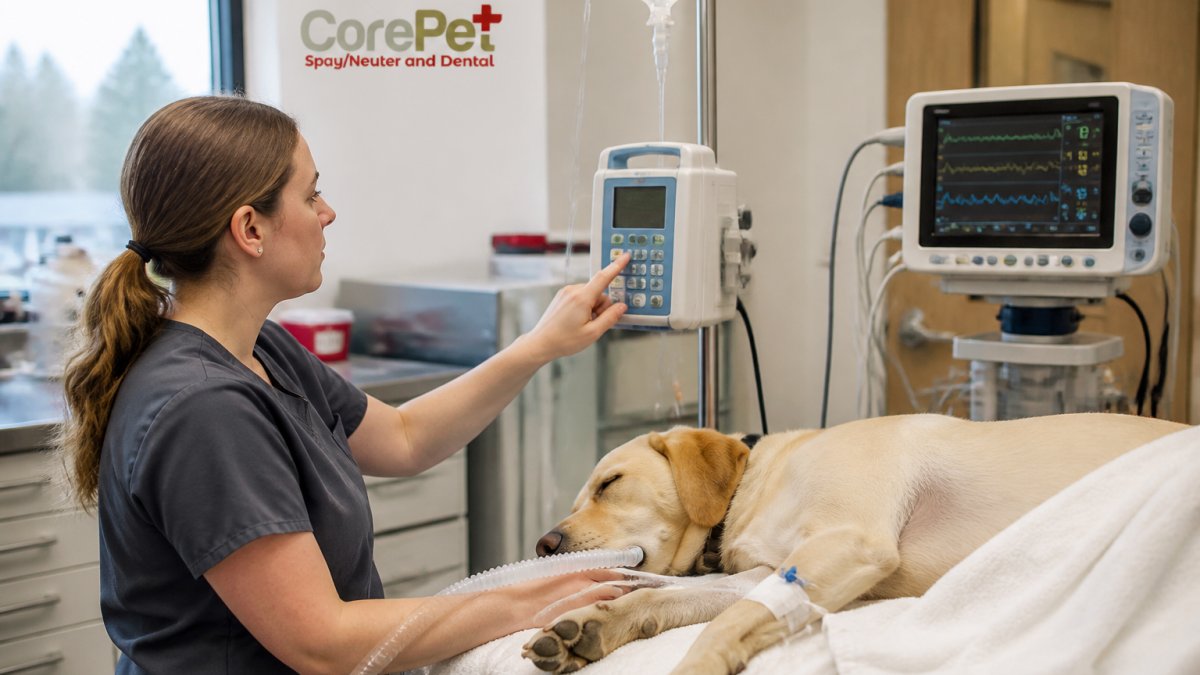
Individualized fluid planning depends on each patient’s age, weight, breed, medical history, and procedure type, a young healthy dog may need different support than an older cat with kidney disease.
IV Fluids for Dogs During Surgery
General anesthesia causes vasodilation in dogs, making them vulnerable to hypotension. IV fluids for dogs during surgery provide additional fluid volume to maintain blood pressure and perfusion to the brain, heart, and kidneys.
Crystalloid fluids, balanced electrolyte solutions, are standard for most surgical cases. The veterinary team calculates fluid needs based on body weight, procedure length, and underlying health conditions; dogs with heart or kidney disease may require modified protocols to avoid overload.
The anesthesia team monitors blood pressure, heart rate, oxygen saturation, and body temperature throughout the procedure. IV fluids continue after surgery to support recovery and flush anesthetic drugs from the body.
IV Fluids for Cats During Anesthesia
Cats are more sensitive to fluid overload than dogs due to smaller body mass and less physiological reserve. IV fluids for cats during anesthesia must be carefully calculated and monitored, as rates appropriate for dogs could cause serious complications.
Cats undergoing dental procedures or spays benefit from fluid support, but fluid volume is proportionally smaller and monitoring more vigilant. Cats with hyperthyroidism or chronic kidney disease require modified fluid plans.
A skilled anesthesia team assesses each cat’s individual needs and adjusts the fluid protocol to provide hydration and circulatory support without risk of overload.
Choosing a surgery center that understands the importance of IV fluids pet anesthesia is essential for safe, high-quality care. At CorePet, our team focuses on delivering individualized fluid plans tailored to each dog, cat, and rabbit’s specific needs. We monitor fluid therapy carefully throughout every procedure to support optimal outcomes and safe recovery. Book an appointment to learn how our approach to anesthesia support can protect your pet’s health during surgery or dental work.
Frequently Asked Questions
Why do pets receive IV fluids during anesthesia?
Anesthesia causes blood vessels to relax, which lowers blood pressure and reduces blood flow to vital organs. IV fluids maintain adequate circulating blood volume, support blood pressure, and ensure organs like the kidneys and liver receive enough oxygen-rich blood during the procedure. This is especially important during longer surgeries or for pets with pre-existing health conditions.
Do all dogs and cats need IV fluids during surgery?
Most pets benefit from IV fluid support during anesthesia, but the decision depends on the individual pet’s age, health status, procedure length, and risk factors. Your veterinarian will assess your pet before the procedure and recommend an individualized fluid plan. Younger, healthier pets undergoing brief procedures may have lower fluid needs, but many still benefit from IV access for safety and emergency response.
What are the risks of IV fluids in pets, and how are they managed?
Fluid overload is the primary concern and can strain the heart and lungs. Your veterinarian monitors fluid administration carefully, calculating the appropriate rate based on your pet’s weight, age, and condition. Monitoring during recovery helps catch signs of overload early, such as rapid breathing or swelling. Discussing your pet’s pre-existing conditions with your veterinarian before the procedure ensures the fluid plan is tailored to minimize risk.