Table of Contents
- Laparoscopic Spay Recovery Day by Day
- Dog Activity After Laparoscopic Spay
- Laparoscopic Spay Incision Care for Dogs and Signs of Infection
- When to Call Your Veterinarian
- Individual Factors That Affect Healing
- Planning Surgery in New Hampshire
- Frequently Asked Questions
Last Updated: October 17, 2026
Laparoscopic Spay Recovery Day by Day
Most dogs act normal within a few days of a laparoscopic spay, but full recovery takes 10 to 14 days.
Laparoscopic spay recovery is the healing period after a minimally invasive spay, where a surgeon removes the ovaries through one or two small incisions instead of a single long cut.
- Day 1: Grogginess from anesthesia; rest and a light meal.
- Days 2-3: Appetite returns; short leash walks only.
- Days 4-7: Energy climbs; keep activity restricted.
- Days 10-14: Incisions heal; follow-up confirms full recovery.
Dog Activity After Laparoscopic Spay
Rest is the hard part. A dog that feels good will try to run, jump, and play long before the incision is ready.
- Leash walks only, short and slow
- No running, jumping, or avoidable stairs
- No dog park or daycare
- Crate or pen rest when unsupervised
A common mistake is going off leash on day three because the dog looks fine. Skin closes fast; deeper layers take longer.
A dog that jumps onto furniture or bounds down stairs too early can pull the internal suture line. That can mean swelling, pain, or a return trip to the veterinarian.
Laparoscopic Spay Incision Care for Dogs and Signs of Infection
Laparoscopic spay incision care for dogs is simple: keep the small incisions clean, dry, and covered from licking. Check the wound twice a day for the first week.
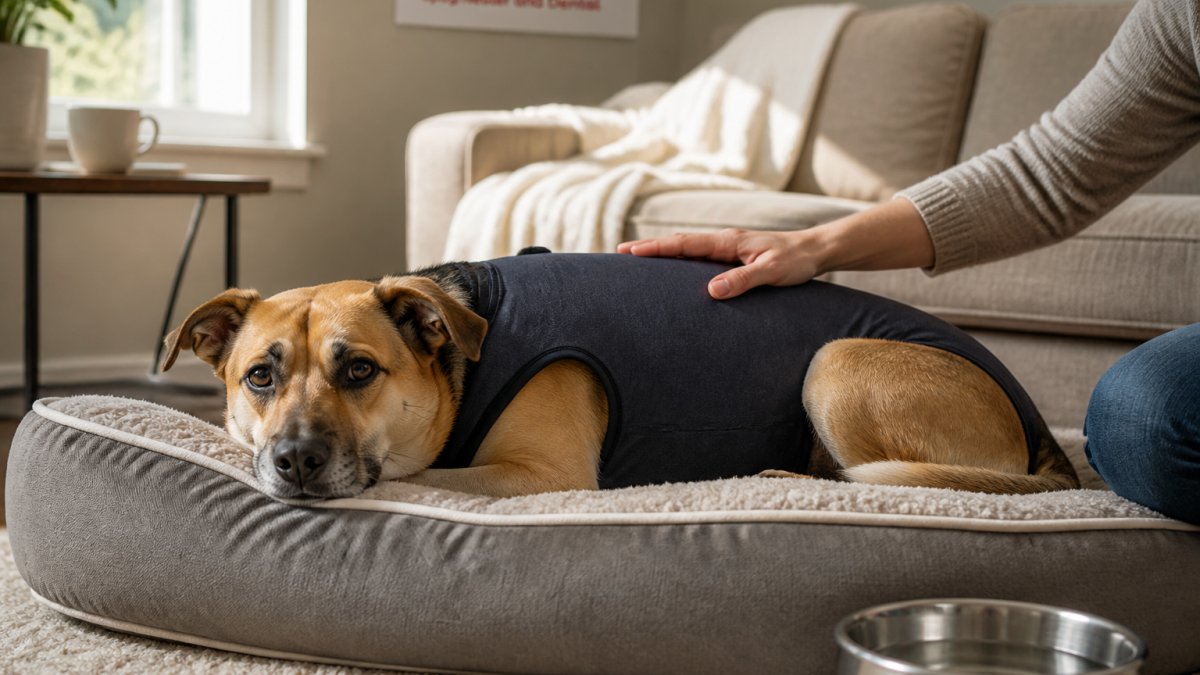
Most surgeons send a dog home with an Elizabethan collar or recovery suit to stop licking and chewing, which introduces bacteria and loosens sutures.
- Spreading redness around the incision
- Swelling that grows instead of shrinks
- Cloudy, yellow, or foul-smelling discharge
- Whining, reluctance to move, or fever
- A gap at the wound edge
Call the veterinarian for any of the above. Mild soreness and slight pinkness in the first day or two are normal. Worsening symptoms are not.
Snap a photo of the incision each morning. Comparing day to day makes it obvious whether redness or swelling is actually increasing, which is far easier than relying on memory.
When to Call Your Veterinarian
Some symptoms mean a same-day call, and a few mean emergency care.
- Vomiting that will not stop
- Refusing food or water for more than a day
- Pale gums or heavy lethargy
- Bleeding that soaks through a bandage
Non-emergency questions, like a slightly reduced appetite or mild whining, can usually wait for a routine follow-up.
Individual Factors That Affect Healing
No two dogs heal at the same pace. Age, size, and temperament shift the timeline.
- Age: Younger dogs often recover faster.
- Size and breed: Giant breeds heal more slowly.
- Temperament: High-energy dogs need stricter limits.
- Overall health: Existing conditions can lengthen recovery.
Planning Surgery in New Hampshire
In New Hampshire, choosing the right surgical team matters as much as the aftercare plan. A center focusing on spay and neuter procedures tends to have clear discharge instructions.
CorePet is a locally owned surgery center in Bedford, New Hampshire, focused on spay, neuter, and dental procedures for dogs, cats, and rabbits, with individualized discharge guidance.
Owners searching for a spay center near me in New Hampshire can check CorePet’s pricing page and book an appointment to confirm timing and pre-surgery steps.
Frequently Asked Questions
How long does it take a dog to recover from a laparoscopic spay?
Most dogs recover from a laparoscopic spay faster than from a traditional spay. You can expect your dog to feel more like themselves within a few days, but full recovery of the internal tissues takes longer. A typical timeline is 10 to 14 days of restricted activity. Your veterinarian will give you a specific recovery plan based on your dog’s age, size, and overall health.
When can my dog run and jump after a laparoscopic spay?
Your dog should stay on leash walks only for the first 10 to 14 days after surgery. Running, jumping, and rough play are off-limits during this time to protect the healing incision and internal tissues. After your follow-up visit, your veterinarian will confirm whether it is safe to gradually return your dog to normal activity. Start with short, controlled play sessions and increase slowly.
What are signs of infection after dog spay?
Watch for increased redness, swelling, or discharge at the incision site. Other signs of infection after dog spay include persistent whining, a bad smell from the wound, or your dog refusing to eat. A small amount of clear fluid in the first day or two can be normal, but pus or thick discharge is not. Call your veterinarian if you notice any of these signs or if your dog seems painful despite medication.
Recovery after a laparoscopic spay takes planning, not luck. The surgery is smaller, but the first two weeks still demand rest, wound checks, and a watchful eye. CorePet focuses on spay, neuter, and dental procedures with modern equipment and clear aftercare instructions, so owners leave knowing what to do on day one and day ten. Book an appointment with CorePet to get a surgery date and a recovery plan in hand.