Table of Contents
- Recognizing Signs of Stress in Dogs Before a Vet Visit
- Recognizing Signs of Stress in Cats Before a Vet Visit
- How to Calm a Dog Before a Vet Visit
- Frequently Asked Questions
Last Updated: October 18, 2026
Recognizing Signs of Stress in Dogs Before a Vet Visit
Signs of veterinary anxiety in dogs and cats are common, but recognizing them early helps you prepare. Dogs may show fear through body language, behavioral shifts, or physical responses.
Common signs include tucked tails, flattened ears, excessive panting, whining, hiding, pacing, or refusing to eat. These reactions stem from fear of the unknown, past negative experiences, or a change in routine.
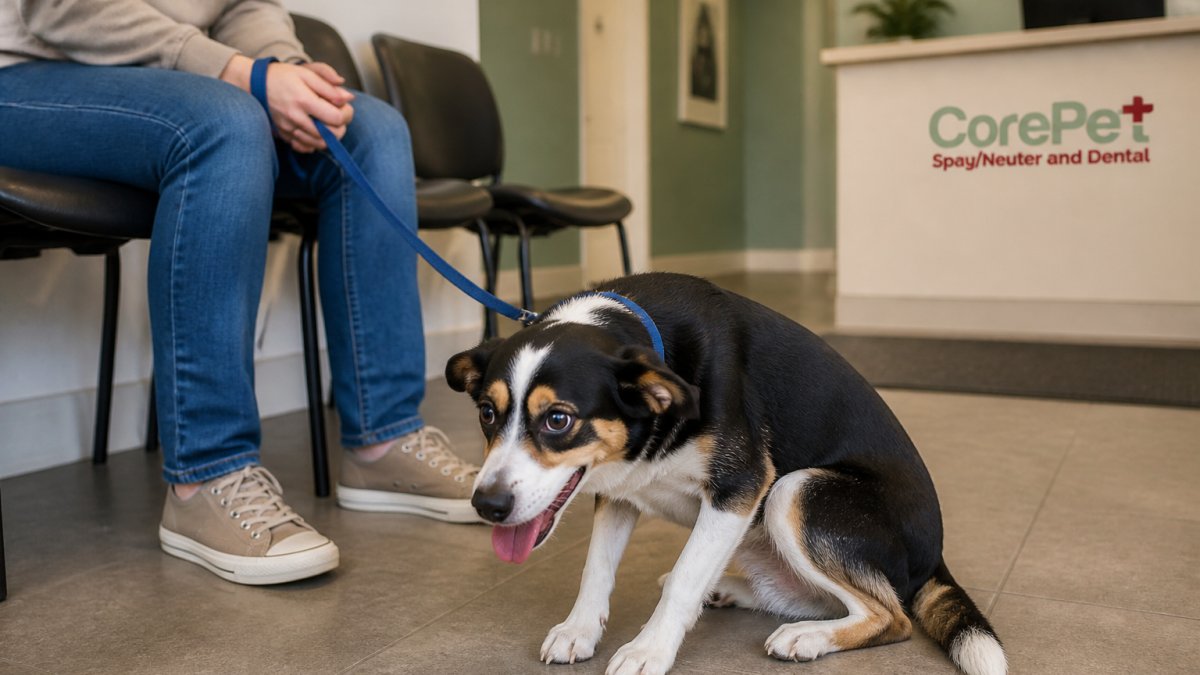
Loud noises, unfamiliar smells, handling by strangers, and the car ride all contribute to veterinary anxiety in dogs and cats. At CorePet, the team focuses on creating a calm environment to reduce stress during procedures.
Recognizing Signs of Stress in Cats Before a Vet Visit
Signs of veterinary anxiety in dogs and cats vary by species. Cats may hide, hiss, or become unusually silent when anxious.
Physical signs include dilated pupils, flattened ears, tail tucking, excessive grooming, and vocalization changes. Some cats refuse food or the litter box for hours after stress, become aggressive, or attempt escape.
Cats are territorial, so the clinic feels foreign and threatening, and handling by unfamiliar people increases their distress.
How to Calm a Dog Before a Vet Visit
Create positive associations with the clinic: walk in without an appointment, get a treat from staff, and leave. Repeat so your dog links the location to rewards, not fear.
Practice handling at home by gently touching your dog’s paws, ears, and mouth daily, rewarding calm behavior with treats and praise.
On appointment day:
- Exercise your dog beforehand to reduce excess energy
- Use a calming tone, dogs sense your tension
- Bring familiar comfort items like a favorite toy
- Arrive early to let your dog adjust to the space
- Ask staff if you can stay during the exam for reassurance
Some dogs benefit from calming supplements or anxiety wraps; ask your veterinarian about options. The goal is making each visit less frightening.
Pet anxiety before veterinary visits is treatable with patience and planning. Recognizing the early signs of stress helps you act before fear escalates. CorePet focuses on providing a calm, professional environment where dogs and cats feel safe during spay, neuter, and dental procedures. When you need surgical care in New Hampshire, choosing a facility that understands anxiety makes all the difference. The American Veterinary Medical Association provides guidance on reducing pet stress during vet visits. Book an appointment with CorePet to experience care designed with your pet’s comfort in mind.
Frequently Asked Questions
What are the most common signs of veterinary anxiety in dogs?
Dogs with veterinary anxiety often display excessive panting, whining, pacing, or attempts to escape the examination room. Some become withdrawn or hide, while others show aggression or destructive behavior. Physical symptoms include trembling, drooling, and loss of appetite. Recognizing these behavioral changes helps you prepare your dog for the visit and alert your veterinarian to anxiety concerns before the procedure begins.
How can I tell if my cat is stressed before a vet appointment?
Cats typically show stress through hiding, excessive vocalization, or becoming unusually aggressive. Some cats refuse food or become overly clingy. Physical signs include dilated pupils, flattened ears, and excessive grooming or self-licking. Cats may also display restlessness or refuse to use the litter box. These behavioral changes signal that your cat needs calming strategies before and during the veterinary visit.
What’s the difference between anxiety and pain or illness in pets?
Anxiety is often triggered by the vet visit itself, while pain or illness causes ongoing symptoms regardless of environment. Anxious pets may eat normally at home but refuse food at the clinic, whereas sick pets lose appetite consistently. Behavioral changes tied to specific triggers (car rides, clinic sounds, handling) suggest anxiety. However, only a veterinarian can accurately distinguish between anxiety and underlying medical conditions through evaluation and diagnostic testing.