Table of Contents
- 7 Signs of Dental Disease in Cats
- 7 Signs of Dental Disease in Cats
- How to Check Cat Teeth at Home
- Feline Dental Cleaning Cost and Cat Dental Surgery Recovery
- Frequently Asked Questions
Last Updated: September 24, 2026
7 Signs of Dental Disease in Cats
Dental disease is one of the most common health problems in adult cats and often goes unnoticed until it causes real pain. The 7 signs of dental disease in cats are bad breath, red or swollen gums, drooling, trouble eating, pawing at the mouth, loose or missing teeth, and weight loss. This guide from CorePet covers each warning sign, how to check your cat’s mouth at home, and what to expect from treatment in New Hampshire.
Cats hide mouth pain well, so problems often build for weeks before owners notice.
7 Signs of Dental Disease in Cats
Dental disease in cats is a condition where plaque and tartar build up on the teeth, inflaming the gums and eventually damaging the tooth roots and bone. It usually starts as gingivitis and can progress to periodontitis.
Watch for these seven signs:
- Bad breath that smells sharp or rotten
- Red, swollen, or bleeding gums
- Drooling, sometimes with blood-tinged saliva
- Trouble eating, such as dropping food or chewing on one side
- Pawing at the mouth or rubbing the face against furniture
- Loose or missing teeth, or discolored teeth
- Weight loss or a sudden drop in appetite
Any one of these signals deserves a vet visit; two or more usually means advanced disease.
Never try to wiggle a loose tooth or scrape tartar off at home. You can break a tooth root or push bacteria deeper into the gum, turning a treatable problem into a painful infection.
How to Check Cat Teeth at Home
Checking your cat’s teeth takes about a minute and works best when the cat is calm, such as after a meal.
- Sit your cat on your lap or a stable surface, facing away from you
- Lift one side of the upper lip and check the gumline for redness, swelling, or a dark yellow-brown crust
- Check the back molars, where tartar builds up first, then repeat on the other side
- Note any smell, bleeding, or broken teeth
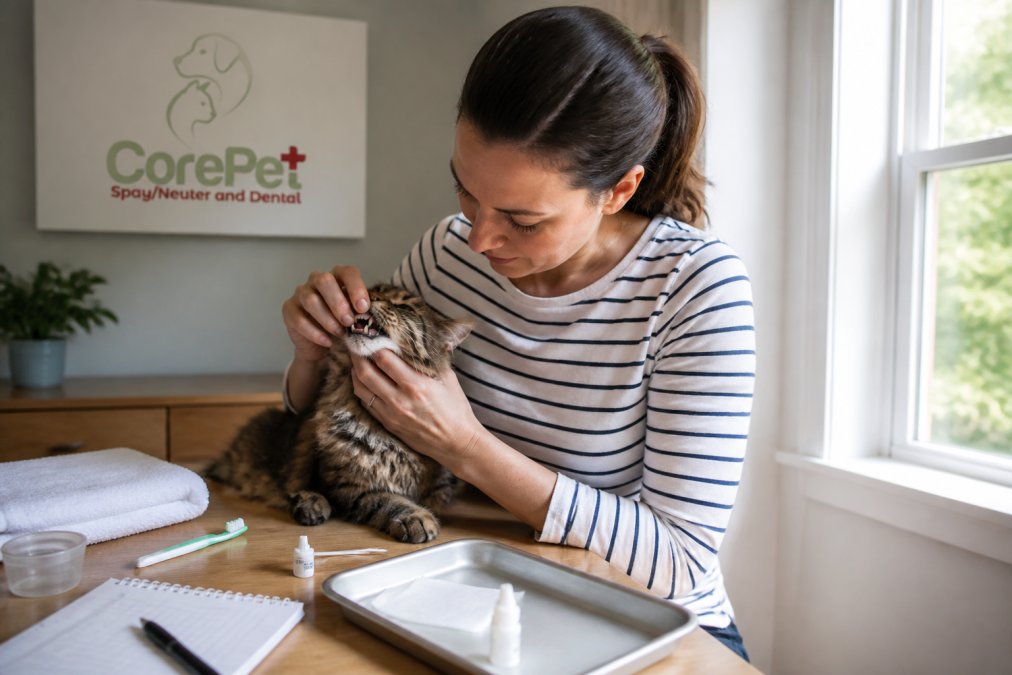
Most cats tolerate this briefly. If your cat pulls away hard or cries out, stop, that reaction itself is a sign of pain.
A common mistake is checking only the front teeth, the canines and incisors often look fine while the real damage sits on the back molars.
Feline Dental Cleaning Cost and Cat Dental Surgery Recovery
Feline dental cleaning cost depends on the clinic, the level of disease, and whether extractions are needed. Because every case is different, the only reliable figure is a written quote from your provider.
Ask for an itemized quote before you book, listing pre-surgical bloodwork, anesthesia and monitoring, dental x-rays, the cleaning, any extractions, and pain medication.
Cat dental surgery recovery usually follows a predictable path: most cats go home the same day, are groggy for 12 to 24 hours, and eat soft food for the first few days. Gum tissue heals in about two weeks.
Call your vet if you see bleeding that doesn’t stop, refusal of all food and water for more than a day, swelling around the jaw, or trouble breathing.
For owners in New Hampshire, CorePet is a locally owned surgery center that focuses on dental procedures for cats, dogs, and rabbits. The team uses modern surgical equipment and gives each pet individual care. You can review CorePet’s services and request a quote to see what’s included before you commit.
The American Veterinary Medical Association notes that regular dental care is one of the most effective ways to prevent pain and tooth loss in pets. The Cornell University College of Veterinary Medicine also advises owners to check their cat’s mouth monthly and book a professional exam when they spot changes.
Frequently Asked Questions
What are the early warning signs of dental disease in cats?
The earliest signs often include bad breath, red or swollen gums, and a buildup of yellow-brown tartar along the gumline. Your cat may also drool, chew on one side of the mouth, or flinch when you touch its face. Because cats hide discomfort well, these subtle changes are easy to miss. If you notice any of them, schedule a veterinary exam rather than waiting for symptoms to worsen.
Should I fast my cat before a dental cleaning?
Most veterinarians ask you to withhold food for about 8 to 12 hours before anesthesia, though water is usually allowed. The exact timing depends on your cat’s health and the clinic’s protocol, so follow the instructions your veterinary team gives you. Never fast a cat for longer than advised, since cats can develop serious liver problems if they go without food too long.
How often should cats have a professional dental exam in New Hampshire?
Most veterinarians recommend a professional dental exam at least once a year, though cats with existing periodontal disease may need checkups every six months. Your cat’s age, diet, and history of dental problems all affect the schedule. Ask your veterinarian what interval makes sense for your cat, and keep up with home brushing between visits to slow tartar buildup.
Dental disease in cats rarely gets better on its own, and waiting only makes treatment harder on your pet. If you’ve noticed bad breath, drooling, or trouble eating, book a dental exam soon. CorePet offers focused dental care for cats, with transparent quotes, modern equipment, and a calm, fear-free approach for every pet. Get started with CorePet and give your cat a healthier, more comfortable mouth.