Table of Contents
- What Is Cherry Eye in Dogs?
- Causes and Dog Breeds Prone to Cherry Eye
- Symptoms, Diagnosis, and When to Seek Veterinary Care
- Cherry Eye Surgery Cost and Treatment Options
Cherry Eye in Dogs: Causes, Treatment & Recovery
Last Updated: July 2, 2026
Cherry eye in dogs occurs when the tear gland of the third eyelid becomes inflamed and prolapses, creating a characteristic red or pink swelling in the corner of the eye. This condition is highly treatable, and most dogs recover fully with proper veterinary care.
Cherry eye isn’t painful in the early stages, but it can become uncomfortable if left untreated. The longer the gland remains prolapsed, the higher the risk of dry eye (keratoconjunctivitis sicca or KCS) developing.
What Is Cherry Eye in Dogs?
Cherry eye occurs when the nictitating membrane (third eyelid) becomes inflamed and its tear-producing gland prolapses outward. This gland normally sits tucked inside the eye socket and produces about 30% of the tear film that keeps the eye moist and protected. When it swells and pops out, it looks like a red or pink mass in the inner corner of the eye.
The condition is caused by a weakening of the ligament that normally holds the gland in place. This weakness can be congenital or develop over time due to inflammation. While not initially painful, cherry eye interferes with tear production and can lead to complications if ignored, including infection and dry eye syndrome.
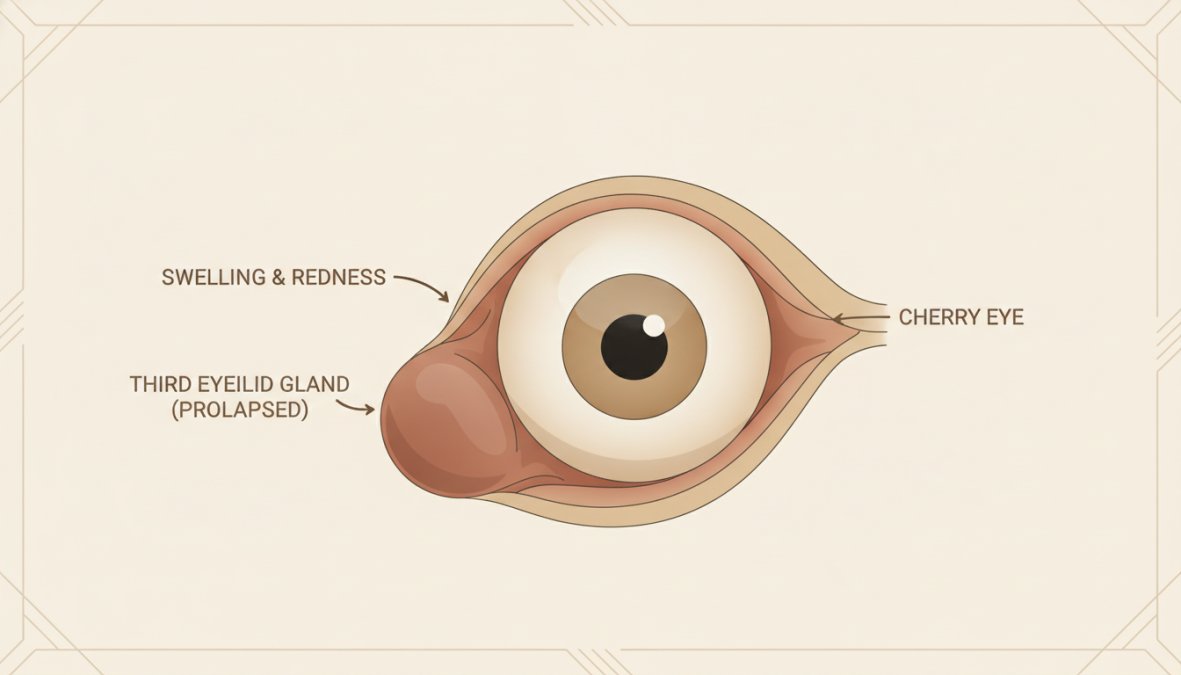
Many dog owners mistake cherry eye for a tumor because of its sudden appearance. In reality, it’s a structural issue with the eye’s support tissues. Most cases require surgical intervention to prevent long-term complications.
Causes and Dog Breeds Prone to Cherry Eye
Cherry eye stems from a weakness in the ligament that anchors the tear gland. This weakness may be inherited, making certain breeds significantly more susceptible. Bulldogs, Beagles, Cocker Spaniels, Poodles, Shih Tzus, and Boston Terriers are among the most commonly affected breeds, often sharing characteristics like shallow eye sockets or loose orbital tissues. Young dogs between six months and five years old are most at risk.
If your dog has cherry eye in one eye, there’s a significant chance the other eye will develop it eventually. Monitor both eyes closely, especially in predisposed breeds.
Environmental factors like chronic eye irritation or allergies may trigger the condition in genetically predisposed dogs. Cherry eye is not contagious and cannot be prevented through diet or lifestyle changes alone.
| Breed | Risk Level | Typical Age of Onset | Notes |
|---|---|---|---|
| Bulldog | Very High | 6-24 months | Most common affected breed |
| Beagle | Very High | 6-36 months | Often affects both eyes |
| Cocker Spaniel | High | 1-5 years | Frequently requires surgery |
| Poodle | High | 6-48 months | All sizes affected equally |
| Shih Tzu | High | 1-4 years | May recur after treatment |
| Boston Terrier | Moderate-High | 6-36 months | Good surgical outcomes |
Symptoms, Diagnosis, and When to Seek Veterinary Care
The most obvious sign of cherry eye is a red or pink mass visible in the inner corner of the affected eye, appearing suddenly and not disappearing on its own. You may also notice your dog squinting, pawing at the eye, excessive tearing, or mucoid discharge. As the condition progresses, the prolapsed gland becomes more inflamed and enlarged.
A veterinarian can diagnose cherry eye with a simple visual examination. Your veterinarian will also evaluate tear production using a Schirmer tear test to measure tear film production, as dogs with cherry eye are at higher risk for developing keratoconjunctivitis sicca (KCS or dry eye) later in life.
Seek veterinary care as soon as you notice the red mass in your dog’s eye. Early treatment prevents complications and improves surgical outcomes.
Bring your dog to a veterinarian within a few days of noticing symptoms. Early intervention reduces inflammation and makes surgical correction easier.
Cherry Eye Surgery Cost and Treatment Options
Treatment depends on severity. In mild cases, anti-inflammatory drops or oral medications may reduce swelling, and the gland may retract on its own. However, most cases require surgical intervention because the underlying ligament weakness doesn’t resolve without correction.
The standard surgical approach is a tacking procedure or imbrication, where the veterinarian surgically reattaches and secures the prolapsed gland back into its normal position using fine sutures. This preserves the gland’s function, which is critical for maintaining long-term tear production and eye health.
The cost of cherry eye surgery varies by location and case complexity. Your veterinarian can provide a specific estimate after examining your dog and determining which surgical approach is most appropriate.
Post-operative care is essential for successful healing. Your dog will need to wear an Elizabethan collar to prevent rubbing or scratching at the eye. Sutures are typically removed 10-14 days after surgery. Most dogs show significant improvement within the first week, with complete healing taking 3-4 weeks.
Ask your veterinarian about the long-term recurrence rate for the surgical technique they recommend. Some procedures have lower recurrence rates than others.
During recovery, keep the eye clean and follow your veterinarian’s instructions regarding medication application. Activity should be restricted for 7-10 days to allow proper healing. Follow-up examinations at one week and four weeks post-surgery ensure the gland has healed properly and is producing adequate tears.
Long-term outcomes for surgically corrected cherry eye are excellent. Dogs typically maintain normal tear production and eye health for years after surgery. However, some dogs develop dry eye syndrome later in life, requiring ongoing management with artificial tears or other medications. Regular eye examinations help catch any developing problems early. If your dog requires additional care during recovery or has other health needs, services like Spay Neuter Dental can help coordinate comprehensive veterinary support alongside your eye treatment plan.
Cherry eye is one of the most straightforward eye conditions to treat. If you’ve noticed signs of cherry eye in your dog, seek early treatment to prevent complications and ensure faster recovery.
Frequently Asked Questions
Is cherry eye in dogs an emergency?
While cherry eye itself is not immediately life-threatening, it requires prompt veterinary attention. The prolapsed third eyelid gland can become inflamed, irritated, and uncomfortable for your dog. Left untreated, the condition may lead to complications including corneal ulcers and reduced tear production, which can cause more serious eye damage. Contact your veterinarian as soon as you notice symptoms.
Can cherry eye go away on its own?
Cherry eye does not resolve on its own. The prolapse of the nictitating membrane gland is a structural issue that requires surgical intervention to correct. While some dogs may experience temporary improvement in inflammation with topical medications, the underlying glandular tissue remains prolapsed. Surgical replacement or tacking procedures are the only permanent solutions recommended by veterinary ophthalmologists.
Which dog breeds are most prone to cherry eye?
Certain breeds show higher breed predisposition to cherry eye, including Bulldogs, Beagles, Cocker Spaniels, Shih Tzus, and Lhasa Apsos. These breeds often have anatomical features that make them more susceptible to third eyelid gland prolapse. While cherry eye can occur in any dog, understanding your breed's risk factors helps with early detection and prompt treatment.
What happens if cherry eye is left untreated?
Untreated cherry eye can lead to serious complications. The exposed glandular tissue may develop corneal ulcers, secondary infections, and chronic inflammation. Over time, reduced tear production can result in keratoconjunctivitis sicca (dry eye), which causes pain and vision problems. The prolapsed mass may also cause persistent ocular discharge and blepharospasm. Early surgical intervention prevents these complications and protects your dog's long-term eye health.
This article was written using GrandRanker