Table of Contents
- Emergency Protocols for Pet Surgery Centers: What Happens Behind the Scenes
- Signs of Surgical Complications in Dogs and Cats
- Your Veterinary Emergency Preparedness Checklist
- Frequently Asked Questions
Last Updated: September 29, 2026
Emergency Protocols for Pet Surgery Centers: What Happens Behind the Scenes
Emergency protocols for pet surgery centers are the written, rehearsed procedures staff follow when a patient crashes under anesthesia, bleeds unexpectedly, or arrives with a life-threatening injury.
A protocol is a checklist someone can run at 2 a.m. without hesitating: who calls the owner, who manages the airway, who documents the timeline.
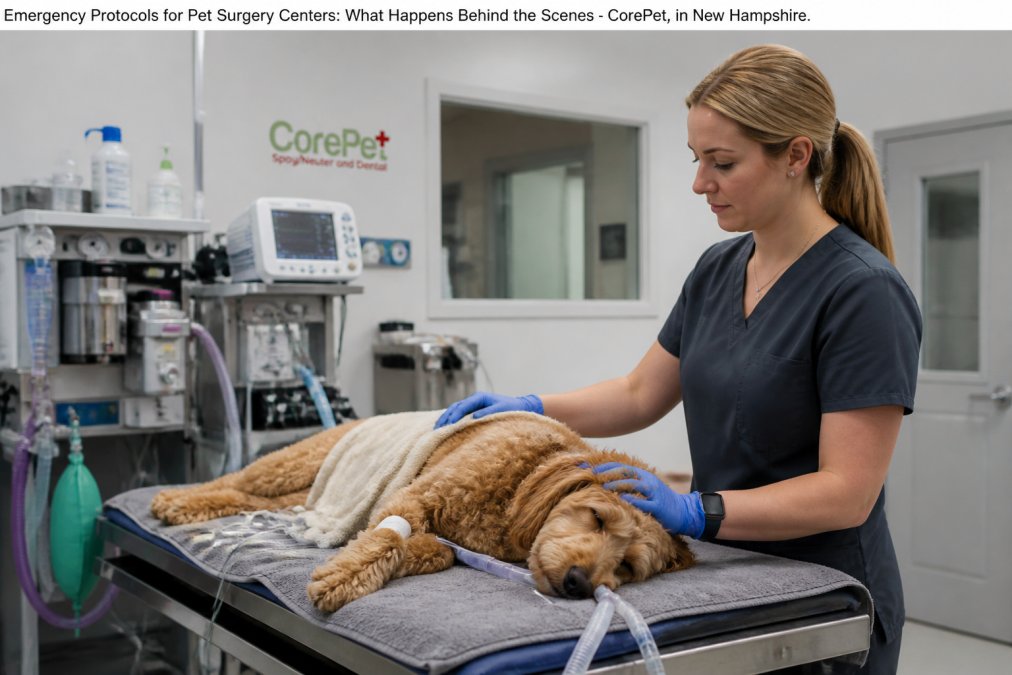
Core components include patient intake assessment, anesthesia monitoring standards, a designated crash cart, a defined chain of command, and a written discharge plan.
Patient intake flags risk early: a technician records weight, temperature, heart rate, and history before the pet reaches the table.
Anesthesia monitoring runs continuously, tracking heart rate, respiration, blood oxygen, and blood pressure, with a dedicated staff member watching.
The crash cart holds emergency drugs, airway supplies, IV fluids, and a defibrillator, checked on schedule.
Chain of command matters: when a patient destabilizes, one person directs the response and everyone else has a defined role.
Ask any surgery center two questions before booking: who monitors anesthesia during the procedure, and what happens if the pet’s heart rate drops. Vague answers are a red flag. Specific, rehearsed answers mean the team has thought about it.
Signs of Surgical Complications in Dogs and Cats
The most common signs of surgical complications in dogs and cats include excessive bleeding, swelling at the incision, lethargy that worsens instead of improves, vomiting, difficulty breathing, and fever. Call the clinic immediately if any appear in the first 48 hours.
Some symptoms are normal: sleepiness, a reduced appetite for a day, and mild grogginess. The key is direction, a pet that improves hour by hour is on track, while one that gets worse needs attention.
Watch for bleeding that soaks through the bandage, swelling that grows, foul-smelling discharge, repeated vomiting, labored breathing, pale gums, refusal to eat for 24 hours, or collapse.
Gum color is a fast, useful check. Healthy gums are pink and refill quickly when pressed. Pale, white, or blue gums suggest a circulation problem and warrant an immediate call.
Uncontrolled pain is another signal: whining, pacing, hiding, or snapping when touched means pain is not well managed, call the clinic rather than waiting it out.
Your Veterinary Emergency Preparedness Checklist
A veterinary emergency preparedness checklist is a written plan covering where to go, who to call, what to bring, and how to stabilize a pet before transport.
In New Hampshire, confirm hours, address, and whether the location takes walk-ins before an emergency happens.
Driving to your regular vet after hours and finding the lights off wastes critical minutes. Confirm which nearby facility handles after-hours emergencies and save the number in your phone now, not during a crisis.
Save the nearest 24/7 emergency hospital’s address and number, your clinic’s after-hours instructions, and a trusted neighbor who can help transport. Keep a first-aid kit with gauze, vet wrap, antiseptic, and a muzzle, plus vaccination records, medication lists, and your pet’s weight, age, and chronic conditions in one folder.
Financial planning deserves its own line. Emergency care can cost far more than a routine procedure, so setting aside savings, checking payment plans, and understanding pet insurance terms beforehand keeps the decision focused on care.
For routine procedures like spay, neuter, and dental surgery, CorePet publishes its pricing upfront so owners can plan.
When to Seek Emergency Vet Care in New Hampshire
Seek emergency veterinary care immediately for difficulty breathing, uncontrolled bleeding, suspected poisoning, bloated abdomen, seizures, trauma, or a pet that cannot stand.
Timing is everything. A pet hit by a car may look stable for an hour before internal bleeding shows, and a bloated dog with a twisted stomach can deteriorate within minutes. When in doubt, call ahead.
The person answering can guide you on whether to come in or monitor at home, and the call lets the facility prepare for your arrival.
Post-Operative Pet Care Instructions
Post-operative care at home centers on rest, incision monitoring, medication timing, and restricting activity for the period the veterinarian specifies.
Read the clinic’s written instructions the same day.
The first 48 hours after surgery carry the highest risk for complications. Owners who check the incision twice daily and follow medication timing closely catch problems early, when they are easiest to treat.
Frequently Asked Questions
What emergency protocols are required for pet surgery centers in New Hampshire?
Pet surgery centers in New Hampshire follow standards set by the New Hampshire Board of Veterinary Medicine, covering anesthesia monitoring, sterile technique, and emergency drug availability. CorePet keeps emergency protocols in place for every procedure, including spay, neuter, and dental surgery. These protocols address breathing problems, bleeding, and reactions to anesthesia during and after surgery.
How do I know if my pet is experiencing a surgical emergency after a procedure?
Watch for signs of surgical complications in dogs and cats: heavy bleeding from the incision, difficulty breathing, pale gums, collapse, or a temperature above 103°F. Vomiting that won’t stop and a swollen, hard abdomen also warrant immediate attention. Call your surgery center or an emergency hospital right away if you see any of these signs.
What should I include in a veterinary emergency preparedness checklist before my pet’s surgery?
Your veterinary emergency preparedness checklist should include your surgery center’s after-hours phone number, the address of the nearest 24/7 emergency hospital, your pet’s medication list, and a copy of discharge instructions. Keep a pet first-aid kit with gauze, a digital thermometer, and a muzzle on hand. Confirm transportation plans in advance in case you need to drive your pet for emergency vet care in New Hampshire.
Emergencies rarely announce themselves, and the difference between a smooth recovery and a crisis often comes down to preparation. CorePet focuses on spay, neuter, and dental procedures for dogs, cats, and rabbits, with modern equipment, transparent pricing, and individualized care that treats every pet as an individual rather than a number. If your pet needs a routine surgical procedure, book an appointment with CorePet and get clear answers about what is included before the day of surgery.