Table of Contents
- Ideal Age for Pet Spaying by Species and Breed
- Pre-Surgical Blood Work for Pets
- Spay Surgery Recovery Time and Post-Operative Care for Spayed Pets
- Health Benefits and Risks at Different Ages
- Frequently Asked Questions
Last Updated: September 4, 2026
The ideal age for pet spaying ranges from 5 to 6 months for most dogs and cats, though breed and size shift this window considerably. This guide breaks down timing so you can make a confident choice for your companion.
Ideal Age for Pet Spaying by Species and Breed
The ideal age depends on anticipated adult size. For most cats and small to medium breed dogs, veterinarians recommend the procedure around 5 to 6 months of age, before the first heat cycle. Large and giant breed dogs require a different approach because their skeletal development takes longer to complete.
| Patient Type | Typical Recommended Window | Primary Consideration |
|---|---|---|
| Cats (all breeds) | 5-6 months | Prevents first heat cycle and reduces mammary tumor risk |
| Small/Medium Dogs | 5-6 months | Balances growth with reproductive health benefits |
| Large/Giant Dogs | 12-18 months | Allows for complete skeletal development first |
| Rabbits | 4-6 months | Prevents reproductive cancers common in unspayed females |
For large breeds like Great Danes or Labrador Retrievers, many veterinary professionals now advise waiting until 12 to 18 months. The reasoning centers on joint health: estrogen and other hormones play a role in closing growth plates, and early spaying can delay that process, potentially increasing the risk of cruciate ligament rupture or hip dysplasia. The American Veterinary Medical Association’s guidance on canine spay timing acknowledges this breed-specific variation, encouraging owners to consult with their veterinarian rather than assume a universal age.
Spaying before the first heat cycle provides the most significant protection against mammary tumors, a benefit that diminishes with each subsequent cycle.
Waiting too long for a large breed dog introduces its own risks. While delaying spay until 18 months protects joints, it also means the pet may experience one or more heat cycles. Owners must weigh the risk of mammary tumors and the practical challenge of [managing a dog in heat](/blog/is-it-safe-to-spay-dog-in-heat/) against the skeletal benefits.
Pre-Surgical Blood Work for Pets
Pre-surgical blood work evaluates organ function before anesthesia, checking liver and kidney enzyme levels, blood cell counts, and platelet function.
The value of this screening becomes clear when considering that many pets, particularly those adopted from shelters or rescues, arrive with unknown medical histories. A routine panel can reveal underlying conditions like anemia, infection, or early kidney disease that might otherwise complicate recovery. Veterinary practice guidelines on preoperative screening emphasize that while blood work is especially critical for senior pets, it provides a valuable safety net for young animals too.
Spay Surgery Recovery Time and Post-Operative Care for Spayed Pets
Spay surgery recovery spans 10 to 14 days, with most pets returning to normal energy within 48 to 72 hours.
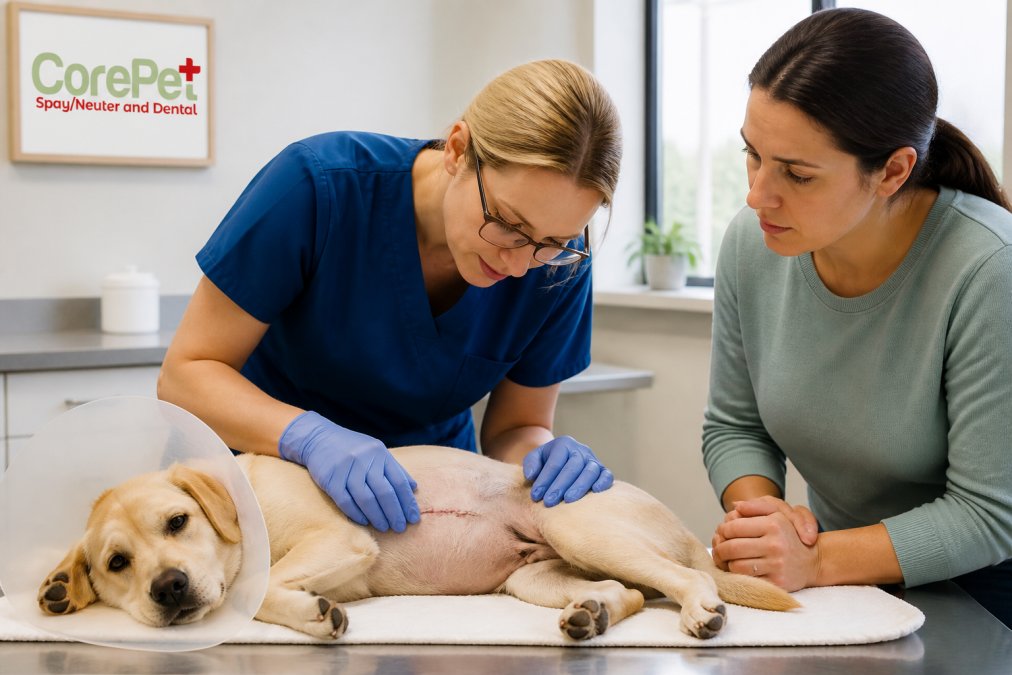
Post-operative care for spayed pets follows a predictable timeline that owners can plan around:
- Day 0-1 (Rest and Monitoring): Keep the pet confined to a quiet space. Check the incision twice daily for redness, swelling, or discharge. Administer all prescribed pain medication as directed.
- Day 2-3 (Limited Activity): Short, leashed bathroom breaks only. No running, jumping, or rough play. The pet may seem more energetic, but internal healing is still in its early stages.
- Day 4-7 (Suture Care): Continue preventing the pet from licking the incision. An Elizabethan collar or recovery suit is essential, as licking is the most common cause of post-surgical infection.
- Day 10-14 (Follow-Up): Most centers schedule a recheck to confirm the incision has healed and to remove any external sutures.
A common mistake owners make is assuming a pet that appears energetic is fully healed. Internal tissues take longer to recover than the incision line suggests, and overexertion during the second week can lead to hernias or seromas. The American Animal Hospital Association’s post-operative care standards recommend strict activity restriction for the full two-week period, regardless of how the pet appears.
Health Benefits and Risks at Different Ages
The ideal age balances reducing reproductive cancer risks and allowing skeletal development. Spaying before the first heat cycle offers maximum protection against mammary tumors and eliminates the risk of pyometra, a potentially fatal uterine infection.
| Timing | Key Benefit | Principal Risk |
|---|---|---|
| Before first heat (5-6 mo) | Maximum mammary tumor protection | Potential joint issues in large breeds |
| After first heat (6-9 mo) | Balanced growth and protection | Slightly elevated tumor risk |
| After maturity (12-18 mo) | Complete skeletal development | Multiple heat cycles, higher tumor risk |
[No single age works perfectly](/blog/is-it-too-late-to-spay-5-year-old-dog/) for every pet. The ideal age emerges from a conversation with a veterinarian who knows the animal’s breed, growth trajectory, and household situation. CorePet focuses on spay, neuter, and dental procedures using modern surgical techniques. Book an appointment to discuss the right timing for your pet’s specific needs.
Frequently Asked Questions
What is the healthiest age to spay a female dog?
The ideal age for pet spaying depends on breed size and overall health. Small breed dogs are typically ready between 5-6 months, while large and giant breeds benefit from waiting until skeletal development is more complete, often 12-24 months. Your veterinarian can assess your dog’s individual growth rate and recommend the best timing. Pre-surgical blood work helps confirm readiness before the procedure.
Is it too late to spay a dog at 7 years old?
Spaying an older dog is possible, but age increases surgical risk. Pre-surgical blood work becomes especially important to assess organ function and anesthesia safety. Older dogs may have a longer recovery period and higher complication risk. Consult your veterinarian about whether the health benefits of spaying, including prevention of pyometra and mammary tumors, outweigh the surgical risks for your senior pet.
How long does spay surgery recovery take?
Spay surgery recovery time typically spans 10-14 days. During the first week, restrict activity and monitor the surgical site for swelling or discharge. Pain medication and post-operative care for spayed pets, including limited jumping and running, are essential. Most pets resume normal activity after 2 weeks, though full tissue healing continues longer. Your veterinarian will provide detailed post-operative instructions and schedule a follow-up exam.
This article was written using GrandRanker