Table of Contents
- Understanding Mass Removal in Dogs
- Signs a Dog’s Lump Needs Veterinary Attention
- Dog Lump Biopsy and Diagnosis Before Surgery
- The Surgical Removal Process
- Frequently Asked Questions
Last Updated: October 8, 2026
Understanding Mass Removal in Dogs
Mass removal is surgery to take out lumps, growths, or tumors from a dog’s body, whether on the skin, under it, or in deeper tissues. Some masses are benign, others cancerous and urgent. CorePet focuses on safe surgical care for dogs needing mass removal, using modern techniques for the best outcomes.
Age, genetics, and environment all play a role in mass development. Early detection and proper surgical removal can prevent serious complications and improve your dog’s quality of life.
Signs a Dog’s Lump Needs Veterinary Attention
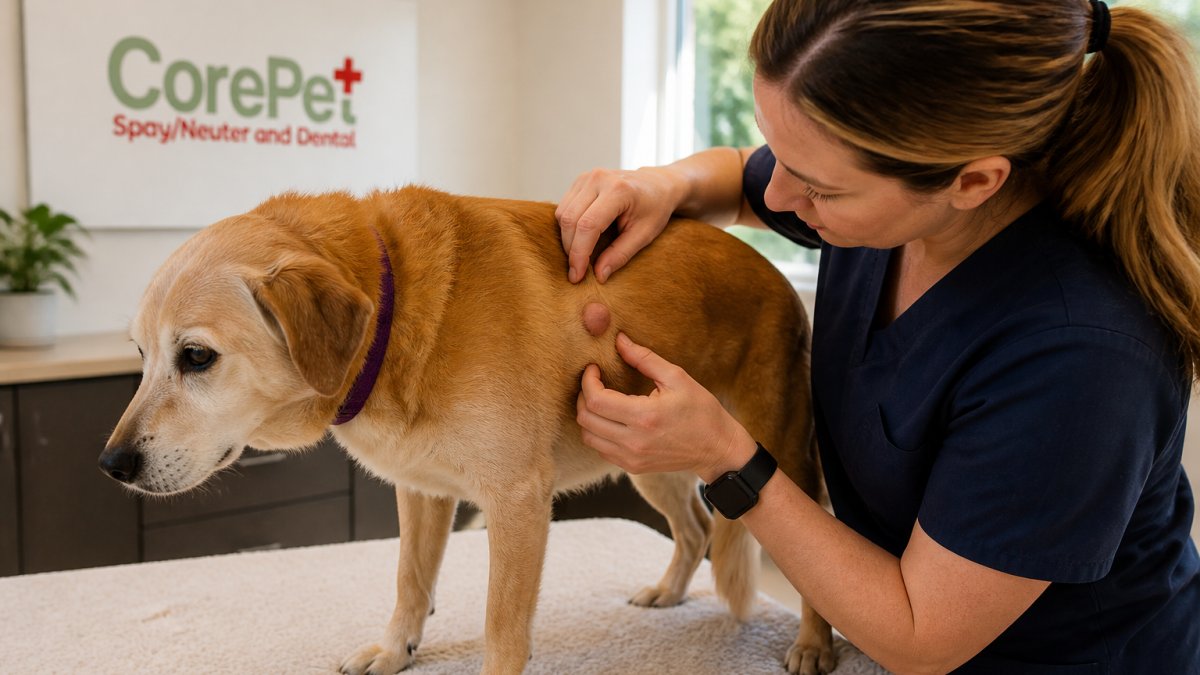
Not every lump needs surgery right away, but some warning signs mean prompt evaluation. Watch for lumps that grow quickly, feel hard or irregular, cause pain when touched, or bleed, ooze, or smell bad.
Behavioral changes matter too: some dogs lick or bite at a mass constantly, risking infection, while others seem uncomfortable or move differently if the growth affects movement.
Lumps near vital areas like the neck, chest, or limbs may interfere with function and warrant faster removal. Even slow-growing masses should be checked to rule out cancer.
Dog Lump Biopsy and Diagnosis Before Surgery
Before removing a mass, your veterinarian will recommend diagnostic tests. A dog lump biopsy takes a small tissue sample to determine if the growth is cancerous, guiding the surgical plan and recovery outlook.
Biopsies use a needle (fine-needle aspirate) or a small tissue sample, with results back within a few days. That tells you whether simple removal is enough or additional treatment is needed.
Ultrasound or X-rays may check whether the mass has spread, and blood work confirms your dog is healthy enough for anesthesia and surgery.
The Surgical Removal Process
The actual mass removal surgery begins with anesthesia to keep your dog comfortable and still. Your veterinarian plans the incision to remove the entire growth plus a margin of healthy tissue, reducing the chance of regrowth.
The surgeon makes an incision, removes the mass, and closes the wound with sutures or surgical glue. For larger or deeper growths, the procedure may take longer and require more complex closure techniques. Your dog will wake up in recovery and go home once stable.
Pain control starts during surgery and continues at home. Most dogs recover well within one to two weeks, though activity restriction is important during healing.
Frequently Asked Questions
When should a dog have a lump checked by a veterinarian?
Any new lump, growth, or mass on your dog warrants a veterinary evaluation. Lumps that grow quickly, feel hard, are attached to underlying tissue, or cause discomfort need prompt attention. Even slow-growing lumps should be assessed to rule out serious conditions. Early evaluation gives you more treatment options and better outcomes.
What is a dog lump biopsy and why is it needed?
A biopsy involves taking a small sample of tissue from the lump to examine under a microscope. This helps determine whether the mass is benign or cancerous and guides treatment decisions. Some biopsies can be done with a needle before surgery; others require tissue samples collected during surgical removal. Knowing what you’re dealing with helps your veterinarian recommend the safest approach.
What should I expect during dog tumor removal recovery?
Recovery typically takes 10-14 days. Your dog will need pain medication, activity restriction, and incision monitoring during this time. Keep the surgical site clean and dry, prevent licking with a collar if needed, and watch for signs of infection like redness or discharge. Most dogs return to normal activity within two weeks, though full healing continues for several weeks beneath the skin.
When your dog has a lump, quick action makes a difference. A veterinary evaluation identifies whether the growth needs removal and what technique works best. CorePet focuses on safe surgical care for dogs in New Hampshire, using modern equipment and proven methods to handle mass removal with confidence. Book an appointment to discuss your dog’s needs and get a clear plan forward.