Table of Contents
- Causes of Bad Breath in Dogs
- How to Brush a Small Dog’s Teeth
- Safe Dog Breath Fresheners
- Frequently Asked Questions
Last Updated: October 19, 2026
Causes of Bad Breath in Dogs
Small dog breath usually traces back to the mouth, not the stomach. Plaque and tartar build up on the teeth, bacteria settle along the gumline, and the smell follows. Periodontal disease is the most common cause, and small dogs develop it faster than large ones.
Small dog breath problems often start early: toy and miniature breeds have crowded teeth in a small jaw, so food debris packs into tight spaces. Common culprits:
- Plaque and tartar buildup on the teeth and gumline
- Gum disease (periodontal disease) from oral bacteria
- Food debris trapped between crowded teeth
- Diet high in starch or sugary treats
- Underlying health issues that a vet should check
Persistent odor is a signal worth acting on.
American Veterinary Dental College on periodontal disease in dogs
How to Brush a Small Dog’s Teeth
Brushing is the most reliable home habit for freshening breath: remove plaque before it hardens into tartar. Do it daily with a dog toothbrush sized for a small mouth.
Start slow:
- Let the dog taste dog-safe toothpaste from your finger.
- Rub the paste along the gums with a finger for a few days.
- Switch to a small soft-bristled dog toothbrush.
- Brush in small circles along the gumline, back teeth first.
- Lift the lip gently and keep sessions short.
- Praise and reward right after.
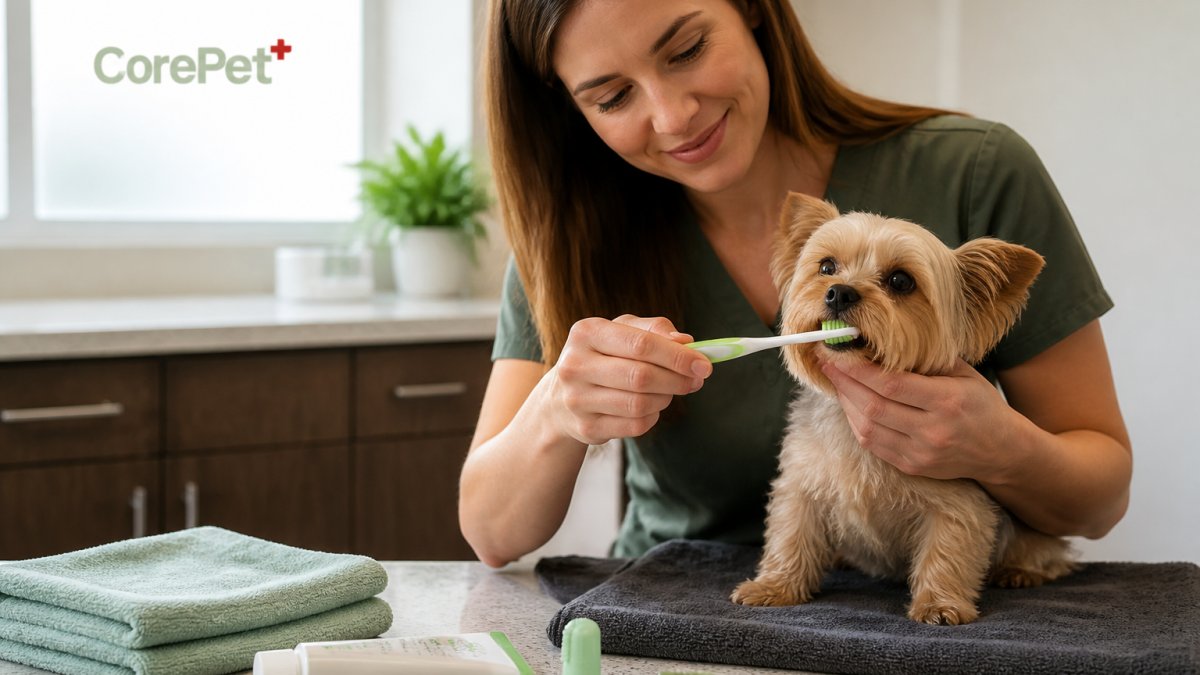
Never use human toothpaste, it contains ingredients dogs should not swallow. A dog-safe toothpaste in a pet-friendly flavor keeps the routine positive.
The back molars hold the most tartar on small dogs. Most owners brush the front teeth, where the smell is less, and skip the back. Spend most of your time on the upper back teeth.
If brushing is a struggle, ask the team at CorePet about dental care during a visit.
Safe Dog Breath Fresheners
Safe breath fresheners reduce oral bacteria rather than masking odor. Here is what to try and what to skip.
What helps:
- Dental chews made for small dogs, given daily
- Chew toys that scrape the teeth as the dog gnaws
- Fresh water in a clean bowl, changed often
- Parsley or mint in tiny amounts
- Probiotics for dogs, supporting oral and gut bacteria
- Carrots and apple slices as crunchy, low-starch treats
What to be careful with:
- Coconut oil in large amounts can upset a small dog’s stomach
- Apple cider vinegar and lemon juice can irritate the mouth and are not proven to freshen breath
- Chlorophyll supplements have limited evidence
A lower-starch diet and glycerin-free treats cut the food debris that feeds oral bacteria. Choose fresheners made for dogs and sized for a small mouth.
Frequently Asked Questions
How do I freshen my dog’s breath quickly?
For a quick fix, offer a dental chew or a small piece of dog-safe breath freshener. Brushing your dog’s teeth with dog-safe toothpaste is the most effective immediate step. Avoid human toothpaste and homemade remedies like lemon juice or apple cider vinegar, which can upset a small dog’s stomach. If bad breath returns within hours, it usually signals plaque buildup or an underlying dental issue that needs a vet’s attention.
Are there safe natural remedies for bad breath in dogs?
Some home options are safe in moderation: parsley or mint added to food, plain yogurt with probiotics, and fresh water in a clean bowl. Coconut oil can be offered in tiny amounts. Skip lemon juice, apple cider vinegar, and human toothpaste. Even safe remedies only mask odor; they do not remove plaque or treat dental disease. Ask your vet before starting any supplement, especially for small dogs.
When should bad breath in a small dog be checked by a veterinarian?
See a vet if bad breath persists despite daily brushing, or if you notice red or bleeding gums, loose teeth, drooling, difficulty eating, or a sudden change in breath odor. Small dogs are prone to periodontal disease, and a professional dental cleaning may be needed. In New Hampshire, CorePet offers dental services; book an appointment if you are unsure whether your dog’s breath is a home-care issue or a medical one.