Last Updated: August 17, 2026
8 Signs Your Dog Needs Dental Work
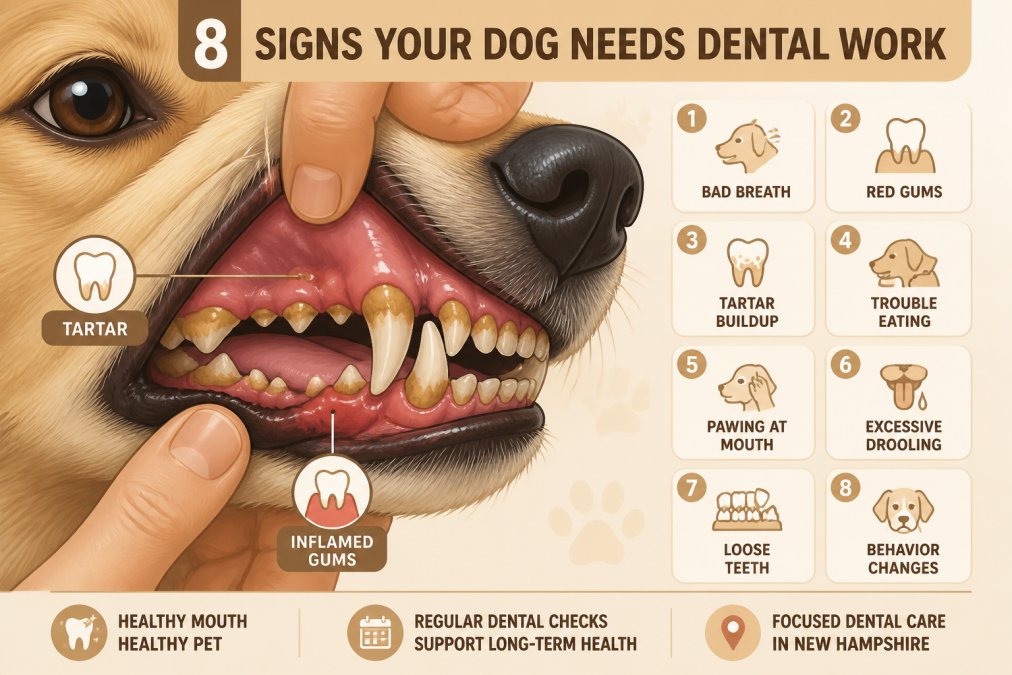
Your dog’s dental health directly affects overall wellness. Oral bacteria can spread to vital organs, causing systemic infections that damage the heart, kidneys, and liver. Recognizing when your dog needs dental work prevents serious complications and keeps your pet comfortable.
1. Bad Breath (Halitosis), Persistent foul odor signals bacterial growth and periodontal disease. 2. Visible Tartar and Plaque Buildup, Yellow or brown deposits indicate calculus requiring professional scaling. 3. Red, Swollen, or Bleeding Gums, Inflamed gums signal gingivitis or early periodontal disease. 4. Loose or Missing Teeth, Tooth loss in dogs under age 10 indicates advanced periodontal disease. 5. Difficulty Eating or Chewing, Dogs in pain often drop food or avoid hard kibble. 6. Excessive Drooling, Sudden increases with mouth pawing indicate dental pain or infection. 7. Swelling Around the Face or Jaw, Facial swelling suggests abscess formation requiring immediate intervention. 8. Behavioral Changes, Dogs with dental pain often become irritable, withdrawn, or aggressive.
How to Check Dog Teeth at Home
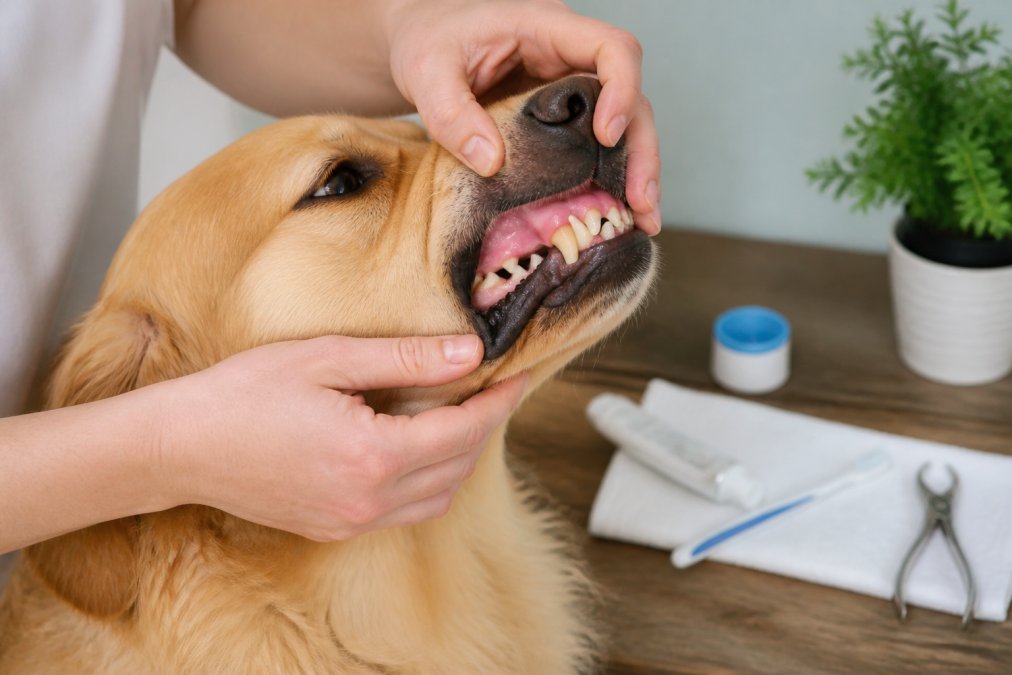
Lift your dog’s lips gently and look for tartar and gum color, healthy gums are firm and pale pink. Examine back molars where disease often starts, and gently wiggle visible teeth to ensure they’re anchored. Perform these checks monthly to catch subtle changes early.
Understanding Anesthesia for Dog Dental Procedures
General anesthesia is necessary for professional cleaning and extractions, allowing thorough cleaning beneath the gumline. Pre-operative bloodwork screens for health issues, and a veterinary technician monitors vital signs throughout. Recovery typically takes a few hours with most dogs returning home the same day.
Dental disease in dogs progresses silently until symptoms become severe. If you’ve noticed any of these eight signs, schedule a dental consultation with a qualified veterinarian. CorePet focuses on dental procedures for dogs, cats, and rabbits in New Hampshire, using advanced surgical techniques and modern equipment to ensure safe, compassionate care. The American Veterinary Dental College provides guidelines on periodontal disease in dogs. Book an appointment to discuss your dog’s dental health and develop a prevention plan tailored to your pet’s needs.
This article was written using GrandRanker