Table of Contents
- Signs of Rabbit Malocclusion Symptoms Every Owner Should Know
- Signs of Dental Disease in Rabbits: Appetite and Droppings Monitoring
- Rabbit Not Eating Dental Problems: When It’s Time to Call the Vet
- Frequently Asked Questions
Last Updated: October 11, 2026
Signs of Rabbit Malocclusion Symptoms Every Owner Should Know
Rabbit malocclusion is a dental condition where a rabbit’s teeth do not line up correctly, so they grow abnormally instead of wearing down. This guide from CorePet covers the signs of rabbit malocclusion symptoms every owner in New Hampshire should recognize early.
Rabbits’ teeth grow for life; chewing hay and grass normally wears them down at the same rate.
When teeth do not meet properly, they keep growing, cutting into the tongue, cheeks, or gums.
A common mistake is waiting until a rabbit stops eating to call a vet, when the problem is often advanced.
Early signs to watch for:
- Drooling or a wet chin, saliva soaking the fur under the jaw
- Pawing at the mouth, swiping at the face in discomfort
- Runny or weepy eyes, tears draining down the face
- Facial discharge, moisture or crusting around the nose
- Reduced appetite, leaving food behind
- Weight loss, prominent ribs and spine
- Dirty bottom, trouble grooming from mouth pain
- Small or fewer droppings, a sign the gut is slowing down
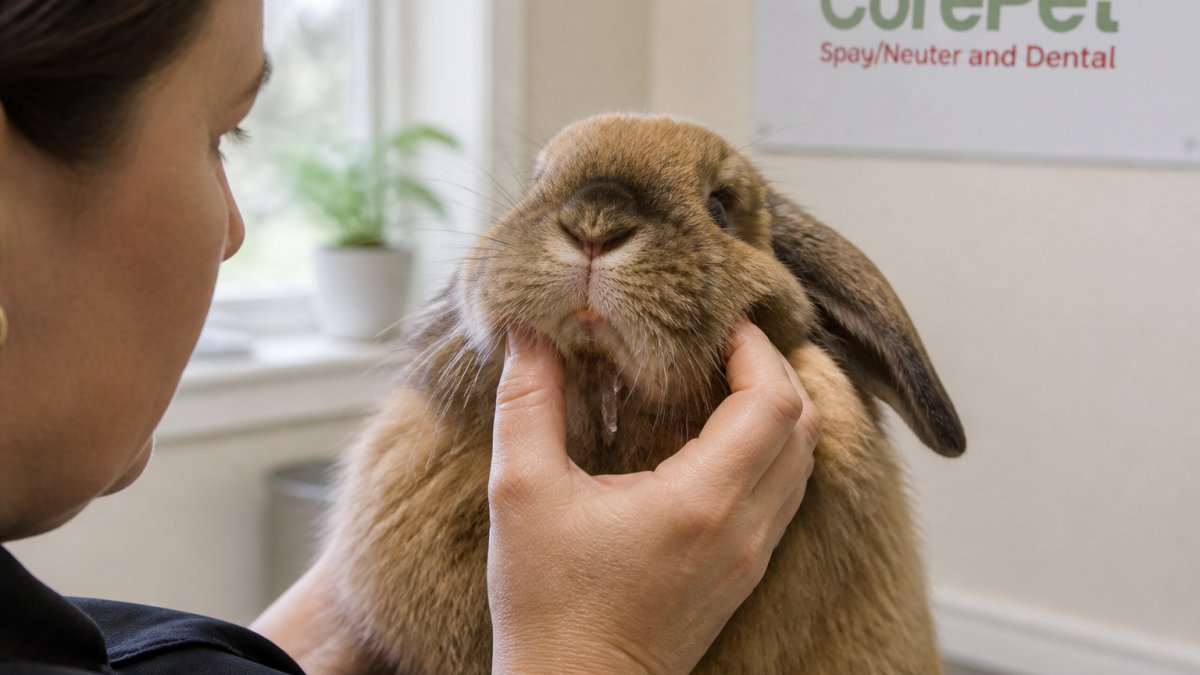
Drooling and a wet chin are two of the earliest and most reliable signs of rabbit dental trouble. If you see either one, schedule a vet visit soon.
Signs of Dental Disease in Rabbits: Appetite and Droppings Monitoring
Signs of dental disease in rabbits often show up first in what a rabbit eats and leaves behind. Monitoring appetite and droppings daily is one of the simplest ways to catch a problem early.
A rabbit with mouth pain may drop food, chew on one side only, refuse hard foods like hay and pellets, or prefer soft treats.
Droppings tell a related story: when a rabbit eats less, fewer and smaller droppings appear.
Soft faeces or a messy bottom can also point to dental disease. A rabbit in pain cannot groom itself well.
Fewer or smaller droppings are not just a stomach issue. In a rabbit with dental disease, they are a warning that the rabbit has stopped eating enough. Ignoring this can lead to dangerous gut slowdown.
Track appetite and droppings daily, noting any change in how much your rabbit eats or how its droppings look.
Rabbit Not Eating Dental Problems: When It’s Time to Call the Vet
Rabbit not eating dental problems become urgent fast. A rabbit that refuses food for even a short time needs veterinary care, not home remedies.
Rabbits cannot safely go long without eating. Their digestive system depends on a steady flow of food.
Call a vet right away if you notice a complete refusal to eat, drooling that soaks the chin and chest, visible swelling on the jaw or face, loud teeth grinding, or no droppings for several hours.
These signs point to serious mouth pain or a dental abscess. Both need prompt care.
What to Do Before the Appointment
Before you go, note when your rabbit last ate normally, count the last day’s droppings, list any refused foods, and bring a photo of the wet chin or droppings if helpful.
Keep your rabbit warm and calm. Offer soft, wet greens if it will eat, but do not force food.
How Vets Diagnose Rabbit Dental Problems
A vet checks more than the front incisors; many dental problems start in the cheek teeth, deep in the mouth.
A full exam may include a look at the incisors and cheek teeth, a check for spurs, sharp edges, and overgrown teeth, imaging of the tooth roots and jaw, and a review of appetite, weight, and droppings.
Treatment depends on what the vet finds: some rabbits need tooth trimming, others more involved dental care.
Dental disease often comes back. Regular checkups and a hay-rich diet help manage it over time.
If you are looking for a surgery center in New Hampshire that works with rabbits, CorePet focuses on dental and surgical care for dogs, cats, and rabbits. Our team can walk you through what a dental exam involves.
Ask the vet to check the cheek teeth, not just the front incisors. Many owners miss this, and it is where a lot of dental disease hides.
Frequently Asked Questions
Can you fix malocclusion in rabbits?
Malocclusion in rabbits can be managed but not cured. Treatment focuses on trimming or filing overgrown teeth, addressing underlying causes, and managing pain. In severe cases, extraction of affected teeth may be needed. Regular veterinary checkups and a high-fiber diet help slow progression. Without ongoing care, rabbit malocclusion symptoms often return, so follow-up appointments are essential.
What does malocclusion look like in rabbits?
Visible signs include drooling, a wet chin, pawing at the mouth, and difficulty eating. You may notice weight loss, reduced appetite, smaller or fewer droppings, and facial swelling. Some rabbits develop runny eyes or facial discharge. In early stages, symptoms can be subtle, so monitor your rabbit’s eating habits and droppings daily for changes that suggest dental disease.
When should I take my rabbit to a veterinarian for dental symptoms?
Contact a veterinarian at the first sign of drooling, pawing at the mouth, or changes in eating or droppings. These signs of dental disease in rabbits can worsen quickly. If your rabbit stops eating or shows weight loss, seek care promptly. Early intervention for rabbit overgrown teeth improves outcomes and reduces the need for more extensive treatment.
A rabbit with dental disease can go downhill quickly, and the signs are easy to miss until eating stops. CorePet is a locally owned surgery center that focuses on dental and surgical care for dogs, cats, and rabbits, with modern equipment and a calm, fear-free approach. Their team offers clear answers, individualized care, and reasonable costs for essential procedures. Book an appointment with CorePet to get your rabbit the dental care it needs.