Table of Contents
- Pre-Surgical Blood Work for Pets: The First Safety Check
- Pet Anesthesia Monitoring Protocols During Spay Neuter Surgery
- Post-Operative Care Instructions for Spay Neuter Recovery
- Frequently Asked Questions
Last Updated: October 3, 2026
Pre-Surgical Blood Work for Pets: The First Safety Check
Spay neuter safety starts before the first incision: pre-surgical blood work shows how a pet’s organs are working and is the key spay neuter safety screening step before anesthesia.
At CorePet, a surgery center focused on spay, neuter, and dental care, blood work is a go, no-go decision point.
What Does Pre-Surgical Blood Work Actually Check?
A standard pre-anesthetic panel checks kidney and liver values, red and white blood cells, and clotting times; pediatric patients often still get a basic screen to catch anemia or low platelets.
Why Fasting Instructions Matter Before Surgery
Fasting matters: food in the stomach during anesthesia can cause vomiting and aspiration. Withhold food for several hours while allowing free water, following the surgical team’s instructions at booking.
Never fast a rabbit the way you would fast a dog or cat. Rabbits cannot vomit, and withholding food can trigger dangerous gut stasis. Follow the surgical team’s species-specific instructions exactly.
Pre-Surgical Assessment and Record Keeping
Before surgery day, the team reviews the pet’s history, previous sedation reactions, current medications, and known health conditions, to build the anesthetic plan. Accurate weight, species, and breed notes help calculate drug doses.
Pet Anesthesia Monitoring Protocols During Spay Neuter Surgery
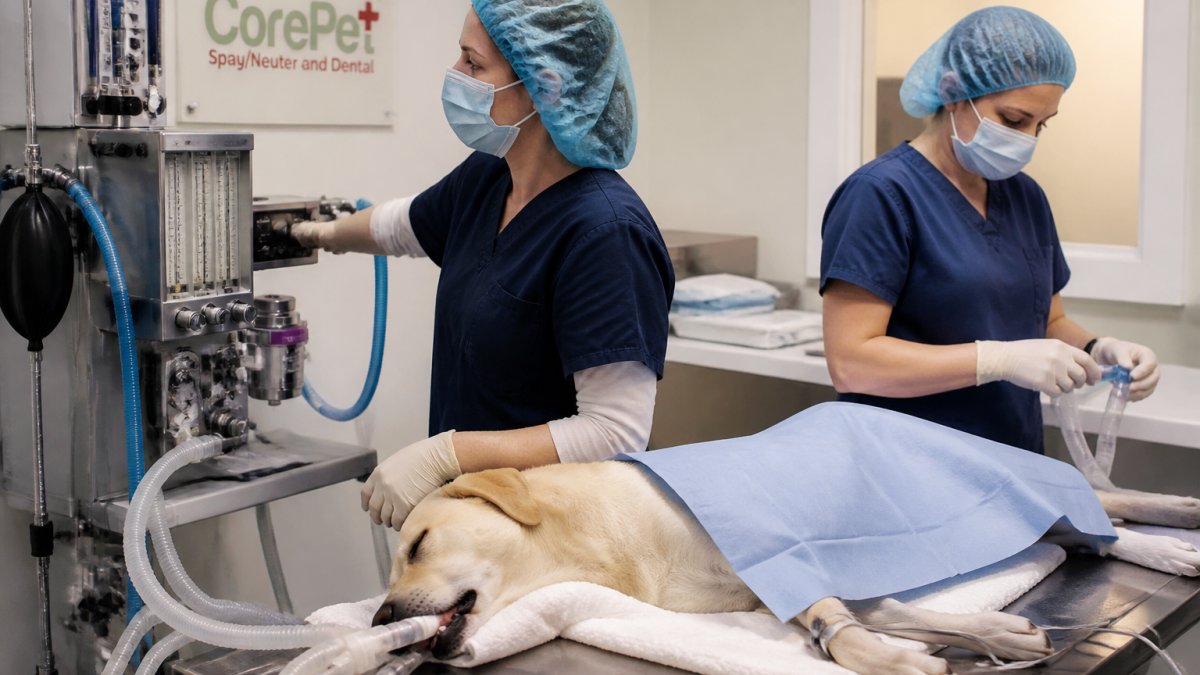
Pet anesthesia monitoring protocols are the checks a trained technician performs throughout surgery to keep a patient stable, covering vital signs, body temperature, and sedation depth from first injection to waking.
What Gets Monitored, and How Often?
Monitoring is continuous. A dedicated staff member watches the patient while the surgeon works.
| What Is Checked | Why It Matters | Typical Check Frequency |
|---|---|---|
| Heart rate and rhythm | Detects stress or drug reactions | Continuous |
| Body temperature | Prevents dangerous cooling | Every few minutes |
| Reflexes and jaw tone | Gauges sedation depth | Regular intervals |
Anesthetic Drug Selection and Protocols
Modern veterinary anesthesia often combines drugs such as dexmedetomidine, ketamine, and butorphanol, a sedative, an analgesic, and a maintenance agent, tailored to age, weight, and health.
Infection Control and Sterile Technique
Infection control is not optional: surgical scrub of the incision site, sterile gowns, gloves, masks, sterilized instruments, and hand hygiene between patients. Careful hemostasis keeps the field clean and lowers complications.
Emergency Readiness and Complication Management
Every surgical team needs a plan for drug reactions, breathing problems, and excessive bleeding: oxygen and airway equipment ready before induction, emergency drugs within reach, a crash cart on site, and a staff member assigned to call for help.
Ask any surgical team what their emergency plan looks like before booking. A clear answer, with named equipment and assigned roles, is a good sign. A vague one is worth a second look.
Pediatric Spay Neuter Considerations
Pediatric neutering brings its own safety needs: young patients lose body heat faster and have less reserve. Special steps include warming blankets and warmed fluids, smaller drug doses, shorter fasting windows, and closer recovery monitoring.
Post-Operative Care Instructions for Spay Neuter Recovery
Post-operative care instructions for spay neuter recovery focus on three things: a quiet space, a clean incision site, and clear signs of pain. Most pets go home the same day and recover within a couple of weeks.
The First 24 Hours at Home
The first day sets the tone: rest in a warm, quiet spot away from other animals and noise. Expect grogginess, minor incision swelling, and reduced appetite that returns by the next day. Call the surgical team if a pet will not wake fully, breathes oddly, or vomits repeatedly.
Pain Management and Analgesia
Pain management is not a luxury: analgesia before and after surgery helps pets heal faster and stay calm. Follow home pain medication dosing exactly, and never give human pain relievers, which can be toxic. Signs of pain include whining, restlessness, refusing food, hiding or guarding the belly, and licking the incision nonstop.
Incision Site Care and the Recovery Period
The incision site needs to stay clean and dry, checked twice a day for redness, discharge, or opening.
Recovery typically takes 10 to 14 days: keep the pet indoors and calm, use an Elizabethan collar or recovery suit if licking starts, avoid bathing, swimming, and rough play, and limit dogs to short leash walks.
Post-Op Home Safety Checklist
Before pickup day, set up a quiet, draft-free resting area, pick up rugs or cords a groggy pet could trip on, stock easy-to-digest food, confirm medication doses and times, separate other pets for the first day, and save the clinic’s phone number.
When to Call the Surgical Team
Call right away for bleeding that will not stop, trouble breathing, fever or heavy swelling, no interest in food for more than a day, or an incision that opens or drains pus.
For owners in New Hampshire weighing a surgery center against a general practice, the deciding factor is often focus. A team performing spay, neuter, and dental procedures daily builds routines around those exact cases.
Frequently Asked Questions
What safety measures are taken during pet surgery in New Hampshire?
Veterinary surgical teams follow established safety protocols including pre-surgical blood work to screen organ function, continuous anesthesia monitoring of heart rate, breathing, and body temperature, and strict sterile technique to prevent infection. A dedicated technician typically monitors vital signs throughout the procedure. After surgery, patients recover in a temperature-controlled area with regular checks until they are alert and stable enough to go home.
Why is pre-surgical blood work important for spay and neuter procedures?
Pre-surgical blood work gives the veterinarian a baseline picture of your pet’s liver and kidney function, blood sugar, and red and white blood cell counts. These results help the surgical team choose safe anesthesia drugs and doses, and they can reveal hidden health issues that might make surgery riskier. For older pets or those with unknown medical history, this screening is especially valuable before spay neuter safety protocols are finalized.
What should I do to prepare my pet the night before spay or neuter surgery?
Follow your veterinarian’s fasting instructions carefully, which usually means no food after a certain time the night before and sometimes no water for a few hours before the appointment. Do not give any medications or supplements unless your vet approved them. Keep your pet indoors and calm, and have a clean carrier or crate ready for transport. Arriving on time with a quiet, relaxed pet helps the surgical team start safely.
Routine surgery still carries real decisions. Owners who ask about blood work, monitoring, and aftercare get better outcomes than those who do not. CorePet offers focused spay, neuter, and dental care for dogs, cats, and rabbits, with modern equipment, individualized treatment plans, and upfront pricing published online. Book an appointment with CorePet and give a pet a safer path through surgery and recovery.