Table of Contents
- Why Pre-Surgical Blood Work Matters for Pet Safety
- Veterinary Anesthesia Safety Protocols and Lab Results
- The Importance of Liver and Kidney Function Tests for Pets
- Pet Surgery Preparation Checklist: What Pre-Surgical Blood Work Reveals
- Frequently Asked Questions
Last Updated: September 1, 2026
Pre-surgical blood work is a critical safety step that often surprises pet owners, especially at low-cost clinics. Many assume these facilities cut corners, yet the opposite is true: budget-conscious surgery centers often require more rigorous pre-operative screening because they operate with leaner margins and cannot absorb complications. CorePet, a locally owned surgery center in New Hampshire, requires comprehensive blood work before every spay, neuter, and dental procedure to protect your pet’s life and ensure surgical success.
Understanding why pre-surgical blood work matters transforms how you think about affordable veterinary care. It’s not a profit center; it’s a risk management tool that separates safe clinics from reckless ones.
Why Pre-Surgical Blood Work Matters for Pet Safety
Pre-surgical blood work identifies hidden health problems that could turn a routine procedure into a medical emergency. A pet might appear perfectly healthy, but underlying kidney disease, liver dysfunction, blood clotting disorders, or anemia can cause catastrophic complications under anesthesia.
Low-cost clinics require these tests because they cannot afford to handle surgical emergencies. A dedicated surgery center focuses on prevention, not crisis management. Blood work catches problems before they become crises. This is why CorePet mandates pre-operative evaluation for every patient, regardless of age or apparent health status.
Veterinary Anesthesia Safety Protocols and Lab Results
Anesthesia safety depends entirely on understanding how a specific pet’s body will respond to drugs. Modern anesthetic protocols are remarkably safe, but they’re not one-size-fits-all. A geriatric cat with reduced kidney function needs different dosing than a healthy two-year-old dog.
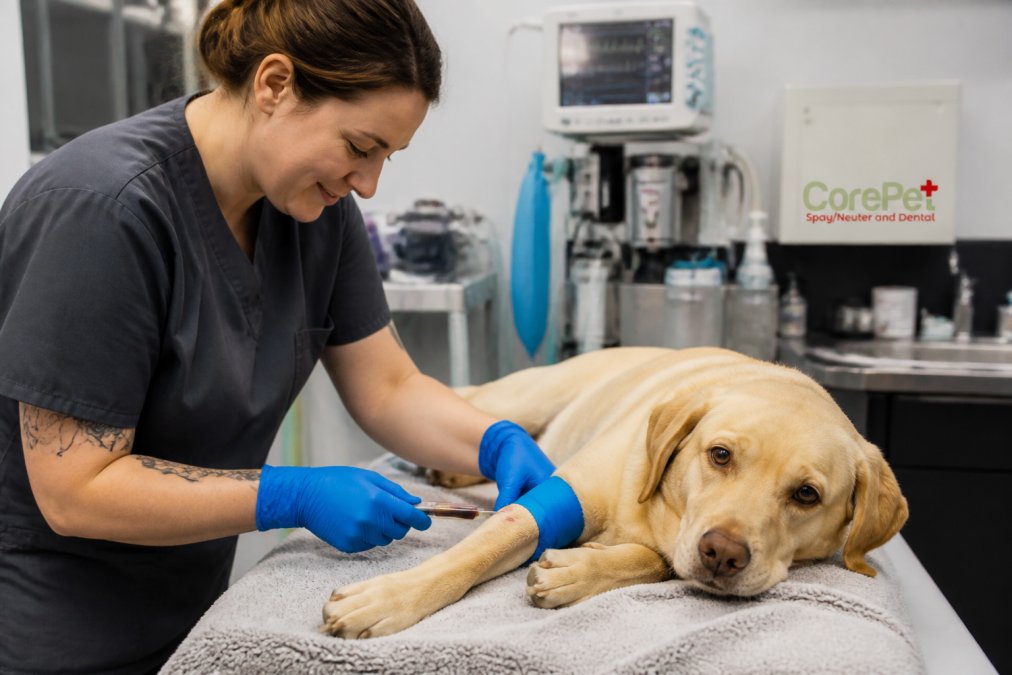
Lab results directly inform anesthesia decisions. Complete blood count reveals whether a pet can tolerate blood loss during surgery. Metabolic panels show kidney and liver function, which determines how quickly the body processes anesthetic drugs. Coagulation studies confirm that blood will clot normally after surgery.
A veterinary professional reviewing pre-operative labs asks specific questions: Is this pet anemic? Can their kidneys handle the stress? Will their liver metabolize the drugs safely? Each answer adjusts the anesthetic plan. A pet with mild kidney disease might receive lower doses of certain drugs or different agents altogether.
The Importance of Liver and Kidney Function Tests for Pets
Liver and kidney function tests are the most critical pre-operative labs because these organs process and eliminate anesthetic drugs and pain medications. If either organ is compromised, drugs accumulate in the bloodstream, causing prolonged sedation or organ damage.
Kidney function tests measure creatinine and blood urea nitrogen (BUN). Elevated values indicate the kidneys cannot filter waste effectively, a common finding in older pets or those with chronic disease. During surgery, blood pressure drops slightly, but if kidneys are already struggling, that temporary drop can cause acute kidney injury.
Liver function tests measure enzymes and proteins that reflect hepatic health. A pet with liver disease metabolizes anesthetic drugs slowly, meaning they stay sedated longer and risk complications. The liver also produces clotting factors; if liver function is poor, bleeding risk increases dramatically. CorePet’s focus on these markers reflects a commitment to evidence-based care.
Pet Surgery Preparation Checklist: What Pre-Surgical Blood Work Reveals
Pre-surgical blood work reveals a complete picture of your pet’s surgical readiness:
Complete Blood Count (CBC): Measures red blood cells, white blood cells, and platelets. Low red cells mean anemia; low white cells suggest infection; low platelets indicate bleeding risk.
Metabolic Panel: Evaluates kidney function, liver function, blood glucose, and electrolyte balance. Abnormal values signal whether the pet can safely undergo anesthesia.
Coagulation Studies: Assess blood clotting ability. Prolonged clotting times mean the pet will bleed excessively during surgery.
Urinalysis: Checks for urinary tract infections, kidney disease, or diabetes, all conditions that affect surgical risk and recovery.
A pet with abnormal pre-operative labs isn’t necessarily disqualified from surgery. Instead, the surgeon now has information to modify the plan: different anesthetic drugs, adjusted dosing, IV fluid support, or post-operative monitoring protocols. This is how low-cost clinics provide safe care, through informed decision-making, not corner-cutting.
Frequently Asked Questions
Q: Why is pre-surgical blood work mandatory for pets?
A: Pre-surgical blood work identifies hidden health conditions that could complicate anesthesia or surgery. Tests measure complete blood count, metabolic panel, and coagulation studies to establish baseline health status. This screening prevents surgical complications, ensures proper anesthesia dosing, and protects your pet during and after the procedure. Without these results, veterinarians cannot safely proceed with elective surgery.
Q: What specific health markers do veterinarians look for in pre-op blood panels?
A: Veterinarians examine hemoglobin levels (anemia screening), glucose levels (diabetes detection), liver and kidney function (organ capacity to metabolize anesthesia), electrolyte balance, and blood clotting factors (hemostasis). These markers reveal whether your pet can safely tolerate anesthesia and recover properly. Abnormal results may require additional testing, medication adjustments, or alternative surgical approaches to ensure your pet’s safety.
Q: What happens if a pet’s pre-surgical blood results are abnormal?
A: Abnormal results don’t automatically cancel surgery. Your veterinarian will discuss findings with you and may recommend postponing the procedure, adjusting anesthesia protocols, adding supportive medications, or requesting additional diagnostics. Some conditions require management before surgery can proceed safely. This transparent approach protects your pet and prevents complications during perioperative care. Your veterinarian will explain options and next steps clearly.
Pre-surgical blood work isn’t a profit center at low-cost clinics; it’s the foundation of safe surgery. Clinics that skip these tests are gambling with your pet’s life. CorePet’s requirement for comprehensive pre-operative evaluation reflects a commitment to surgical excellence and patient safety. When you choose a surgery center that mandates blood work, you’re choosing a clinic that respects the risk and takes it seriously. Your pet’s safety depends on it.
This article was written using GrandRanker