Table of Contents
-
Why Regular Pet Dental Checkups Are Vital: The Systemic Health Connection
-
Signs of Dental Disease in Dogs and Cats You Shouldn’t Ignore
-
The Cost of Pet Dental Cleaning: Preventative Care vs. Emergency Treatment
Last Updated: June 9, 2026
Understanding why regular pet dental checkups are vital is something most pet owners learn too late, after a painful and expensive dental emergency. At CorePet, we see this pattern repeatedly: a dog or cat arrives with advanced periodontal disease that could have been caught months or years earlier. Oral health connects directly to your pet’s heart, kidneys, liver, and overall systemic health. Below, we’ll show you what to watch for, what professional care involves, and how to build a prevention strategy that works.
Why Regular Pet Dental Checkups Are Vital: The Systemic Health Connection
Periodontal disease is the most common clinical condition diagnosed in adult dogs and cats, and it is almost entirely preventable. Bacteria form plaque along the gumline; if not removed, it mineralizes into tartar within days and bacteria can enter the bloodstream. According to the American Veterinary Medical Association’s pet dental health resources, untreated dental disease has been linked to kidney, liver, and heart muscle damage in companion animals.
Gingivitis, the earliest stage, is reversible with professional cleaning and at-home care. Once it progresses to full periodontal disease, bone and soft tissue damage is permanent. Waiting for visible symptoms is the wrong strategy.
Breed plays a significant role in dental risk. Brachycephalic breeds, bulldogs, pugs, Persian cats, French bulldogs, have crowded teeth that trap plaque faster, as do small breeds like Yorkshire Terriers and Chihuahuas. For these patients, many veterinary professionals recommend twice-yearly oral examinations.
Signs of Dental Disease in Dogs and Cats You Shouldn’t Ignore
Persistent bad breath is not normal. Halitosis is one of the clearest early signs of dental disease and should prompt a veterinary checkup, not a mint-flavored treat.
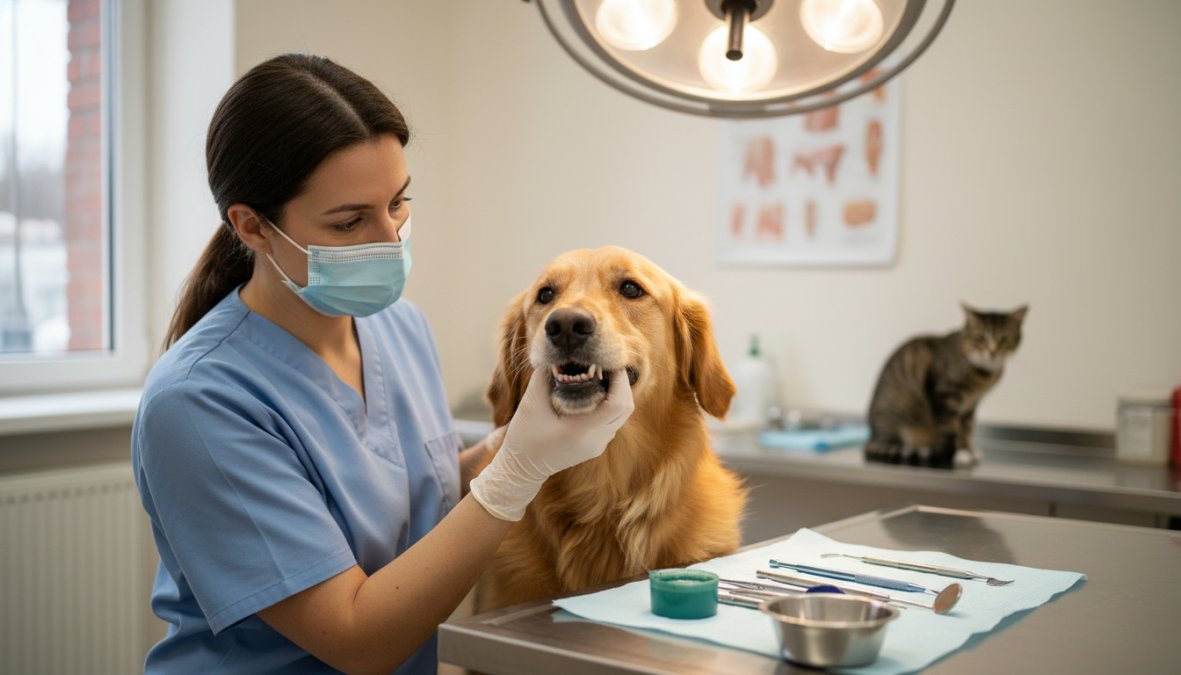
Key signs to watch for:
-
Halitosis: Persistent bad breath that doesn’t resolve with normal eating and drinking
-
Visible tartar: Yellow or brown buildup along the gumline, especially on upper back teeth
-
Red or swollen gums: Inflamed, sometimes bleeding gum tissue
-
Pawing at the mouth: A behavioral signal of oral discomfort
-
Difficulty chewing or dropping food: A late-stage symptom indicating pain
-
Facial swelling: Can indicate an abscess beneath the gumline
-
Tooth discoloration: Gray or brown teeth may indicate pulp damage
-
Reduced appetite or increased irritability: Chronic oral pain suppresses eating and changes behavior
Animals instinctively mask pain. According to Cornell University College of Veterinary Medicine’s feline health resources, a large proportion of cats over four show some degree of dental disease, often without obvious symptoms. By the time eating behavior changes significantly, disease is often advanced.
Why Regular Pet Dental Checkups Are Vital: Professional Cleanings, Anesthesia, and Debunking the Myths
At-home brushing cannot remove calculus once it has hardened. Only ultrasonic scaling and hand instrumentation can safely remove subgingival tartar, the plaque below the gumline where disease originates.
This raises the most persistent myth in veterinary dentistry: anesthesia-free dental cleaning. Scraping visible tartar off the crown without addressing what’s below the gumline does not treat periodontal disease, it creates the appearance of clean teeth while disease progresses. As documented in the American Animal Hospital Association’s dental care guidelines, anesthesia-free dentistry does not meet the standard of care. General anesthesia in a properly equipped facility is safe for the vast majority of patients, and its risk is far lower than allowing periodontal disease to progress untreated.
A complete professional dental cleaning includes:
-
Pre-anesthetic clinical assessment and bloodwork review
-
Intravenous fluid support during the procedure
-
Full-mouth dental radiographs to assess bone loss and root health
-
Ultrasonic scaling to remove supragingival and subgingival calculus
-
Hand scaling and root planing in affected areas
-
Polishing to smooth enamel and slow future plaque adhesion
-
Probing to measure pocket depth around each tooth
-
Tooth extraction if indicated by radiographic or clinical findings
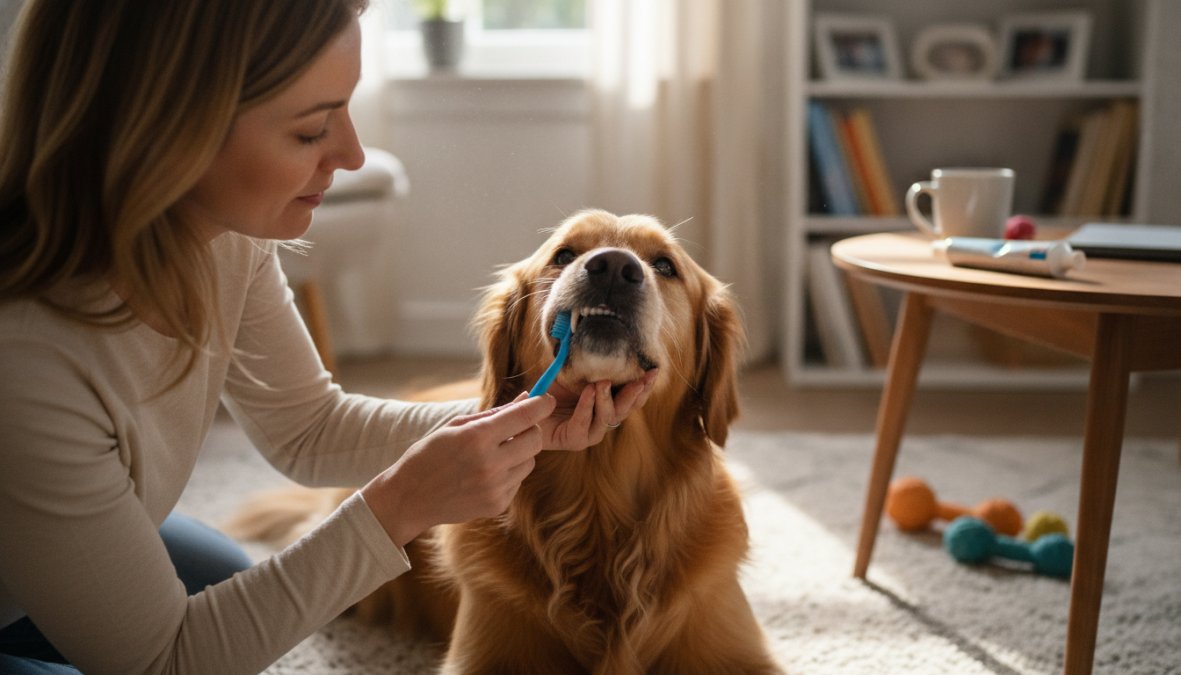
At-home brushing is the most effective daily maintenance tool between professional cleanings. Use a pet-specific toothbrush and enzymatic toothpaste, never human toothpaste, which contains fluoride and xylitol, both toxic to animals.
Step-by-step at-home brushing technique:
-
Let your pet taste the toothpaste from your finger for several days before introducing the brush
-
Wrap a finger in gauze and gently rub the outer tooth surfaces in a circular motion
-
Once accepted, introduce the toothbrush with a small amount of toothpaste
-
Focus on the outer surfaces of the upper teeth, where tartar accumulates fastest
-
Work in short 30-60 second sessions, building up gradually
-
Reward immediately after each session to build positive association
The Cost of Pet Dental Cleaning: Preventative Care vs. Emergency Treatment
The cost-benefit case for preventative dental care strongly favors acting early. A routine professional cleaning costs considerably less than a dental emergency involving multiple extractions, abscess treatment, or oral surgery, and the math worsens when factoring in systemic complications requiring ongoing diagnostics and long-term medication.
|
Care Type |
Typical Scope |
Relative Cost |
Outcome |
|---|---|---|---|
|
Annual dental checkup |
Exam, scaling, polish |
Lower |
Disease prevention |
|
Moderate dental disease |
Scaling, 1-2 extractions |
Moderate |
Disease management |
|
Advanced periodontal disease |
Multiple extractions, oral surgery |
Higher |
Damage already done |
|
Systemic complications |
Kidney/liver treatment |
Highest |
Ongoing management |
For New Hampshire pet owners, a practical two-step approach works well. PetWell Clinic, with locations in Manchester and Somersworth, offers low-cost annual wellness checkups on a walk-in basis. If a professional cleaning is needed, CorePet Surgical Center in Bedford focuses in dental procedures with modern equipment at reasonable costs. CorePet is currently accepting new patients. Call to schedule your appointment.
According to the American Veterinary Dental College’s resources on periodontal disease, early-stage gingivitis is reversible, but once bone loss occurs, the goal shifts from reversal to slowing progression. That distinction has real financial and health implications for your pet.
Pet dental health doesn’t require perfection, it requires consistency: annual checkups, regular at-home brushing, and a veterinary team that catches problems before they become emergencies.
Frequently Asked Questions
How often should my pet have a dental checkup?
Most veterinarians recommend a professional dental checkup at least once a year for dogs and cats. However, pets with a history of periodontal disease, brachycephalic breeds, or small dogs prone to tartar buildup may benefit from checkups every six months. Annual oral examinations allow your veterinary team to catch early signs of gingivitis, plaque accumulation, or tooth decay before they become costly or painful problems. Regular pet dental checkups are vital precisely because early intervention is far simpler and less expensive than treating advanced disease.
What are the signs of dental disease in dogs and cats?
Common signs of dental disease in dogs and cats include persistent bad breath (halitosis), yellow or brown tartar buildup on teeth, red or swollen gums, pawing at the mouth, difficulty chewing, dropping food, and changes in behavior such as increased irritability or reduced appetite. In cats, you may also notice excessive drooling or weight loss. These symptoms often indicate gingivitis or periodontal disease that requires professional evaluation. If you notice any of these warning signs, schedule a veterinary check-up promptly.
Is anesthesia-free pet dental cleaning safe and effective?
Anesthesia-free dental cleaning is widely considered inadequate by veterinary professionals. Without anesthesia, a veterinary technician cannot safely clean below the gumline where harmful bacteria and dental calculus accumulate most. It also prevents dental radiographs, which are essential for detecting bone loss and hidden tooth decay. The procedure can be stressful and even dangerous for a moving, anxious pet. A proper veterinary dental prophylaxis under anesthesia is the standard of care and the only way to perform a thorough, safe oral examination and cleaning.
How much does a professional pet dental cleaning cost, and is it worth it?
The cost of pet dental cleaning varies depending on your location, the pet's size, and whether extractions or dental radiographs are needed. Preventative cleanings are significantly less expensive than treating advanced periodontal disease, which can require multiple tooth extractions and treatment for systemic complications affecting kidney and liver health. Investing in annual dental care is a sound financial decision for pet parents. In Manchester, NH, PetWell Clinic offers low-cost annual checkups on a walk-in basis, and CorePet Surgical Center handles professional dental cleanings — call to schedule.
Can poor dental health really affect my pet's heart and kidneys?
Yes. Untreated periodontal disease allows oral bacteria to enter the bloodstream, where they can travel to vital organs including the heart, kidneys, and liver. This systemic spread is linked to conditions such as endocarditis and chronic kidney disease in pets. This is one of the most compelling reasons why regular pet dental checkups are vital — not just for oral hygiene, but for your pet's overall wellness. Catching and treating gum disease early dramatically reduces the risk of these serious secondary health complications.
This article was written using GrandRanker