Table of Contents
- The Real Risks of Delaying Dog Dental Care (And Why They Escalate Fast)
- Signs of Dental Disease in Dogs You Should Never Ignore
- Stages of Periodontal Disease in Dogs: From Gingivitis to Bone Loss
- Systemic Health Risks: How Delayed Dental Care Affects the Heart, Liver, and Kidneys
- Breed-Specific Predispositions and Tooth Loss Consequences
- How to Brush Dog Teeth: A Simple At-Home Dental Care Routine
- Dog Teeth Cleaning Cost vs. the Price of Ignoring Dental Disease
- Protecting Your Dog’s Health Starts Now: A Practical Action Plan
Last Updated: June 1, 2026
The risks of delaying dog dental care are more serious than most pet owners realize, and the damage compounds silently for months before any visible symptoms appear. This guide from CorePet covers everything Manchester, New Hampshire dog owners need to know: what happens inside your dog’s mouth when dental care is skipped, how bacteria travel from the gumline to the heart and kidneys, and what you can do today to reverse course before treatment becomes expensive. Below, we’ll show you exactly how dental disease progresses, which breeds face the highest risk, and how a simple at-home routine can prevent most of it.
Most guides focus on scaring you with worst-case scenarios. This one gives you the tools to avoid them.
The Real Risks of Delaying Dog Dental Care (And Why They Escalate Fast)
Periodontal disease is the most common health condition diagnosed in adult dogs, and it begins with a problem that looks completely harmless: plaque. Delaying dog dental care at any stage of this progression makes the next stage harder, more expensive, and more painful to reverse.
Plaque and Tartar Build-Up: The Starting Point
Plaque is a soft, sticky film of bacteria that forms on tooth surfaces within hours of eating. Left undisturbed, it mineralizes into tartar, a hardened deposit that bonds to enamel and cannot be removed with brushing alone. Tartar accumulates fastest along the gumline, where it drives a wedge between the tooth and the surrounding tissue.
The problem is that tartar is not just cosmetic. It creates a protected environment where anaerobic bacteria thrive below the gumline, producing toxins that trigger an inflammatory response in the surrounding tissue. That inflammation is the beginning of gingivitis, and gingivitis is the entry point for everything that follows.
A common mistake owners make is assuming bad breath (halitosis) is normal for dogs. It is not. Halitosis is one of the earliest signs that bacterial activity has already reached a problematic level. By the time you can smell it clearly, plaque and tartar have usually been accumulating for weeks or months.
Tartar cannot be removed with a toothbrush. Once mineralized deposits form below the gumline, professional dental prophylaxis under anesthesia is the only safe way to remove them fully. Waiting longer does not make this easier or cheaper.
The Role of Bacteria in the Bloodstream
The gumline is not a sealed barrier. As periodontal disease progresses, the tissue becomes inflamed and permeable, allowing bacteria to enter the bloodstream directly through damaged tissue during routine activities like chewing. This process is called bacteremia, and it is the mechanism that connects oral health to systemic organ damage.
According to the American Veterinary Dental College’s overview of periodontal disease, the bacteria most commonly associated with periodontal disease in dogs are the same gram-negative species linked to inflammatory damage in distant organs. Once in circulation, the immune system mounts a response, but repeated or chronic bacteremia overwhelms that response over time.
This is where the risks of delaying dog dental care extend far beyond the mouth.
Signs of Dental Disease in Dogs You Should Never Ignore
Signs of dental disease in dogs often go unrecognized because dogs are instinctively wired to hide discomfort. By the time a dog shows obvious signs, the disease has typically progressed well beyond its earliest, most treatable stage. But there is a more useful way to read these signs than simply listing them: each sign maps to a rough stage of disease progression, which tells you not just that something is wrong, but how urgent the situation is.
Most guides give you a symptom list. This one gives you a symptom-to-stage map.
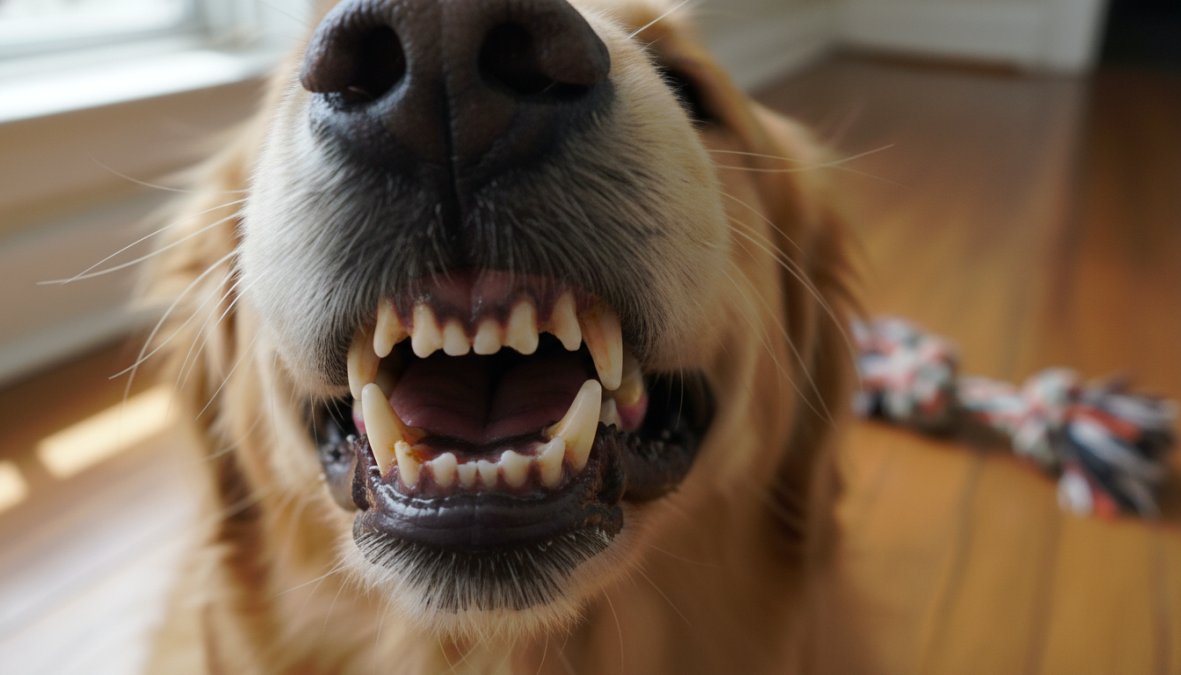
Early Signs (Often Stage 1-2: Gingivitis to Early Periodontitis)
These signs are easy to dismiss because they are subtle and the dog is otherwise behaving normally. That is exactly why they matter, catching disease here means catching it while it is still fully or partially reversible.
- Persistent bad breath (halitosis), Not post-meal odor that clears within minutes, but a consistent smell present throughout the day. Halitosis at this stage reflects bacterial activity at the gumline, not yet deep tissue infection.
- Slight redness along the gumline, Healthy gum tissue is a consistent coral pink. A red or magenta tinge along the margin where gum meets tooth is the earliest visible sign of gingivitis.
- Yellow or light brown deposits near the gumline, Tartar accumulation is visible before gum disease becomes severe. These deposits are most obvious on the upper back teeth (premolars and molars) and the canine teeth.
- Mild reluctance to chew hard toys, A dog that previously engaged enthusiastically with chew toys but now shows reduced interest may be experiencing early gum sensitivity, not boredom or aging.
Run your finger gently along your dog’s upper gumline and look at what transfers to your fingertip. A faint yellow or tan residue is early tartar. Redness or bleeding on light contact is gingivitis. Either finding warrants a veterinary dental exam.
Mid-Stage Signs (Often Stage 2-3: Progressing Periodontitis)
By this point, some permanent attachment loss has occurred. The dog is experiencing real discomfort, but because dogs suppress pain signals, the behavioral changes are often misread as personality shifts or normal aging.
- Chewing on one side of the mouth, Watch your dog eat. Consistent one-sided chewing indicates the dog is actively avoiding pressure on a painful area. This is one of the most reliable behavioral signs of unilateral dental pain.
- Dropping food while eating, A dog that picks up food and then drops it, or chews slowly and carefully, is managing oral pain during eating. This is not pickiness.
- Preference shift toward softer foods, A dog that was previously enthusiastic about dry kibble but now shows reluctance, or that soaks kibble before eating, is often self-managing pain by reducing chewing force.
- Pawing at the mouth or rubbing the face on furniture or carpet, This indicates active discomfort, not an itch. The dog is attempting to relieve pressure or pain from the mouth or jaw area.
- Increased drooling, or drooling with a pink tinge, Excess salivation is a pain response. Blood in saliva indicates active gum bleeding, which at this stage suggests significant tissue inflammation.
- Visible brown or dark tartar covering large portions of tooth surfaces, Heavy tartar accumulation, particularly if it extends well above the gumline onto the crown of the tooth, indicates long-standing disease.
Late-Stage Signs (Often Stage 3-4: Moderate to Advanced Periodontitis)
These signs indicate that significant structural damage has already occurred. At this stage, the goal shifts from prevention to damage control. Prompt veterinary attention is not optional.
- Swelling below the eye on one side of the face, This is a classic presentation of a carnassial tooth (upper fourth premolar) root abscess. The root of this tooth sits directly below the eye socket, and when it abscesses, the swelling appears on the cheek or below the eye. This is a dental emergency.
- Visible tooth mobility, A tooth that moves when touched is no longer anchored by healthy bone and ligament. Mobility at this level indicates severe attachment loss.
- Missing teeth in an adult dog, Teeth do not simply fall out in healthy adult dogs. A missing tooth in an adult dog indicates either a previous extraction or tooth loss from advanced periodontal disease, both of which warrant examination of the surrounding teeth.
- Reluctance to be touched around the face or muzzle, A dog that previously tolerated face handling but now pulls away, growls, or shows anxiety when the muzzle area is approached is communicating pain. This is not behavioral regression; it is a pain response.
- Significant weight loss or muscle wasting without other explanation, When eating becomes consistently painful, food intake drops. Sustained caloric deficit leads to muscle loss and weight reduction. If your dog has lost noticeable weight and dental disease has not been ruled out, it should be.
Why Dogs Hide Pain: The Instinct That Works Against Them
Dogs suppress pain signals as a survival instinct inherited from their wild ancestors. A dog that appears weak or injured is vulnerable to predators and social displacement within a pack, so dogs are neurologically wired to mask discomfort and maintain normal behavior patterns even when experiencing significant pain.
This instinct is the reason a dog can have a severely abscessed tooth and still greet you at the door, still eat (slowly, carefully, on one side), and still appear to be functioning normally. The suppression is not conscious, it is physiological. Pain-masking behavior is not a sign that the dog is fine; it is a sign that the dog’s nervous system is doing exactly what evolution designed it to do.
What owners often misread as "slowing down with age," "being picky about food," or "not being a chewer anymore" is frequently a dog making behavioral adaptations to avoid oral pain. These adaptations are quiet, gradual, and easy to normalize, which is precisely why annual veterinary dental exams are essential. A veterinarian examining the mouth under proper lighting, with probing instruments and radiographs, will find what behavioral observation alone cannot.
If your dog shows any late-stage signs, facial swelling, visible tooth mobility, or significant behavioral changes around the mouth, do not wait for a scheduled annual exam. These signs indicate active infection or structural failure that requires prompt evaluation.
Stages of Periodontal Disease in Dogs: From Gingivitis to Bone Loss
Periodontal disease in dogs progresses through four clinically recognized stages, each representing a deeper level of tissue and bone destruction. Understanding these stages is the most useful framework for understanding why timing matters so much.
Stage 1: Gingivitis. Inflammation is limited to the gum tissue. No bone loss has occurred. This is the only stage that is fully reversible with professional cleaning and improved oral hygiene.
Stage 2: Early Periodontitis. Attachment loss of up to 25% has occurred. Pockets form between the tooth and gumline where bacteria accumulate. Professional cleaning can halt progression, but some damage is permanent.
Stage 3: Moderate Periodontitis. Attachment loss between 25-50%. Bone loss is visible on dental radiographs. Many teeth at this stage require extraction to prevent ongoing infection.
Stage 4: Advanced Periodontitis. Attachment loss exceeds 50%. Severe bone loss, tooth mobility, and abscesses are common. In small breeds, the jaw bone itself can become so weakened that a broken jaw occurs from normal chewing forces.
Most dogs seen for their first professional dental cleaning present at Stage 2 or Stage 3. According to veterinary oral health research from Cornell University College of Veterinary Medicine, periodontal disease is present in most dogs by age three, which means the window for Stage 1 intervention closes faster than most owners expect.
Stage 1 gingivitis is the only stage of periodontal disease that is fully reversible. Every stage after that involves permanent tissue or bone loss. The earlier dental care starts, the less damage accumulates.
Systemic Health Risks: How Delayed Dental Care Affects the Heart, Liver, and Kidneys
Here is where it gets serious. The connection between oral bacteria and organ damage is not theoretical; it is one of the most well-documented relationships in veterinary medicine.
When bacteria enter the bloodstream through diseased gum tissue, they travel to organs with high blood flow: the heart, kidneys, and liver. The inflammatory response triggered by chronic bacteremia causes cumulative damage to these organs over months and years.
Heart disease: Bacterial endocarditis, an infection of the heart valves, is associated with oral bacteria in dogs. The inflammatory response also contributes to myocardial damage over time.
Kidney failure: The kidneys filter blood constantly, making them a primary target for circulating bacteria. Chronic exposure to oral pathogens is linked to accelerated kidney function decline.
Liver function: The liver processes toxins from the bloodstream, and sustained bacterial load from periodontal disease places ongoing stress on hepatic tissue.
Systemic health is not a separate concern from oral hygiene. The gumline is a direct pathway to the bloodstream, and the bloodstream connects to every organ in the body. Owners who address dental disease early are not just protecting their dog’s teeth; they are protecting the immune system and reducing the inflammatory burden on every major organ.
As documented in the Merck Veterinary Manual’s section on periodontal disease, the systemic effects of periodontal disease are a primary reason veterinarians now treat dental prophylaxis as essential preventive medicine rather than optional grooming.
Breed-Specific Predispositions and Tooth Loss Consequences
Not all dogs face equal risk. Breed anatomy plays a significant role in how quickly periodontal disease develops and how severe its consequences become.
Small and toy breeds, including Chihuahuas, Yorkshire Terriers, Dachshunds, Maltese, and Pomeranians, are disproportionately affected. Their teeth are often crowded into jaws too small to accommodate them properly, creating tight contact points where plaque accumulates rapidly and is nearly impossible to clean without professional tools. These breeds commonly show advanced periodontal disease by age two or three.
Brachycephalic breeds, such as Bulldogs, Pugs, and Shih Tzus, face similar crowding issues due to their compressed facial anatomy. Misaligned teeth create abnormal occlusion that accelerates wear and increases plaque retention.
Large breeds are not immune. Greyhounds, despite their size, are genetically predisposed to thin enamel and early periodontal disease. German Shepherds frequently develop a specific condition called chronic ulcerative paradental stomatitis.
Tooth Loss, Broken Jaw Risk, and Nutritional Impact
Tooth loss is not just a cosmetic problem. Teeth are structural anchors for the jaw, and their loss triggers bone resorption in the surrounding area. In small breeds with advanced bone loss from periodontal disease, the mandible (lower jaw) can become thin enough to fracture from normal chewing forces. This is called a pathological fracture, and it is one of the most serious and painful consequences of untreated dental disease.
Beyond the structural risk, tooth loss directly affects nutrition. Dogs missing multiple teeth, especially carnassial teeth used for shearing, struggle to chew effectively. This leads to reduced food intake, poor nutrient absorption, and weight loss. Dogs that were previously enthusiastic eaters may become reluctant, not because of appetite loss, but because eating hurts.
The nutritional impact compounds over time. A dog eating less than it needs due to oral pain will lose muscle mass, immune function, and overall vitality. This is a downstream consequence of delayed dental care that many owners never connect back to the original problem.
How to Brush Dog Teeth: A Simple At-Home Dental Care Routine
At-home dental care is the single most effective thing you can do between professional cleanings. Daily brushing reduces plaque accumulation significantly, slowing the progression of periodontal disease and extending the intervals between professional procedures.
Here is a practical routine that works for most dogs:
- Choose the right tools. Use a soft-bristled toothbrush designed for dogs or a finger brush. Use only pet-safe enzymatic toothpaste; human toothpaste contains fluoride and xylitol, both of which are toxic to dogs.
- Start with desensitization. Before introducing the brush, let your dog lick toothpaste from your finger for several days. Then rub your finger along the gumline without a brush. Build tolerance gradually.
- Introduce the brush. Once your dog accepts finger contact, move to the brush. Start with just the front teeth, using small circular motions along the gumline.
- Focus on the outer surfaces. The tongue naturally cleans the inner surfaces of teeth. The outer (buccal) surfaces, especially the upper back molars, are where plaque accumulates most heavily.
- Brush daily, or at minimum three times per week. Daily brushing is ideal. Anything less than three times per week provides minimal benefit for plaque control.
- Supplement with dental chews and water additives. These do not replace brushing but provide additional plaque-fighting activity between sessions.
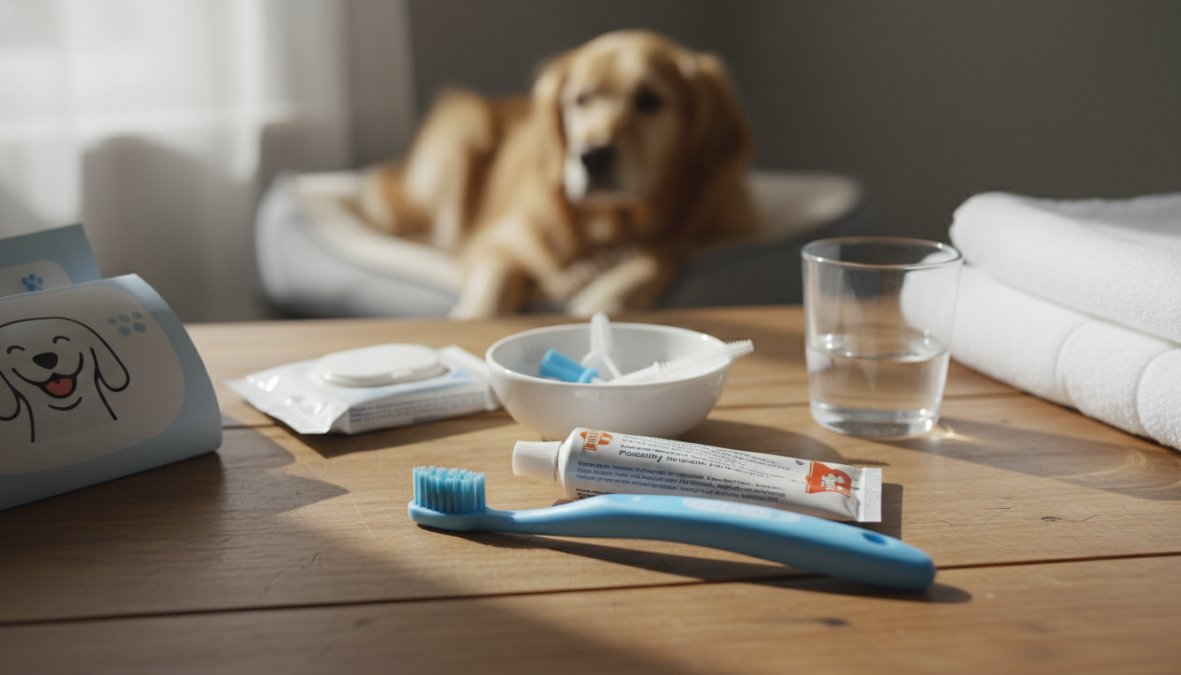
The upper fourth premolars (carnassial teeth) are the most commonly affected by periodontal disease and the hardest to reach. Tilt the brush at a 45-degree angle toward the gumline on these teeth specifically, and spend extra time on the upper back corners of the mouth.
Anesthesia-Free vs. Professional Cleaning: What You Need to Know
Anesthesia-free dental cleaning is widely marketed as a safer, lower-cost alternative to professional dental prophylaxis. The reality is more complicated, and this is the part most guides get wrong.
Anesthesia-free cleaning removes visible tartar from tooth surfaces above the gumline. It does not address the subgingival (below the gumline) deposits where periodontal disease actually develops. It also cannot safely include dental radiographs, which are essential for identifying bone loss, root abscesses, and tooth resorption that are invisible to visual examination.
The American Animal Hospital Association’s dental care guidelines explicitly state that anesthesia-free dental procedures are not a substitute for professional dental prophylaxis and do not address the disease process. They can create a cosmetically cleaner appearance while leaving the underlying disease untreated.
Professional cleaning under anesthesia allows for complete subgingival scaling, polishing, probing of periodontal pockets, and full-mouth radiographs. This is the standard of care, and it is the only approach that actually treats periodontal disease rather than masking it.
Dog Teeth Cleaning Cost vs. the Price of Ignoring Dental Disease
Most veterinary articles mention that delaying dental care is "costly" without ever showing you the math. That vagueness is not helpful when you are trying to decide whether to schedule a cleaning this month or push it to next year. This section breaks down what the cost curve actually looks like at each stage of disease progression, so you can make an informed decision rather than an emotional one.
What You Are Actually Comparing
The financial comparison in dog dental care is not "cleaning vs. no cleaning." It is planned, low-complexity intervention vs. unplanned, high-complexity intervention under worse conditions. That distinction matters because urgency and complexity are the two biggest cost drivers in veterinary dentistry.
Here is how the cost structure escalates at each stage of periodontal disease:
| Stage | Typical Procedure | Complexity | What Drives the Cost Up |
|---|---|---|---|
| Stage 1, Gingivitis | Prophylactic cleaning, polish, radiographs | Low | Anesthesia time only; no extractions |
| Stage 2, Early Periodontitis | Cleaning + subgingival scaling + 1-3 extractions | Moderate | Extraction time, suturing, additional anesthesia |
| Stage 3, Moderate Periodontitis | Cleaning + multiple extractions, possible surgical flaps | High | Surgical time, specialist referral possible, longer recovery |
| Stage 4, Advanced Periodontitis | Extractions, possible jaw stabilization, systemic workup | Very High | Hospitalization, imaging, specialist fees, post-op medication |
| Systemic Complications | Cardiac, renal, or hepatic management | Ongoing | Specialist visits, diagnostics, long-term medication |
The cost gap between Stage 1 and Stage 4 is not incremental. Each stage adds procedural complexity, anesthesia time, specialist involvement, and recovery management. A dog that reaches Stage 4 before receiving any dental care will require a procedure that is fundamentally different in scope from a routine prophylaxis, and the price reflects that.
The Hidden Multiplier: Anesthesia Time
Anesthesia is billed by time in most veterinary practices. A routine prophylactic cleaning on a dog with Stage 1 disease typically takes 45 to 75 minutes under anesthesia. A dog presenting at Stage 3 with multiple extractions needed may require two to three times that duration. Longer anesthesia means more monitoring, more reversal agents, more recovery time, and more staff involvement. Every additional tooth requiring surgical extraction adds to that clock.
For small breeds, the group at highest risk for early-onset periodontal disease, this matters even more. A Chihuahua or Yorkshire Terrier presenting at Stage 3 may need 10 to 15 extractions in a single session. That is a fundamentally different procedure than a cleaning, and it carries a fundamentally different price tag.
The Prevention-to-Treatment Ratio
A useful framework used by many veterinary practitioners is the prevention-to-treatment ratio: the idea that every dollar spent on routine prophylaxis at Stage 1 prevents a multiple of that cost at Stage 3 or 4. While the exact ratio varies by practice, region, and individual case, the directional relationship is consistent and well-recognized in veterinary dentistry.
The reason is structural. Routine prophylaxis is a scheduled, predictable procedure performed on a stable patient. Emergency or advanced-stage treatment involves:
- Pre-anesthetic bloodwork (often required for older or compromised patients)
- Dental radiographs to map bone loss before extraction
- Surgical extraction of multi-rooted teeth with bone involvement
- Suturing of extraction sites
- Post-operative antibiotics and pain management
- Potential follow-up visits
None of those line items appear in a routine Stage 1 cleaning. Each one is a direct consequence of delayed care.
At-Home Care as a Cost-Reduction Strategy
At-home dental care does not eliminate the need for professional cleanings, but it meaningfully extends the intervals between them and reduces the complexity of each visit. A dog whose owner brushes its teeth three to five times per week will accumulate plaque and tartar more slowly, arrive at each professional cleaning at a lower stage of disease, and require less subgingival work per visit.
Over a dog’s lifetime, particularly for small breeds that may need annual or biannual professional cleanings, that reduction in per-visit complexity compounds into significant savings. The toothbrush and enzymatic toothpaste are not just health tools; they are the lowest-cost intervention in the entire dental care cost curve.
The most expensive dental outcome is not the cleaning you schedule, it is the emergency extraction procedure you did not plan for. Routine prophylaxis at Stage 1 is the only point in the disease progression where cost, complexity, and recovery time are all at their lowest simultaneously.
What to Ask Your Veterinarian Before Booking
To get an accurate cost picture before committing to a procedure, ask your veterinarian these specific questions:
- What stage of periodontal disease is present based on the oral exam? This sets the baseline for what the procedure will involve.
- Will dental radiographs be included? Full-mouth radiographs are essential for accurate staging and should be standard, not optional.
- What is the estimate for extractions if they are needed? Most practices provide a range based on the pre-anesthetic exam, with a final count confirmed under anesthesia.
- What does post-operative care include? Antibiotics, pain medication, and a follow-up exam are standard after extractions and should be factored into the total.
For Manchester, New Hampshire dog owners, CorePet’s pricing page provides current rates for dental cleanings and procedures. Because CorePet focuses exclusively on dental work alongside spay and neuter services, the team performs these procedures at high volume with dedicated equipment, a structure that supports consistent, transparent pricing without the overhead of a full-service general practice.
Protecting Your Dog’s Health Starts Now: A Practical Action Plan
The risks of delaying dog dental care do not announce themselves with dramatic symptoms. They build quietly, below the gumline, in places you cannot see. By the time halitosis, drooling, or pawing at the mouth appears, the disease has already progressed past its most reversible stage.
The action plan is not complicated:
- Schedule a veterinary dental examination if your dog has not had one in the past 12 months
- Ask your vet to assess which stage of periodontal disease is present
- Book a professional dental cleaning if Stage 1 or higher is diagnosed
- Start a daily brushing routine using pet-safe enzymatic toothpaste
- Add dental chews approved by the Veterinary Oral Health Council (VOHC) to the daily routine
- Schedule annual professional cleanings (or more frequently for high-risk breeds)
- Monitor for behavioral changes: food dropping, one-sided chewing, reluctance to play with toys
For Manchester, New Hampshire dog owners looking for dental care near me, CorePet offers professional dental procedures with modern surgical equipment and individualized care at reasonable costs. The team focuses exclusively on procedures with the highest impact on animal health, which means dental work is not a secondary service squeezed between appointments; it is a core specialty.
Delaying dog dental care is one of the most common and most consequential gaps in routine pet health. The good news is that it is also one of the most preventable.
Frequently Asked Questions
What happens if you never get your dog's teeth cleaned?
Without regular dental care, plaque hardens into tartar, leading to gingivitis and eventually periodontal disease. Left untreated, this causes tooth loss, painful abscesses, and bone loss in the jaw. Bacteria from the mouth can also enter the bloodstream and contribute to organ damage affecting the heart, liver, and kidneys. The risks of delaying dog dental care compound over time, making early intervention far safer and more affordable than treating advanced disease.
Can dog dental problems really cause heart disease?
Yes, there is a recognized link between poor oral hygiene and systemic health conditions in dogs. When bacteria from periodontal disease enter the bloodstream, they can trigger an inflammatory response that affects major organs, including the heart. While not every dog with dental disease will develop heart problems, the connection is well-documented in veterinary medicine and is a key reason why routine dental prophylaxis is considered essential preventative care.
How do I know if my dog needs dental work?
Common signs of dental disease in dogs include bad breath (halitosis), visible tartar along the gumline, red or swollen gums, drooling more than usual, pawing at the mouth, reluctance to chew hard food, and changes in eating habits. Since dogs often hide pain instinctively, even subtle behavioral changes can signal a problem. A veterinary dental exam is the most reliable way to assess your dog's oral health and determine whether a professional cleaning is needed.
How much does a dog teeth cleaning cost compared to treating dental complications?
A routine professional dog teeth cleaning under anesthesia typically costs significantly less than treating advanced periodontal disease, tooth extractions, or systemic complications like kidney or liver issues caused by oral bacteria. Preventative dental care, including at-home brushing and regular cleanings, is almost always the more cost-effective path. CorePet offers transparent, affordable dental procedure pricing; visit the CorePet pricing page to see current rates for Manchester, New Hampshire.
Is it too late to start dental care if my dog already has tartar buildup?
It is rarely too late to improve your dog's oral health. Even dogs with significant tartar buildup and early-stage periodontal disease can benefit from a professional dental cleaning followed by a consistent at-home routine. Advanced stages may require extractions or additional treatment, but starting care now will slow disease progression and reduce systemic health risks. A veterinary dental assessment is the best first step to understand your dog's current condition and options.
Chronic dental disease is one of the leading sources of preventable pain and systemic illness in dogs, and most of it develops because the early warning signs are easy to miss. CorePet provides professional dental procedures in Manchester, New Hampshire, specializing exclusively in dental and surgical care with modern equipment and individualized attention. Book an appointment with CorePet and give your dog the dental care that protects not just their teeth, but their long-term health.
This article was written using GrandRanker