Table of Contents
- Rabbit Malocclusion Symptoms: Early Signs of Dental Disease in Rabbits
- The Best Diet for Rabbit Dental Health
- Rabbit Teeth Trimming Procedure: What Happens at the Vet
- Frequently Asked Questions
Last Updated: September 25, 2026
Rabbit Malocclusion Symptoms: Early Signs of Dental Disease in Rabbits
Dental disease in rabbits symptoms and care starts with recognizing that a rabbit who stops eating is not being picky, it is in pain. CorePet, a surgery center focused on spay, neuter, and dental procedures for dogs, cats, and rabbits, sees this often in New Hampshire: owners wait a few days hoping the appetite returns, and by the time a rabbit is seen, the teeth have already done serious damage.
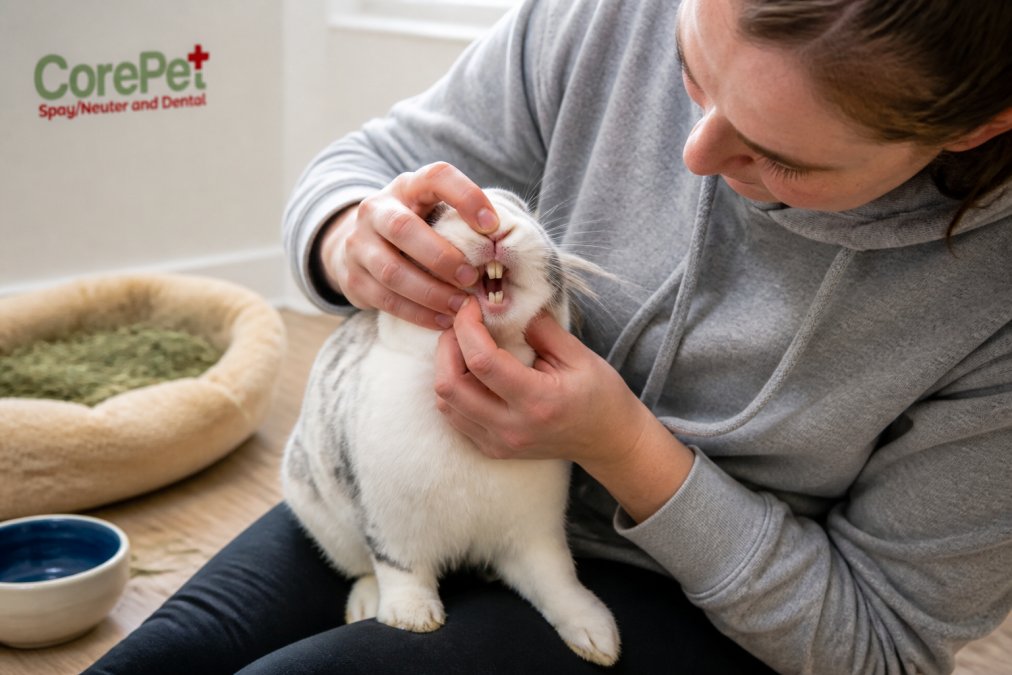
Rabbits have elodont teeth that grow continuously. When upper and lower teeth do not meet correctly, malocclusion, they overgrow, develop sharp spurs, and press into the tongue and cheeks.
Early warning signs
- Dropping food or chewing on one side only
- Reduced appetite and weight loss
- Drooling or a wet chin and dewlap
- Watery eyes from blocked tear ducts
- Smaller, softer, or fewer cecotropes
- Lethargy and reduced grooming
Signs that mean urgent care
- Complete anorexia lasting more than 12 hours
- Facial swelling or a hard lump along the jaw
- Nasal discharge or noisy breathing
- Stasis signs: no droppings, hunched posture, teeth grinding
A rabbit that stops producing droppings is a medical emergency: gut motility depends on constant fiber intake, and dental pain can trigger stasis within a day.
Never wait more than 24 hours to seek care if a rabbit stops eating or producing droppings. Gastrointestinal stasis can become life-threatening quickly, and dental pain is one of its most common triggers.
A step-by-step home health check
Run this two-minute check weekly: weigh your rabbit, check the chin and front paws for wetness, look for eye tearing, watch how the rabbit chews a treat, inspect droppings, feel the jawline for swelling, and listen for grinding. Any change from the previous week warrants a call to a veterinarian.
The Best Diet for Rabbit Dental Health
The best diet for rabbit dental health is built on unlimited grass hay, because chewing hay wears down teeth naturally and keeps the gut moving. Timothy hay should make up the bulk of daily intake. The House Rabbit Society guidance on rabbit diet explains hay does double duty: it provides needed fiber and the chewing action that grinds down elodont teeth.
| Food Type | Role in Diet | Effect on Teeth |
|---|---|---|
| Grass hay (timothy) | Unlimited, daily staple | Wears down molars and incisors |
| Leafy greens | Daily portion | Minimal wear, adds moisture |
| Pellets | Small measured amount | Little wear, can mask problems |
| Fruit and treats | Occasional only | No wear, high sugar |
What most owners get wrong
Weigh your rabbit monthly and write the number on a calendar. A slow drop of even a few ounces over several weeks is one of the earliest signs of dental discomfort, and it shows up before the rabbit stops eating entirely.
Fresh water matters too: a rabbit in dental pain often drinks less, worsening stasis risk. Offer water in both a bowl and a bottle.
Rabbit Teeth Trimming Procedure: What Happens at the Vet
A rabbit teeth trimming procedure shortens overgrown incisors or molar spurs, usually with a dental burr under anesthesia for the back teeth. Incisors can sometimes be trimmed awake, but molars almost always require sedation or general anesthesia.
What the appointment involves
- Oral examination. The vet checks incisors, then uses an otoscope or mouth speculum to view molars, premolars, and the occlusal surface.
- Imaging. Skull radiographs identify tooth root elongation, abscesses, and jaw abnormalities.
- Anesthesia. Most molar work requires anesthesia, with breathing and heart rate monitored.
- Burring or floating. A dental burr smooths spurs and reshapes the occlusal surface.
- Recovery. The rabbit is watched until awake and eating.
Post-operative care at home
- Offer soft foods for the first day, plus unlimited hay.
- Keep the rabbit warm and quiet, away from other pets.
- Watch for droppings within the first 12 hours.
- Give pain medication exactly as prescribed.
- Call the vet if the rabbit refuses food for more than a few hours after waking.
What about cost?
Dental procedure pricing depends on the exam, imaging, anesthesia, and the extent of the work needed. Many owners worry about surprise fees once a pet is already under anesthesia. The American Veterinary Medical Association guidance on pet care costs recommends asking for a written estimate that breaks out each item before the appointment. CorePet publishes its pricing on its website so owners can see what is included upfront rather than discovering add-ons afterward.
Rabbit dental disease is progressive, not a one-time fix. Even after a trimming, the underlying malocclusion remains, so most rabbits need ongoing monitoring and periodic rechecks.
When to ask about a dental-focused provider
Rabbits are not small dogs. Their anatomy, anesthesia risks, and dental needs differ enough that owners should ask how often a provider treats rabbits. CorePet works with rabbits regularly as part of its spay, neuter, and dental focus, and offers transparent pricing so owners know what to expect before booking.
Frequently Asked Questions
Can dental disease in rabbits be cured?
It depends on the cause and how early it is caught. Mild cases linked to diet can improve with better fiber intake and professional care. Once malocclusion or tooth root elongation develops, the condition is usually managed for life rather than cured. Regular checkups and a hay-based diet give rabbits the best chance of staying comfortable.
How to tell if a rabbit has dental problems?
Watch for dribbling, weight loss, dropping food, and reduced appetite. A rabbit with dental disease may also have watery eyes, matted fur around the chin, or produce fewer cecotropes. Because rabbits hide pain well, any change in eating habits deserves a veterinary oral examination, including a look at the incisors and molars.
How does diet impact rabbit dental health?
Rabbits have elodont teeth that grow continuously, so chewing wears them down. Timothy hay and other grass hays provide the fiber intake needed for that natural wear. A diet low in hay lets molars overgrow, leading to spurs, soft tissue trauma, and malocclusion. Unlimited hay should make up most of what your rabbit eats each day.