Table of Contents
- Why Rabbit Dental Care Is Essential
- Signs of Overgrown Rabbit Teeth and Dental Disease
- Rabbit Diet for Dental Health and Prevention
- Frequently Asked Questions
Last Updated: September 22, 2026
Rabbits have teeth that grow continuously throughout their lives, making dental disease potentially life-threatening. CorePet understands that preventative rabbit dental care is essential for keeping your pet healthy and avoiding costly emergency procedures.
Why Rabbit Dental Care Is Essential
Rabbits rely on constant chewing of high-fiber foods like timothy hay to naturally wear down their continuously growing teeth. Without adequate fiber or proper alignment, overgrowth leads to pain, difficulty eating, and in severe cases, gastrointestinal stasis, a potentially fatal shutdown of digestive function.
A rabbit with painful teeth stops eating, triggering metabolic problems. Prevention through proper diet and regular veterinary checkups is far more effective than managing advanced dental disease.
Many rabbit owners miss early warning signs because rabbits naturally hide pain. A slight change in eating habits or a slight head tilt warrants a veterinary checkup, don’t wait for obvious symptoms to appear.
Signs of Overgrown Rabbit Teeth and Dental Disease
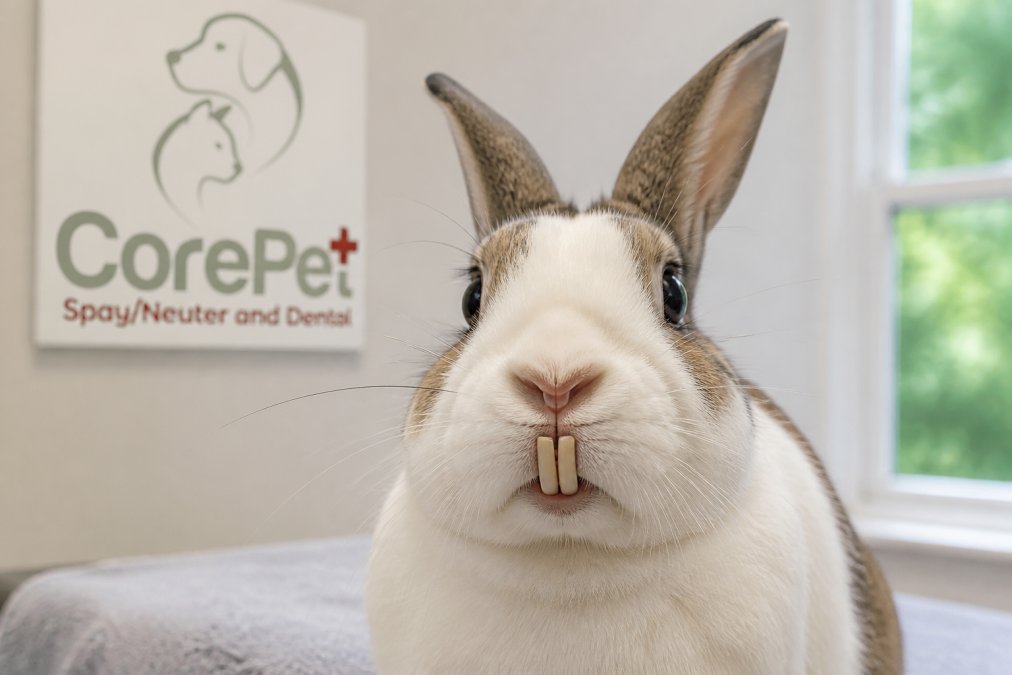
Visible incisors that appear longer than normal or misaligned are the most obvious indicator. Rabbits with malocclusion often develop sharp dental spurs that cut into soft tissue, causing pain and preventing normal chewing.
Symptoms include reduced appetite, selective eating of soft foods, drooling, weight loss, and facial swelling. A veterinary examination with radiographs is necessary to assess molars and detect root elongation.
If a rabbit stops eating entirely or shows signs of abdominal pain, seek veterinary care immediately. Gastrointestinal stasis can develop within hours and is a medical emergency.
Rabbit Diet for Dental Health and Prevention
The foundation of rabbit dental health is a high-fiber diet centered on timothy hay, which should make up 80-90% of daily food intake. Chewing hay naturally grinds down tooth surfaces and prevents overgrowth.
Supplementary foods should include leafy greens and limited pellets, but never replace hay as the primary food source. Fresh water must be available at all times. Some rabbits are picky eaters and resist timothy hay, particularly if they’ve been fed primarily pellets or alfalfa. Transitioning a rabbit to a hay-based diet requires patience, gradually introduce timothy hay while reducing other foods over several weeks.
Regular veterinary checkups catch dental problems early, before they progress to emergency situations. A veterinarian can perform a thorough oral examination and take radiographs to assess tooth roots and identify malocclusion. For rabbits in New Hampshire with advanced dental disease, professional dental trimming under anesthesia may be necessary. CorePet focuses on safe dental procedures for rabbits, using modern surgical techniques to address overgrown teeth and dental spurs while minimizing risk during anesthesia.
Frequently Asked Questions
What are the early warning signs of dental disease in rabbits?
Watch for reduced appetite, drooling, discharge from the mouth or eyes, and difficulty chewing. Rabbits may also show behavioral changes like reduced activity, teeth grinding, or avoiding hard foods. Weight loss and anorexia are serious indicators that require immediate veterinary attention. Early detection through regular home checks and professional exams prevents progression to severe malocclusion and dental spurs.
How does a rabbit’s diet impact their dental health?
High-fiber diets, particularly timothy hay and grass, are critical for rabbit dental health. Chewing hay naturally wears down continuously growing teeth and maintains proper occlusal surfaces. Without adequate fiber intake, teeth overgrow and develop malocclusion. Pellets alone do not provide enough chewing action. A diet of 80% hay, supplemented with fresh vegetables and limited pellets, supports natural wear patterns and prevents the need for frequent dental trimming.
What should I expect during rabbit dental surgery recovery?
Recovery from dental procedures requires pain management and careful monitoring. Most rabbits resume eating soft foods within hours of anesthesia wearing off. Provide hand-fed hay, leafy greens, and water during the first 24 hours. Watch for signs of gastrointestinal stasis, including reduced appetite or no droppings. Follow your veterinarian’s post-operative instructions closely, including any prescribed pain medication. Full recovery typically takes 3-5 days, though your rabbit should return to normal activity within 48 hours.
Rabbit dental disease is preventable through proper diet and early detection. A commitment to high-fiber feeding and regular veterinary care protects your rabbit’s long-term health and quality of life. If your rabbit shows signs of dental problems, professional evaluation is essential. CorePet provides comprehensive dental care for rabbits, combining advanced surgical techniques with individualized treatment plans to ensure your pet receives the safest, most effective care possible.