Table of Contents
- Best Age to Spay a Dog: What Veterinarians Recommend
- Health Benefits of Spaying a Dog
- Spay Surgery Recovery Timeline and Post-Operative Care
- Finding Low Cost Spay Neuter Clinics in New Hampshire
Last Updated: August 30, 2026
Best Age to Spay a Dog: What Veterinarians Recommend
The best age to spay a dog depends on breed size, growth rate, and individual health factors. Veterinarians increasingly recognize that one-size-fits-all recommendations miss the complexity of canine development. Large and giant breed dogs reach skeletal maturity much later than small breeds, which changes the surgical decision entirely. CorePet works with pet owners across New Hampshire to navigate this decision based on their dog’s specific needs.
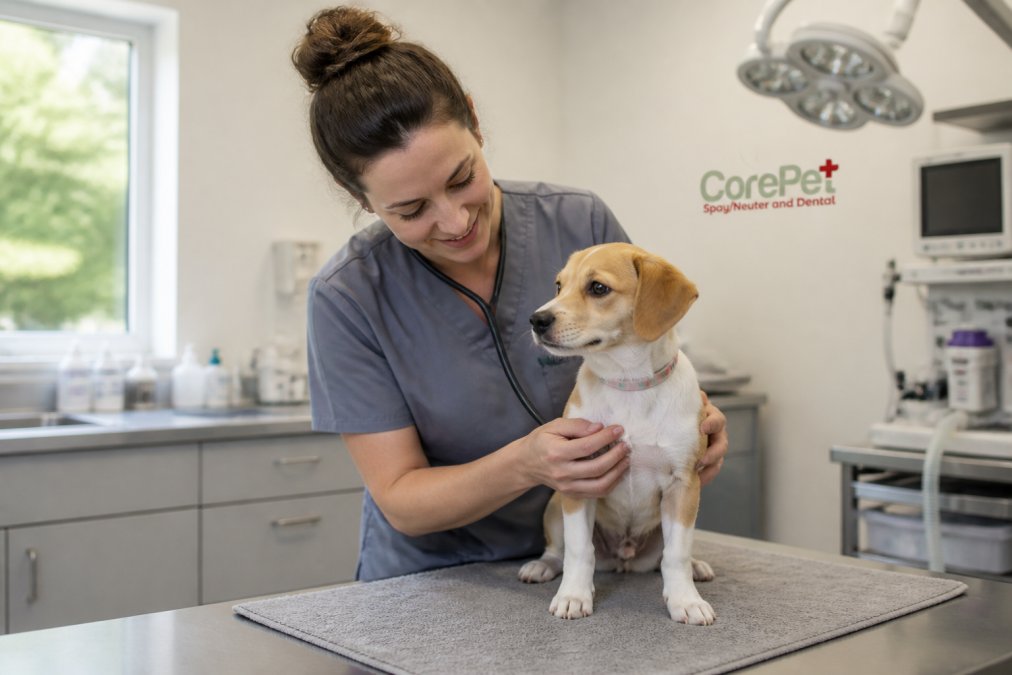
Small breed dogs (under 25 pounds) typically finish growing by 12 months and can be spayed as early as 8 weeks, though many veterinarians recommend waiting until 5-6 months. Large breed dogs (25-90 pounds) continue growing until 12-18 months, and giant breeds (over 90 pounds) may not reach full skeletal maturity until 18-24 months. This timing matters because spaying before growth plates close carries different orthopedic risks than spaying after.
Research shows that removing reproductive hormones before growth plate closure can increase the risk of cruciate ligament rupture and hip dysplasia in large and giant breeds. Yet spaying also prevents serious reproductive health conditions. The decision requires weighing both sides honestly for that specific dog.
Health Benefits of Spaying a Dog
Spaying eliminates the risk of pyometra, a life-threatening uterine infection that develops in unspayed females, particularly as they age. It also removes the possibility of mammary tumors, which are hormone-dependent and far more likely in dogs that go through multiple estrus cycles. Pyometra requires emergency surgery and can be fatal if untreated.
Many dogs become calmer after spaying, especially during their heat cycle when they would normally experience hormonal shifts. The popular belief that spaying eliminates aggression is overstated; spaying addresses hormone-driven behaviors, not learned aggression or anxiety-based reactivity.
Spaying also prevents unwanted pregnancies and eliminates the stress of heat cycles. From a reproductive health standpoint, spaying is preventative medicine that removes the organs most likely to develop serious disease later in life.
Spay Surgery Recovery Timeline and Post-Operative Care
Most dogs recover from spay surgery within 10-14 days, though full healing of internal tissues takes closer to 4-6 weeks. The first 48 hours are critical; dogs should rest in a quiet space, avoid jumping or running, and take pain medication as prescribed. Restricted activity during this window prevents complications like seroma formation or suture failure.
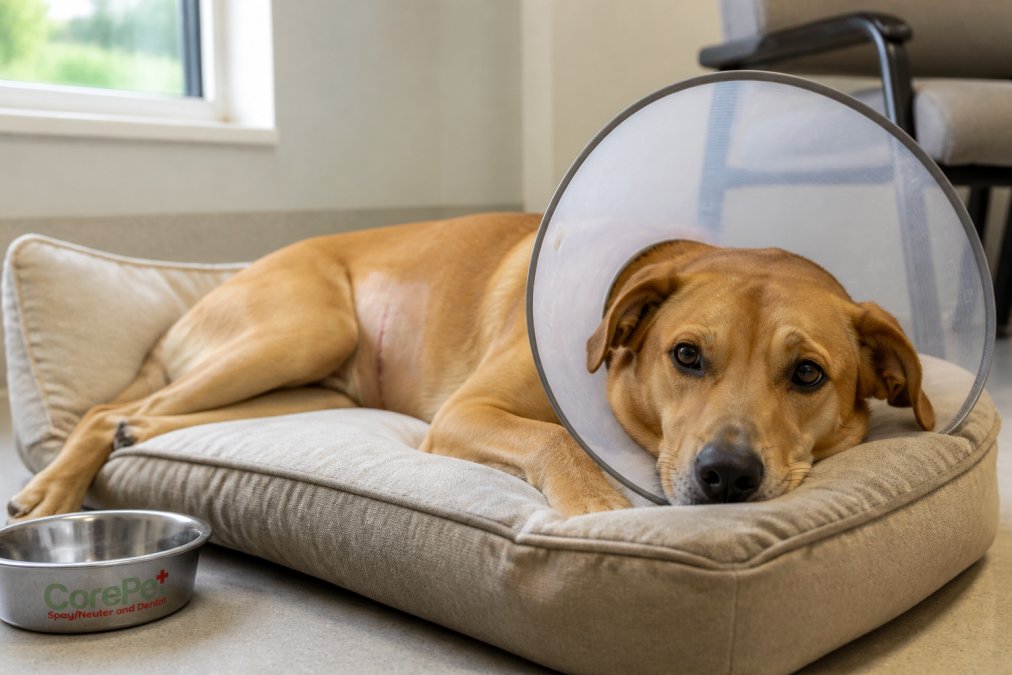
Suture removal typically happens 10-14 days post-surgery, though some facilities use absorbable sutures that don’t require removal. Swelling and mild bruising around the incision are normal in the first week. Excessive discharge, gaping incisions, or signs of infection warrant immediate veterinary attention.
The protective collar (E-collar) prevents licking and chewing at the incision, which can introduce infection or tear open healing tissue. After suture removal, most dogs can resume normal activity gradually over the following 2-3 weeks.
Finding Low Cost Spay Neuter Clinics in New Hampshire
Affordable spay and neuter services exist across New Hampshire, ranging from general veterinary practices offering competitive pricing to dedicated surgical centers focused exclusively on these procedures. General practices often bundle spay services with routine exams and bloodwork, which adds cost but provides broader health oversight. Dedicated surgical centers simplify the process by focusing only on spay, neuter, and dental procedures, which can reduce overhead and pricing.
Many communities in New Hampshire have low-cost clinic days through animal welfare organizations or municipal programs. These events often operate on a first-come, first-served basis and may have waiting lists extending weeks or months. Calling ahead to understand the facility’s surgical protocols, pain management approach, and post-operative support is essential before committing.
When comparing options, ask what’s included in the quoted price. Some facilities bundle pre-operative bloodwork, anesthesia, pain medication, and the surgical fee into one transparent cost. Others quote surgery alone and add bloodwork, medication, and monitoring fees separately. Understanding the full scope prevents surprise charges once the dog is already under anesthesia.
Choosing the right age to spay your dog requires balancing reproductive health benefits against growth and development considerations. Large and giant breed owners should consult with a veterinarian about waiting until growth plates close, while small breed owners can often proceed earlier. CorePet focuses exclusively on spay, neuter, and dental procedures with advanced surgical techniques and individualized care. Book an appointment to discuss your dog’s specific needs and timeline.
Frequently Asked Questions
What is the ideal age to spay a female dog?
The best age to spay a dog depends on breed size. Small breeds typically benefit from spaying between 6 to 12 months, while large and giant breeds should wait until 12 to 24 months to allow growth plates to close. This timing reduces orthopedic health risks while preventing reproductive health issues like pyometra and mammary tumors. Consult your veterinarian to determine the optimal timing for your individual dog's development.
What are the main health benefits of spaying a dog?
Spaying a dog eliminates the risk of pyometra, a life-threatening uterine infection, and significantly reduces the risk of mammary tumors, especially when performed before the first heat cycle. It also prevents unwanted pregnancies and eliminates behavioral changes associated with estrus cycles. Additionally, spaying prevents overpopulation in shelters and contributes to responsible pet ownership.
How long does spay surgery recovery take?
Most dogs recover from spay surgery within 10 to 14 days. During the first week, restrict activity and prevent licking of the incision site. Pain medication is typically provided for 7 to 10 days post-operatively. Full healing of internal tissues occurs within 2 to 3 weeks. Your veterinarian will schedule a follow-up visit to check the incision and remove sutures if needed.
This article was written using GrandRanker