Table of Contents
- Low Cost Spay Neuter Clinics in New Hampshire: Your Top 10 Options
- NH Spay Neuter Assistance Program: How to Qualify and Apply
- Cat Spay Cost in New Hampshire: What to Expect
- Benefits of Spaying and Neutering Your Pet
- Pre-Operative and Post-Operative Care: What Every NH Pet Owner Should Know
- Finding Low Cost Spay Neuter Near You in New Hampshire: Transportation and Access Tips
- Conclusion
Last Updated: May 20, 2026
Finding affordable veterinary care for your pet in the Granite State is harder than it should be. Fortunately, options for low cost spay neuter New Hampshire residents can actually access have expanded significantly in recent years, spanning state-funded voucher programs, non-profit clinics, and specialized surgery centers. This guide from CorePet breaks down every major option, explains how to qualify for financial assistance, and covers what to expect before and after surgery. Below, we’ll show you exactly how to find the right program for your situation, including angles most guides skip entirely.
The thing most pet owners don’t realize: pet overpopulation is a solvable problem, and spaying or neutering your pet is the single most effective step you can take. Unplanned litters strain shelters, increase euthanasia rates, and cost communities far more than subsidized surgery programs. The good news is that New Hampshire has built a surprisingly strong network of resources, from the state’s Animal Population Control Program (APCP) to mobile feline clinics serving rural areas.
Low Cost Spay Neuter Clinics in New Hampshire: Your Top 10 Options
New Hampshire’s network of affordable spay and neuter providers is more comprehensive than most guides suggest. Here’s a ranked breakdown of the best options, starting with our top editorial pick.
1. CorePet: Specialized Spay/Neuter Surgery Center
CorePet is a modern, locally owned surgery center that focuses exclusively on spay, neuter, and dental procedures for dogs, cats, and rabbits. That specialization matters more than most people realize. When a clinic performs the same procedures every single day, surgical precision improves, recovery protocols tighten, and outcomes get better. CorePet uses advanced surgical techniques and modern equipment, and the team provides individualized care rather than the assembly-line experience common at high-volume shelters.
The pricing is transparent and available directly on the CorePet pricing page, which is a refreshing change from clinics that make you call just to get a number. For NH pet owners who want the safety of a dedicated surgical facility without full-service vet pricing, CorePet sits in exactly the right position.
Best for: Dog, cat, and rabbit owners who want a specialized surgical environment with modern protocols at reasonable costs.

2. NHSPCA Low-Cost Clinic (Stratham)
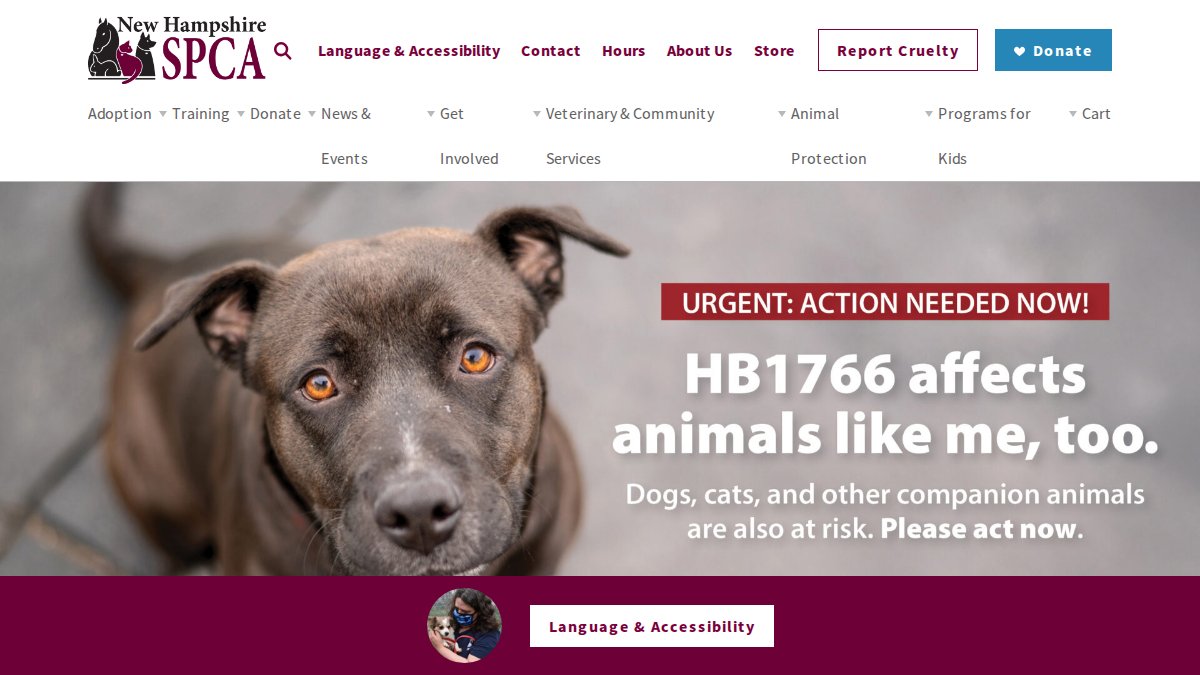
The New Hampshire SPCA in Stratham is one of the state’s most established spay and neuter providers. Their clinic includes a physical exam, surgery, and nail trim as standard. Vaccines and microchipping are available as add-ons. Online booking makes scheduling straightforward, and the NHSPCA’s reputation for volume means appointments run efficiently.
One honest limitation: pre-operative bloodwork is not available on-site, so pets with health concerns may need a separate vet visit before surgery.
Best for: NH residents seeking a well-established, reputable clinic with convenient online registration.
3. Rozzie May Animal Alliance (Conway)
Rozzie May Animal Alliance operates out of Conway and runs a mobile "Feline Fix It Wagon" that brings low-cost cat surgeries directly into underserved areas. This is one of the few providers addressing the rural access problem head-on. Their dedicated Conway clinic handles dog surgeries. Pricing is below market because Rozzie May operates as a 501(c)3 non-profit and subsidizes services for the public.
The catch: clinics fill up fast. Booking weeks in advance is standard, not optional.
Best for: Cat and dog owners in northern NH and western Maine.
4. Animal Rescue League of NH (ARLNH)
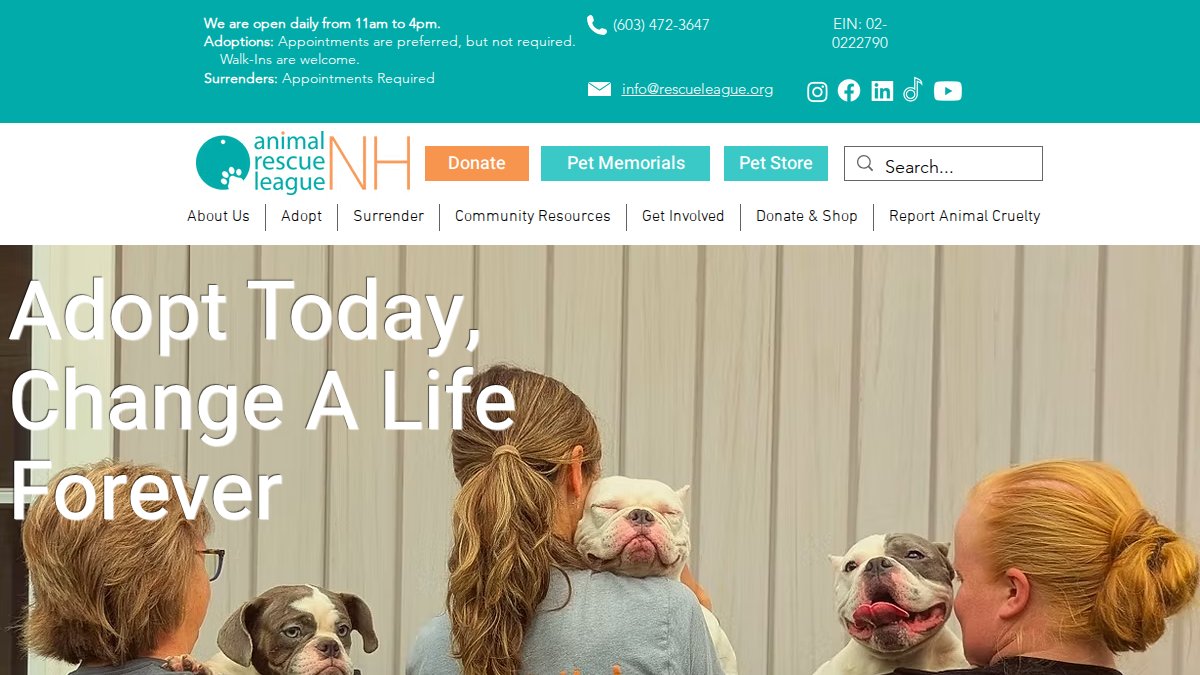
The Animal Rescue League of New Hampshire offers low-cost spay and neuter clinics for cats, dogs, and rabbits, with online scheduling that simplifies the process. Their services target NH residents who need financial assistance, and post-surgery recovery resources are included. The rabbit inclusion is notable. Many clinics don’t offer rabbit spay/neuter at all, making ARLNH a standout for small pet owners.
Best for: NH residents needing financial assistance, especially rabbit owners.
5. Upper Valley Humane Society (UVHS)
Upper Valley Humane Society holds reduced-cost spay and neuter clinics roughly three times per month, serving approximately 600 pets annually. Their "Spay the Mom" program offers free spay for mother pets when offspring are surrendered, which is a genuinely smart approach to breaking the cycle of unplanned litters. UVHS also runs a Trap-Neuter-Return (TNR) program for feral cats.
Age and weight restrictions apply, so call ahead before assuming your pet qualifies.
Best for: Upper Valley residents and anyone dealing with an "oops" litter.
6. Monadnock Humane Society (MHS)
Monadnock Humane Society runs public feline spay and neuter clinics that include a basic exam, vaccines, and flea and ear mite treatment in the package. Their starting price for male cat neuters is listed at $75, making them one of the more transparent providers on cost. They also operate a "Barn Cat" program for feral cats and an Animal Safety Net program providing free medical care for pets in crisis.
Best for: Cat owners in the Monadnock region who want comprehensive care packages.
7. Pope Memorial Humane Society (PMHS)
Pope Memorial Humane Society issues $100 spay and neuter vouchers accepted at participating local veterinary hospitals. Vouchers cover dogs, cats, and rabbits. Their "Moms and Toms" program offers free spay or neuter for parent animals when litters are surrendered, mirroring UVHS’s approach.
The geographic restriction is the main limitation. PMHS vouchers are tied to their specific service area in mid-coast New Hampshire.
Best for: Low-income residents in the PMHS service area who prefer using their own local vet.
8. Humane Society for Greater Nashua (HSFN)
HSFN operates on an honor system for pet owners who cannot afford standard care, which is an unusually trust-based model. Their packages include surgery, vaccines, microchip, and a recovery cone. Availability depends on donations and grants, so slots can be limited.
Best for: Pet owners in the Greater Nashua area with genuine financial constraints.
9. AWARE NH (Hooksett)
AWARE NH in Hooksett provides affordable spay and neuter clinics for lower-income families in the Manchester and Hillsborough County area. They also assist clients with state voucher applications, run monthly vaccine and microchip clinics, and maintain referral services to other regional resources. If you’re not sure which program you qualify for, AWARE NH is a good first call.
Best for: Manchester-area residents who need help navigating the state assistance system.
| Provider | Location | Includes Rabbits | Mobile/Outreach | Notable Program |
|---|---|---|---|---|
| CorePet | NH | Yes | No | Specialized surgical focus |
| NHSPCA | Stratham | No | No | Online booking |
| Rozzie May | Conway | No | Yes (cats) | Mobile Feline Fix It Wagon |
| ARLNH | Statewide | Yes | No | Financial assistance focus |
| UVHS | Upper Valley | No | No | Spay the Mom |
| MHS | Monadnock | No | No | Barn Cat program |
| PMHS | Mid-coast | Yes | No | $100 vouchers |
| HSFN | Nashua | No | No | Honor system pricing |
| AWARE NH | Hooksett | No | No | State voucher assistance |
NH Spay Neuter Assistance Program: How to Qualify and Apply
The NH Animal Population Control Program (APCP) is the state’s official financial assistance program for low-cost spay and neuter services. It’s administered by the NH Department of Agriculture and provides vouchers that dramatically reduce the cost of surgery at participating veterinary hospitals statewide. According to NH Department of Agriculture Animal Population Control Program, the program offers $25 co-pay vouchers that cover spay or neuter surgery plus a pre-surgical exam and rabies immunization for up to $15.
That’s a genuinely significant subsidy. The program exists specifically because pet overpopulation creates measurable public costs, and the state has determined that prevention is cheaper than management.
Eligibility Requirements
The APCP is designed for low-income New Hampshire residents. To qualify, you must:
- Be a current NH resident
- Receive at least one qualifying state benefit: Medicaid, SSI (Supplemental Security Income), SNAP (food stamps), or similar programs
- Provide proof of income or benefit enrollment
- Present a valid photo identification
Pets covered under the program are limited to three per household every five years. The program covers canine and feline pets. Cryptorchid (undescended testicle) cases may involve additional surgical complexity and cost.
Do not assume your pet qualifies automatically because you receive state benefits. Each application is reviewed individually, and pets must be in good health for surgery. Animals with pre-existing conditions may need veterinary clearance before a voucher is issued.
Application Procedure Step by Step
- Gather documentation: photo ID, proof of NH residency, and proof of qualifying benefit (Medicaid card, SSI award letter, or SNAP EBT card)
- Download or request the APCP application from the NH Department of Agriculture website
- Submit the completed application by mail or through a participating organization like AWARE NH, which offers in-person assistance
- Wait for state approval and voucher issuance (processing times vary)
- Contact a participating veterinary hospital to schedule your appointment
- Bring the voucher, your ID, and your pet’s health records to the appointment
AWARE NH in Hooksett offers direct help with APCP applications for Manchester-area residents. If the paperwork feels overwhelming, reach out to them before giving up on the program.
Cat Spay Cost in New Hampshire: What to Expect
Cat spay costs in New Hampshire vary significantly depending on where you go and what’s included. At low-cost clinics, a female cat spay typically starts in the range offered by Monadnock Humane Society ($75 for male cats as a baseline), with female spays generally running higher due to the more complex abdominal procedure. Full-service private veterinary practices charge considerably more, often including pre-operative bloodwork, IV fluids, and extended monitoring.
The APCP voucher reduces your out-of-pocket cost to a $25 co-pay if you qualify, making it the most affordable route for eligible NH residents.
Full-Service Vet vs. Low-Cost Clinic: Understanding the Difference
This is where most guides stay deliberately vague. The honest answer is that both models can deliver safe outcomes, but they involve real trade-offs.
Full-service veterinary practices typically offer:
- Pre-operative bloodwork to catch hidden health issues
- IV fluid support during anesthesia
- Extended post-operative monitoring
- Immediate access to emergency care if complications arise
Low-cost clinics typically offer:
- Standardized anesthesia protocols for healthy, young animals
- High surgical volume with experienced teams
- Significantly lower pricing
- Limited capacity to handle complications on-site
The risk comparison isn’t as dramatic as some full-service vets suggest. Low-cost clinics that perform hundreds of procedures per month develop real surgical expertise. The key variable is pet health: a young, healthy cat is an excellent candidate for a low-cost clinic. An older pet, an overweight pet, or one with a known health condition warrants a full-service environment with bloodwork and IV support.
According to American Veterinary Medical Association resources on surgical safety, proper pre-operative screening significantly reduces anesthetic risk across all settings.
Benefits of Spaying and Neutering Your Pet
Most guides list the benefits of spaying and neutering in a bullet-point summary and move on. This section goes further: it explains why the timing of surgery matters, what the actual health mechanisms are, and how those benefits interact with the specific conditions NH pet owners face, including the state’s rural geography, seasonal stray surges, and the shelter intake patterns that make this a public health issue, not just a personal one.
Health Benefits: The Mechanisms Behind the Claims
For female cats and dogs:
Spaying eliminates the ovaries and uterus, which removes the hormonal cycles that drive two of the most serious reproductive health risks in female pets:
- Pyometra: A bacterial infection of the uterus that develops in response to repeated progesterone exposure. It is life-threatening, requires emergency surgery, and is entirely preventable by spaying before the condition develops. Pyometra is one of the most common reasons middle-aged and older unspayed female dogs and cats present as emergencies at veterinary hospitals.
- Mammary tumors: In dogs, spaying before the first heat cycle is associated with a dramatically lower incidence of mammary tumors compared to dogs spayed after multiple heat cycles. The protective effect diminishes with each heat cycle. In cats, the majority of mammary tumors are malignant, making early spay a meaningful cancer-prevention measure.
Spaying also eliminates the risk of ovarian cysts and uterine cancer, and removes the behavioral disruptions, vocalizing, restlessness, attracting intact males, that accompany heat cycles.
For male cats and dogs:
Neutering removes the testes, eliminating testicular cancer entirely and significantly reducing the risk of benign prostatic hyperplasia (BPH), a condition that causes progressive difficulty urinating and defecating in intact older male dogs. Neutered males are also substantially less likely to develop perianal tumors, which are testosterone-dependent.
Behaviorally, neutered male cats are far less likely to urine-spray indoors, roam (which is a leading cause of vehicle-related injury and death in outdoor cats), or engage in territorial fighting that transmits FIV (Feline Immunodeficiency Virus). In dogs, neutering reduces roaming and inter-male aggression, though it does not reliably eliminate all behavioral issues, a point worth being honest about.
The NH-Specific Population Context
New Hampshire’s shelter system absorbs the downstream consequences of unplanned litters every year, with intake numbers spiking in late spring and summer, what shelter workers call "kitten season." Rural areas of the state, particularly in Coos, Grafton, and Carroll counties, have fewer low-cost resources and higher rates of free-roaming cats, which compounds the problem.
The state’s Animal Population Control Program (APCP) exists precisely because the NH Department of Agriculture has determined that subsidizing sterilization is less expensive to the public than managing the shelter intake, disease transmission, and euthanasia that result from unchecked reproduction. That’s not a philosophical position, it’s a cost-benefit calculation embedded in state policy.
When to Spay or Neuter: What the Current Guidance Actually Says
The traditional recommendation of four to six months for cats and small-to-medium dogs remains the standard at most low-cost clinics in New Hampshire, and it is well-supported for those populations. However, guidance for large and giant breed dogs has evolved. Some veterinary organizations now recommend waiting until skeletal maturity, which may be 12 to 18 months for breeds like Labrador Retrievers, German Shepherds, and Golden Retrievers, before neutering males, based on research suggesting early neutering may affect joint development in large breeds.
This is not a settled debate, and the risk-benefit calculation depends on your specific dog’s breed, size, lifestyle, and whether you can reliably prevent unplanned breeding in the interim. If you have a large-breed dog and are uncertain about timing, this is a conversation worth having with a veterinarian before booking a low-cost clinic appointment.
For cats, the four-to-six-month window is broadly appropriate across breeds, and early-age spay/neuter (as young as eight weeks) is practiced safely at many high-volume clinics.
If your pet is a large or giant breed dog and you’re unsure about the right age for neutering, ask CorePet or your regular vet before scheduling. Getting the timing right is part of getting the outcome right.
The Honest Behavioral Caveat
Spaying and neutering reduces hormonally driven behaviors, roaming, spraying, mounting, and some forms of aggression. It does not eliminate behaviors that are learned, fear-based, or environmentally reinforced. A dog that barks excessively, pulls on the leash, or guards resources will not be "fixed" by surgery. Setting realistic expectations prevents disappointment and keeps the focus where it belongs: on the genuine, well-documented health and population benefits that make sterilization one of the highest-value interventions available to pet owners.
Pre-Operative and Post-Operative Care: What Every NH Pet Owner Should Know
Getting the surgery scheduled is only half the job. Pre-operative and post-operative care directly affect surgical outcomes, and skipping these steps is the most common mistake NH pet owners make. This section goes further than most guides: beyond listing instructions, it gives you a clear triage framework for the post-op period so you know exactly what to do, and when, if something doesn’t look right.
Pre-Operative Instructions
Most low-cost spay and neuter clinics in New Hampshire require:
- Withhold food after midnight the night before surgery (water is usually fine until the morning of the procedure, confirm with your specific clinic, as protocols vary slightly)
- Confirm your pet is free of fleas and ear mites before arrival (some clinics will turn away infested animals and charge a cancellation fee)
- Bring your pet in a secure, hard-sided carrier for cats; dogs should arrive on a leash with a properly fitted collar or harness
- Provide vaccination records, particularly for rabies and distemper/FVRCP
- Disclose any medications your pet is currently taking, including flea preventatives, heartworm medication, and supplements
- Ensure your pet is at a healthy weight, severely obese animals face meaningfully higher anesthetic risk, and some clinics will defer surgery and refer you to a full-service vet
- Do not bathe your pet within 24 hours before surgery
Arriving without a carrier for a cat is one of the most common reasons appointments get delayed or rescheduled at NH low-cost clinics. A secure carrier is not optional. If you don’t own one, borrow from a neighbor, check with your local humane society (some loan carriers), or purchase an inexpensive one in advance. Do not plan to carry your cat in your arms.
What Happens on Surgery Day
At most NH low-cost clinics, drop-off is in the morning, typically between 7:30 and 9:00 a.m., and pickup is in the afternoon, often between 3:00 and 5:00 p.m. Your pet will spend several hours in recovery before being released.
At drop-off, a technician will:
- Review your pet’s health history and any medications
- Perform or confirm a brief physical assessment
- Explain the day’s timeline and give you a pickup window
- Collect payment (most low-cost clinics require payment at drop-off, not pickup)
At pickup, you’ll receive discharge instructions, any prescribed medications (typically pain relief for one to three days), and a contact number for post-op questions. Read the discharge paperwork before you leave the parking lot. If anything is unclear, ask before you drive away, not at 10 p.m. when your pet is restless and you can’t reach anyone.
Post-Operative Recovery: What Normal Looks Like
Recovery time for a routine spay or neuter is typically seven to ten days for dogs and five to seven days for cats. During that window, expect:
Normal signs in the first 24-48 hours:
- Mild to moderate lethargy, your pet may sleep most of the day
- Reduced appetite on surgery day; appetite should return by the following morning
- Slight swelling, pinkness, or bruising at the incision site
- Mild shivering or disorientation as anesthesia clears (usually resolves within a few hours)
- Occasional whimpering or restlessness, particularly as pain medication wears off
Normal signs from day 2 through day 7:
- Gradual return to normal energy and appetite
- Incision site that looks slightly pink or has a thin scab forming, this is healing, not infection
- Some pets will lick or paw at the incision; this is why the recovery cone (E-collar) matters
Give pain medication on schedule for the full prescribed course, even if your pet seems comfortable. Analgesia prevents the stress response that slows tissue healing. Skipping doses because your pet “seems fine” is one of the most common owner mistakes in the post-op period.
Post-Op Complication Triage: A Clear Decision Framework
This is the section most guides skip entirely. When something looks wrong after surgery, pet owners face a high-anxiety decision: Is this normal? Do I need to call? Do I need to go to an emergency vet right now?
Here is a practical three-tier framework:
TIER 1, Monitor at home. No call needed unless it worsens.
These are expected and do not require intervention:
- Lethargy lasting up to 48 hours post-surgery
- Small amount of clear or slightly pink fluid at the incision site in the first 24 hours
- Mild swelling at the incision site that is not growing
- Reduced appetite on surgery day
- Your pet wearing the cone and acting annoyed about it
- Slight bruising around the incision, especially in dogs
TIER 2, Call your clinic or a veterinarian during business hours.
These are not emergencies but warrant professional guidance within the same day:
- Swelling at the incision site that is still increasing after 48 hours
- Discharge from the incision that is yellow, green, or has an odor
- Your pet has not eaten at all by 24 hours post-surgery
- Vomiting that occurs more than once but has stopped
- Mild redness spreading slightly beyond the incision edges
- Your pet has chewed through the cone and you’re not sure whether the incision was disturbed
- You ran out of pain medication before the prescribed course ended
TIER 3, Go to an emergency veterinary clinic immediately. Do not wait.
These are genuine emergencies:
- Active bleeding from the incision that does not slow with gentle pressure within five minutes
- Your pet has chewed through or torn open the incision site
- Pale, white, gray, or bluish gums (a sign of shock or internal bleeding)
- Extreme lethargy, your pet cannot stand, won’t lift their head, or is unresponsive
- Labored or rapid breathing that persists more than a few hours after returning home
- Vomiting that continues for more than 12 hours post-surgery
- Abdomen that appears bloated or is hard to the touch
- Your pet has not urinated within 12-18 hours of returning home
If you are unsure whether something falls into Tier 2 or Tier 3, default to Tier 3 and call an emergency clinic. The cost of an unnecessary emergency visit is far lower than the cost of waiting too long on a genuine complication. Most NH low-cost clinics do not have after-hours emergency lines, know the location of your nearest 24-hour emergency veterinary hospital before surgery day, not after.
The nearest 24-hour emergency veterinary options for NH residents include the Veterinary Emergency and Referral Center of New England (Manchester area) and the Animal Emergency Care clinic in Concord, confirm current hours and locations directly, as emergency clinic availability can change.
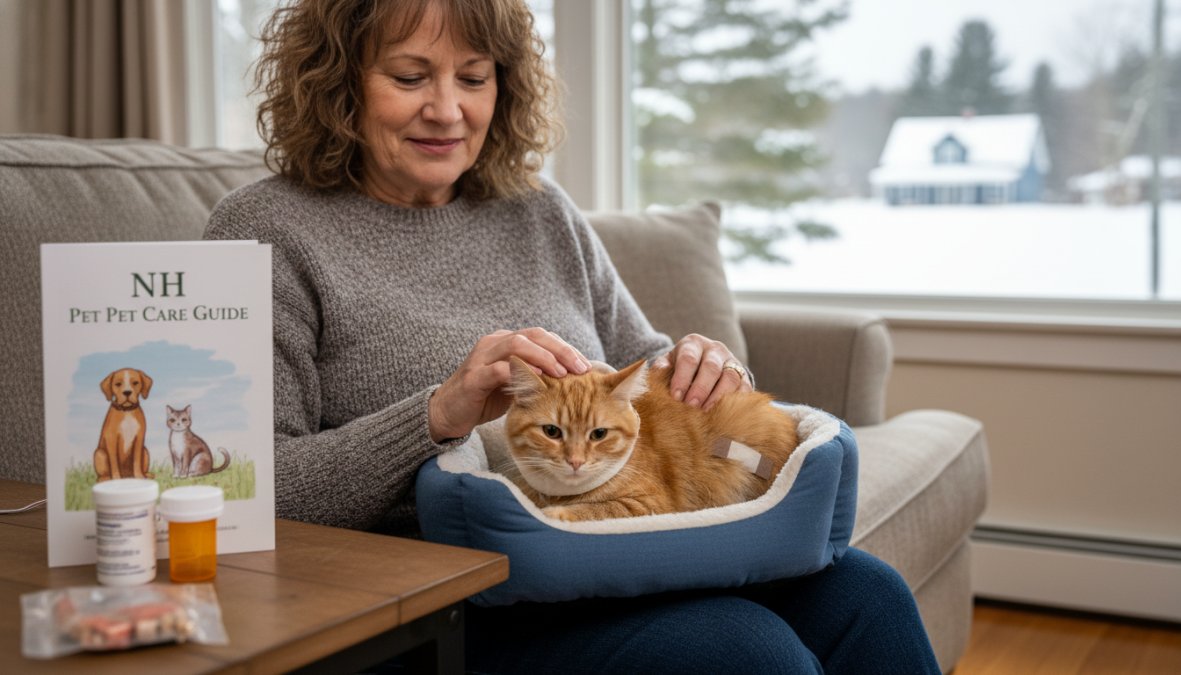
Keeping the Incision Site Safe
The E-collar (cone) is the single most important piece of post-op equipment. Pets that lick or chew their incision site are the primary source of post-op infections and dehiscence (the incision reopening). The cone must stay on any time you cannot directly supervise your pet, including overnight.
If your pet is extremely distressed by a hard plastic cone, soft fabric recovery collars and inflatable donut-style collars are available at most pet supply stores and online. These are acceptable alternatives for some pets, but they do not prevent licking as reliably as a properly fitted hard cone. If you switch to a soft alternative, check the incision site at least twice daily.
Keep your pet from jumping, running, or climbing stairs for the full recovery period. For dogs, leash walks only, no off-leash play, no swimming, no rough interaction with other pets. For cats, confine to a single room if possible to limit movement.
Finding Low Cost Spay Neuter Near You in New Hampshire: Transportation and Access Tips
Geography is a real barrier for low cost spay neuter New Hampshire pet owners, particularly in the northern and western parts of the state. Not every county has a clinic nearby, and not every pet owner has reliable transportation.
Here’s how to close that gap:
Use the NH SPCA and AWARE NH as starting points. Both organizations maintain referral networks and can point you toward the closest participating provider. AWARE NH specifically handles referrals to regional resources for clients who can’t reach their Hooksett location.
Check Rozzie May’s mobile schedule. The Feline Fix It Wagon operates on a rotating schedule across NH and western Maine. If you have cats and live in a rural area, this mobile unit may come closer to you than any fixed clinic. Check their website at Rozzie May Animal Alliance mobile clinic schedule for current dates and locations.
Ask about transportation assistance. Some humane societies partner with local volunteer driver networks for pet owners without vehicles. This isn’t widely advertised, but it’s worth asking directly when you call to book.
Plan around appointment availability. High-demand clinics like Rozzie May and UVHS fill weeks or months in advance. If you’re planning a spring appointment, start calling in January. Waiting until your pet is six months old and then trying to book a same-week appointment is a recipe for frustration.
Combine trips when possible. If you’re driving to Stratham for the NHSPCA clinic, check whether vaccines or microchipping are available the same day. Most clinics offer add-on services that save you a return trip.
The fragmented nature of low-cost veterinary care in New Hampshire is its biggest weakness. No single directory aggregates every clinic, every mobile schedule, and every voucher program in one place. Until that changes, the practical approach is to start with the APCP application if you qualify, identify your two or three nearest clinic options, and book as far in advance as possible.
Affording veterinary surgery shouldn’t determine whether your pet gets the care they need. CorePet addresses this directly by specializing exclusively in spay, neuter, and dental procedures, using modern surgical techniques and equipment to maintain high medical standards at reasonable costs. The focused model means your pet benefits from a team that performs these procedures every day, not occasionally. Book an appointment with CorePet and get your pet the safe, individualized surgical care they deserve.
Frequently Asked Questions
Is there financial assistance for spaying and neutering in NH?
Yes. New Hampshire's Animal Population Control Program (APCP) offers $25 spay/neuter vouchers to eligible low-income residents receiving benefits such as Medicaid, SSI, or SNAP. The program covers up to 3 pets per household every 5 years and includes a pre-surgical exam and rabies immunization subsidy of up to $15. Several non-profits like Pope Memorial Humane Society also offer $100 vouchers for residents in their service areas.
What is the average cost of spaying a cat in New Hampshire?
Cat spay costs in New Hampshire vary widely depending on the provider. At low-cost clinics, feline spay/neuter can start around $75 for male cats at places like Monadnock Humane Society. Full-service private veterinary practices typically charge significantly more. If you qualify for the NH Animal Population Control Program, your out-of-pocket cost could be as low as $25. Always check individual clinic pricing pages, as costs fluctuate based on the pet's weight and health status.
Do animal shelters in NH offer low-cost spay and neuter?
Yes, several shelters and humane societies across New Hampshire offer low-cost spay/neuter clinics. The NHSPCA in Stratham, the Animal Rescue League of NH, Upper Valley Humane Society, Monadnock Humane Society, and the Humane Society for Greater Nashua all operate subsidized clinics. Many include extras like vaccines, microchipping, and nail trims. Appointments fill quickly, so booking in advance is strongly recommended.
Are there mobile spay and neuter clinics in New Hampshire?
Yes. Rozzie May Animal Alliance operates a mobile 'Feline Fix It Wagon' that brings low-cost spay/neuter services directly to communities in New Hampshire and western Maine. This is especially valuable for rural residents who may not have easy access to a fixed clinic location. Checking their schedule in advance is important, as mobile clinic dates are limited and spots fill fast.
At what age should I get my pet spayed or neutered?
Most veterinarians recommend spaying or neutering cats and dogs between 4 and 6 months of age, before their first heat cycle. However, the ideal timing can vary based on breed and size, larger dog breeds may benefit from waiting slightly longer. Rabbits are typically spayed or neutered between 4 and 6 months as well. Always consult with your veterinary provider to determine the best timing for your individual pet's health and wellness.
This article was written using GrandRanker