Table of Contents
- How to Book a Dog Spay Appointment Online at CorePet
- Spay and Neuter Services: What CorePet Offers
- Pricing, Fees, and What Affects Your Total Cost
- How to Prepare Your Dog for Spay Surgery
- Questions to Ask Your Vet Before Booking a Dog Spay Surgery
- Dog Spay Surgery Recovery Time: What to Expect
- Cancellation Policy, Office Hours, and Scheduling Tips
- Why Book Your Dog Spay Appointment Online with a Specialist Clinic
- Conclusion
Last Updated: May 19, 2026
How to Book a Dog Spay Appointment Online at CorePet
The fastest way to book dog spay appointment online is through CorePet’s surgery request form, which takes most pet owners under five minutes to complete. CorePet has helped hundreds of dog owners schedule spay and neuter procedures without the frustration of phone tag or unclear next steps. This guide walks you through every stage of the process, from submitting your initial request to bringing your dog home after surgery. Below, we’ll show you exactly how to prepare, what to expect on surgery day, and what recovery actually looks like.
Here’s what most guides get wrong: they treat the booking step as a formality. It isn’t. The information you provide upfront directly affects your dog’s surgical safety, scheduling priority, and total cost. Get it right from the start.

Step 1: Submit Your Surgery Request
Submitting a surgery request is the first step to securing your dog’s spay appointment. You’ll need your dog’s basic information: breed, weight, age, and any known health conditions. CorePet uses this information to assess surgical risk and confirm your dog qualifies for the procedure under their weight and health guidelines.
A common mistake here is leaving fields incomplete. Incomplete requests delay scheduling by several days. Fill out every field, even if you’re unsure, and add a note explaining any uncertainties.
Step 2: Confirm Availability and Pay Your Deposit
Once your request is reviewed, CorePet will confirm availability and ask for a deposit to hold your appointment slot. The deposit is not a fee for the surgery itself. It secures your place on the schedule and is applied toward your total balance on surgery day.
Pay your deposit as soon as availability is confirmed. Appointment slots at [specialty spay/neuter clinics](/blog/low-cost-spay-neuter-clinics) fill quickly, and a confirmed request without a deposit does not hold your date.
Step 3: Review Vaccine Requirements Before Your Appointment
Every dog scheduled for spay surgery at CorePet must meet current vaccine requirements before the procedure. Rabies vaccination is required. Depending on your dog’s age and history, additional vaccines may apply. You’ll receive a checklist after your booking is confirmed, and your veterinarian can provide documentation if records need to be pulled.
Dogs that arrive without proof of current rabies vaccination cannot proceed to surgery. This isn’t a technicality, it’s a patient safety standard that protects every animal in the clinic.
Spay and Neuter Services: What CorePet Offers
CorePet focuses exclusively on spay, neuter, and dental procedures, which means the team performs these surgeries every single day. That specialization matters. A clinic that does spay surgery as one of dozens of services it offers cannot match the surgical consistency of a center built entirely around these procedures.
Spay surgery for female dogs involves the removal of the ovaries and uterus under general anesthesia. Neuter surgery for male dogs removes the testicles. Both procedures eliminate the risk of certain reproductive cancers and dramatically reduce behavioral issues tied to hormonal cycles. According to American Veterinary Medical Association guidance on spay/neuter, spaying before the first heat cycle offers the greatest long-term health benefit for female dogs.
CorePet also handles more complex cases, including cryptorchid neuters, where one or both testicles have not descended into the scrotum. This requires a more involved surgical approach and is priced accordingly.
Age-Specific Benefits: Pediatric vs. Adult Spay Surgery
This is the question most booking pages never answer, and it is the one owners most often bring to the phone call: does my dog’s age change what surgery she needs, or how risky it is? The answer is yes, and understanding the difference helps you book at the right time rather than too early or too late.
Pediatric spay (typically 8 weeks to 5 months):
Many high-volume spay/neuter clinics and shelters perform spay surgery on puppies as young as eight weeks. Pediatric patients recover faster because their tissue planes are less vascular and anesthesia clearance is quicker in young, healthy animals. The primary concern with very early spay in female dogs is the potential effect on musculoskeletal development, particularly in large and giant breeds. Most practitioners find that pediatric spay is appropriate for small and medium breeds without reservation, while larger breeds benefit from a slightly longer wait.
Standard spay (approximately 5 to 12 months):
This is the most common window for spay surgery and the one CorePet’s scheduling is built around. Dogs in this range have mature enough physiology to handle anesthesia predictably while still being young enough to capture the full long-term health benefits, particularly the near-elimination of mammary tumor risk when surgery occurs before the first or second heat cycle. According to Cornell University College of Veterinary Medicine resources on spay timing, the risk of mammary tumors increases significantly after the second heat cycle, making timing a genuine medical consideration, not just a convenience.
Adult and senior spay (12 months and older):
Adult dogs can be safely spayed at any age, but the surgical and anesthetic considerations shift. Older dogs benefit from pre-surgical bloodwork to assess kidney and liver function before anesthesia is administered. Dogs that have already experienced heat cycles or a pregnancy may have more developed uterine tissue, which can extend procedure time. None of this makes adult spay surgery unsafe, it makes preparation more important. If your dog is over five years old, ask CorePet specifically about their pre-surgical screening recommendations for her age group.
The large-breed timing question:
For large breeds (over 50 pounds at adult weight) and giant breeds, emerging research suggests that waiting until 12 to 18 months before spaying may reduce the risk of certain orthopedic conditions, including cranial cruciate ligament tears and hip dysplasia. This is an active area of veterinary discussion, not a settled consensus. The practical guidance: if you have a large-breed puppy, discuss timing with your veterinarian before booking, and bring that conversation to CorePet’s intake form so the surgical team has context.
Add-On Services: Microchip, Pain Medication, and More
Several add-on services are available at the time of booking or on surgery day:
- Microchip implantation: Permanent identification placed while your dog is already under anesthesia, which eliminates the need for a separate procedure
- Pre-surgical bloodwork: Recommended for older dogs or those with known health concerns to assess anesthesia risk
- Additional pain medication: Extended pain management options beyond the standard post-operative protocol
- Hernia repair: If a hernia is identified during the pre-surgical exam, it can often be addressed during the same anesthesia event
Adding services at booking rather than on surgery day ensures the team is prepared and avoids delays in your dog’s discharge.
If your dog is between age windows or you are unsure whether her breed qualifies for the standard protocol, note it explicitly in the surgery request form. The intake team reviews these notes before confirming availability, and flagging uncertainty upfront is faster than resolving it on surgery day.
Pricing, Fees, and What Affects Your Total Cost
Pricing for dog spay surgery at CorePet is available directly on the CorePet pricing page, and it varies based on several factors pet owners should understand before booking.
The main variables that affect your total cost include:
| Factor | Why It Affects Price |
|---|---|
| Dog’s weight | Heavier dogs require more anesthesia and longer procedure time |
| Cryptorchid status | Retained testicles require additional surgical access |
| Add-on services | Microchip, bloodwork, extended pain medication |
| Hernia repair | Identified and addressed during surgery |
| Deposit amount | Applied to total balance, not an additional fee |
CorePet’s model is built around making essential veterinary care accessible. The focus on spay, neuter, and dental procedures allows the clinic to offer these services at reasonable costs without cutting corners on equipment or technique.
Do not compare prices between a general-practice veterinary clinic and a specialty spay/neuter center without accounting for what is included. Some quotes exclude anesthesia monitoring, post-operative pain medication, or the e-collar. Ask for an itemized estimate before you book anywhere.
What most guides miss is that low-cost does not mean low-standard. CorePet uses modern surgical techniques and equipment. The cost savings come from operational focus, not from compromising on care.
How to Prepare Your Dog for Spay Surgery
Preparing your dog for spay surgery starts several days before the appointment, not the morning of. Most pet owners underestimate how much preparation affects their dog’s surgical outcome and recovery speed.
Pre-Surgery Fasting Instructions
Pre-surgery fasting is required for all dogs undergoing spay surgery under general anesthesia. The standard guideline is no food after midnight the night before surgery. Water is typically permitted until a few hours before the procedure, but confirm the exact cutoff with CorePet when your appointment is confirmed.
Fasting prevents a serious anesthesia complication called aspiration, where stomach contents enter the lungs during intubation. This is not a precaution that can be skipped or shortened, even if your dog seems hungry or distressed. A dog that has eaten within the restricted window will have their surgery postponed.
The thing nobody tells you: small breeds are sometimes given modified fasting windows because they are more prone to hypoglycemia. If your dog is under 10 pounds, ask specifically about the fasting protocol for her size.
What to Bring on Surgery Day
Arrive on time and bring the following:
- Proof of current rabies vaccination (physical or digital record)
- Any additional vaccine documentation required
- Your deposit confirmation or payment receipt
- A phone number where you can be reached during the procedure
- A secure carrier or leash for transport
Leave the food at home. Do not bring toys, blankets, or other items unless CorePet specifically requests them. The surgical environment needs to stay controlled and clean.
Questions to Ask Your Vet Before Booking a Dog Spay Surgery
Knowing the right questions to ask before booking a dog spay surgery separates prepared pet owners from those who end up surprised by the process. These are the questions worth asking before you confirm any appointment.
Is my dog the right age for spay surgery? Age-specific benefits vary by breed. Smaller breeds are often ready for spay surgery around six months. Larger and giant breeds may benefit from waiting until 12-18 months, as early spaying can affect musculoskeletal development. According to Cornell University College of Veterinary Medicine resources on spay timing, the optimal timing depends on breed size and individual health status.
What anesthesia protocol will be used? Modern anesthesia for spay surgery includes pre-anesthetic sedation, gas anesthesia during the procedure, and continuous monitoring of heart rate, oxygen levels, and temperature. Ask whether a trained technician monitors anesthesia throughout the entire procedure.
What does post-operative care look like? You should leave the clinic with written discharge instructions, pain medication, and clear guidance on when to call if something looks wrong.
Are there any weight limits for the procedure? Many spay/neuter clinics have weight limits for standard pricing tiers. Dogs above a certain weight may require a different anesthesia approach or pricing structure.
What is the cancellation policy if my dog gets sick before surgery? Illness before surgery means the procedure must be postponed. Know the policy before you book.
Dog Spay Surgery Recovery Time: What to Expect
Dog spay surgery recovery time is typically 10 to 14 days for full incision healing, though most dogs return to normal energy levels within five to seven days. The first 48 hours are the most critical period. Understanding the recovery timeline helps you set up your home correctly and recognize when something needs attention.
The First 24-48 Hours Post-Operative
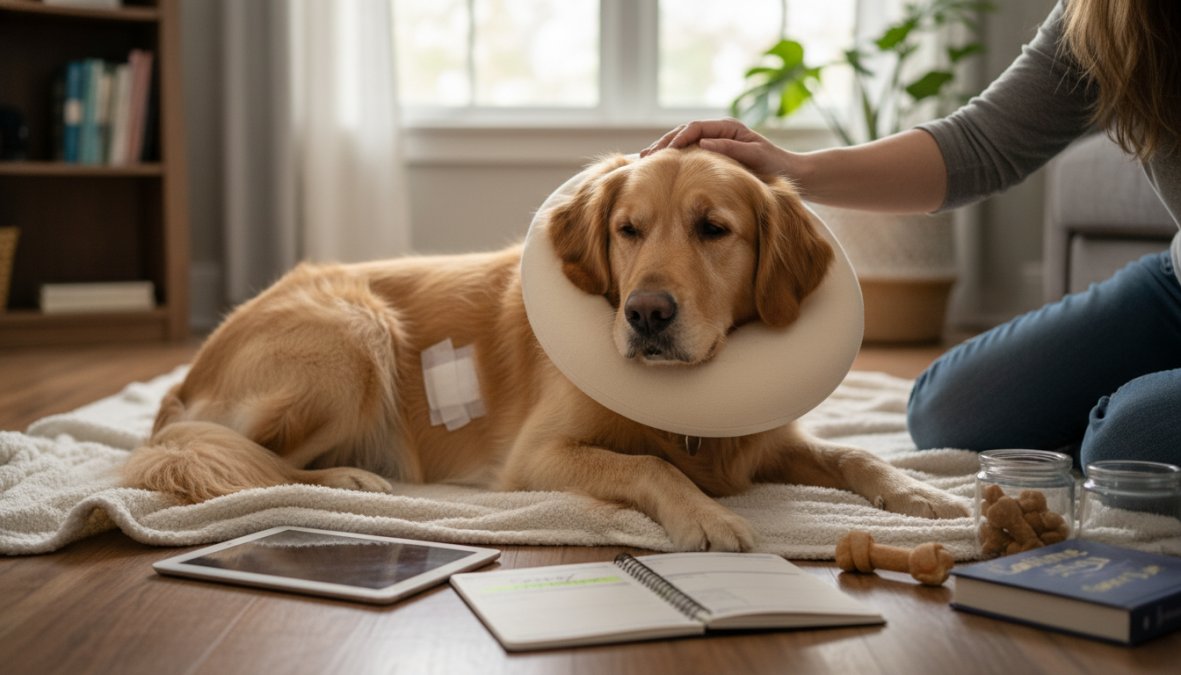
The first 24-48 hours after spay surgery are about rest, pain management, and observation. Your dog will likely be groggy from anesthesia for several hours after discharge. This is normal. Offer small amounts of water when she is alert enough to drink without difficulty, and hold off on a full meal until the following morning.
Watch the incision site closely. Some redness and mild swelling is expected. Discharge, excessive swelling, or signs that your dog has licked or chewed the incision require a call to the clinic. Pain medication prescribed at discharge should be given exactly as directed, not skipped because your dog "seems fine."
The e-collar is not optional during recovery. Most incision complications in the first 48 hours happen because the dog was left unsupervised without one. Keep it on whenever you cannot directly watch her.
Days 3-14: Monitoring and E-Collar Use
By day three, most dogs are more alert and want to move around more than they should. This is the most common point where owners make mistakes. Increased energy does not mean the incision has healed. Internal sutures are still knitting together beneath the skin.
Restrict activity for the full 10-14 day recovery period:
- No running, jumping, or rough play
- No baths or swimming until the incision is fully closed
- Short leash walks only for bathroom breaks
- E-collar stays on except during supervised meals
A follow-up check at the end of the recovery window confirms the incision has healed and your dog is cleared for normal activity. As noted by American Animal Hospital Association post-operative care standards, consistent activity restriction during the recovery window is the single most important factor in preventing incision complications.
Cancellation Policy, Office Hours, and Scheduling Tips
Understanding the cancellation policy before you pay your deposit is not a formality, it is the difference between a stressful last-minute scramble and a straightforward reschedule. This section covers what you need to know about CorePet’s scheduling mechanics, what happens when plans change, and how to time your booking to get the most support from the clinical team.
Cancellation Policy: What Happens to Your Deposit
Specialty spay/neuter clinics operate on tight scheduling windows. Each surgery slot is reserved for a specific dog at a specific time, and a last-minute cancellation leaves that slot empty with no way to backfill it on short notice. That is why deposit policies exist, and why reading them before you book matters.
The general standard at high-volume spay/neuter clinics is a 48- to 72-hour cancellation window. Cancellations made outside that window typically result in a full or partial deposit refund or credit toward a rescheduled appointment. Cancellations made inside the window, or no-shows, typically result in deposit forfeiture. CorePet’s specific policy is presented at the time of booking confirmation. Read it before you submit payment.
What counts as a legitimate medical cancellation?
If your dog becomes ill before surgery, vomiting, diarrhea, lethargy, or any sign of active infection, the procedure must be postponed. Anesthesia on a compromised patient carries significantly higher risk, and most clinics will not proceed. The important step here is to call the clinic as soon as you recognize the problem, not the morning of surgery. Clinics that receive advance notice of a medical issue almost universally work with owners to reschedule without penalty, because the alternative, a sick dog on the surgical table, is not in anyone’s interest.
Documentation helps. If your regular vet sees your dog in the days before surgery and advises postponement, ask for a written note. Having that record protects you if there is any question about the reason for the cancellation.
Do not wait until surgery morning to cancel if you suspect your dog is unwell. A same-morning cancellation is treated differently than a 48-hour advance notice in most clinic policies, and the surgical team has already prepared for your dog’s procedure by that point.
What if CorePet cancels or reschedules your appointment?
Clinic-side cancellations, due to equipment issues, staffing, or weather, are rare but possible. In these cases, your deposit is either fully refunded or held for your rescheduled date, depending on your preference. Ask about this scenario explicitly when you confirm your booking if it is a concern.
Office Hours and Check-In Windows
Office hours at specialty spay/neuter clinics are structured differently than general veterinary practices. Most operate on a morning check-in model: dogs are dropped off during a defined window (commonly 7:00-8:30 a.m.), surgeries are performed throughout the day, and dogs are discharged in the afternoon once they have recovered from anesthesia.
Arriving outside the check-in window creates a cascade of delays, not just for your dog, but for every patient scheduled that day. The surgical sequence is planned around check-in order and procedure complexity. A late arrival disrupts that sequence.
Check CorePet’s current hours on their website before your appointment day. Hours can shift seasonally or around holidays, and the website reflects the most current schedule.
Holiday scheduling:
Avoid booking surgery immediately before a major holiday if post-operative support availability matters to you. Clinics operating with reduced holiday staffing may have limited capacity to answer follow-up calls or address concerns in the 24-48 hours after your dog goes home. Booking earlier in the week, Monday or Tuesday, gives you the full weekday window for follow-up contact if something comes up during recovery.
Scheduling Tips That Actually Make a Difference
These are the practical moves that separate a smooth booking experience from one that requires multiple follow-up calls:
Book as soon as your dog meets the weight and age requirements. Appointment slots at specialty spay/neuter clinics fill weeks out, particularly in spring and early summer when demand peaks. Waiting until you feel ready often means waiting an additional four to six weeks for an available date.
Confirm your appointment 48 hours in advance. This is good practice regardless of clinic policy. It gives you a natural opportunity to ask last-minute questions about fasting, vaccine documentation, or what to bring, and it confirms the clinic has your correct contact information for day-of communication.
Have your vaccine records ready before you start the booking form. The most common reason surgery requests stall is missing or incomplete vaccination documentation. Pull your dog’s rabies certificate before you open the form. If records are held by your regular vet, request them a week before your intended booking date to allow time for the office to respond.
Ask about community cat or TNR scheduling tracks if applicable. If you are involved in trap-neuter-return work, some spay/neuter centers maintain separate scheduling tracks for community cats and feral animals with different intake protocols. Confirm which track applies to your situation before booking.
The single most protective thing you can do before surgery day is read the cancellation policy at the time of booking, save your confirmation details, and call the clinic immediately, not the morning of, if your dog shows any signs of illness in the days leading up to her appointment.
Why Book Your Dog Spay Appointment Online with a Specialist Clinic
Booking a dog spay appointment online with a specialist clinic rather than a general-practice veterinarian comes down to one thing: surgical volume drives surgical skill.
General veterinary practices perform spay surgery alongside dozens of other procedures. A specialist clinic like CorePet performs spay, neuter, and dental procedures exclusively. That focus produces teams who have refined their technique, their anesthesia protocols, and their post-operative processes specifically for these surgeries. The equipment is calibrated for these procedures. The staff training centers on them.
The online booking process itself reflects this specialization. Rather than a generic appointment request form, the surgery request captures the specific information needed to assess your dog’s eligibility, estimate her procedure complexity, and prepare the surgical team before she arrives. That preparation reduces surprises on surgery day.
According to Humane Society of the United States information on spay/neuter access, access to affordable, high-quality spay and neuter services remains one of the most impactful ways pet owners can support their dog’s long-term health. Choosing a clinic that specializes in these procedures gives you the best combination of surgical expertise and reasonable cost.
The contrarian take: some pet owners assume their regular vet is the safest choice simply because of the existing relationship. Familiarity with your dog’s history matters, but surgical specialization matters more for an elective procedure like spay surgery. You can maintain your relationship with your regular vet for wellness visits while choosing a specialist for surgery.
Frequently Asked Questions
What information do I need to provide when booking a dog spay surgery online?
When you book a dog spay appointment online, you'll typically need to provide your dog's name, breed, age, and current weight. Most clinics, including CorePet, also require proof of up-to-date vaccinations, particularly a rabies vaccine, before confirming your surgery date. You may also need to submit a surgery request form and pay a deposit to secure your spot. Having your pet's basic health history on hand speeds up the booking process considerably.
How do I prepare my dog for a spay appointment?
Preparing your dog for spay surgery involves a few key steps. Most veterinary clinics require pre-surgery fasting, no food after midnight the night before, though water restrictions vary by clinic. Make sure your dog's vaccinations are current, especially rabies. Arrange a quiet recovery space at home with a comfortable bed, and have an e-collar ready. Avoid giving any unapproved medications before surgery. Following your veterinarian's specific pre-surgery instructions helps reduce anesthesia risks and supports a smoother procedure.
How long does it take for a dog to recover from spay surgery?
Dog spay surgery recovery time is typically 10 to 14 days for full incision healing. The first 24 to 48 hours post-operative are the most critical, your dog may be groggy from anesthesia and should rest quietly. Activity must be restricted for at least two weeks to prevent complications. An e-collar prevents licking the incision site. Pain medication prescribed by your veterinarian helps manage discomfort during recovery. Most dogs return to normal energy levels within a week, though full internal healing takes longer.
Is it better to spay a dog at a private clinic or a low-cost spay/neuter clinic?
Both options can provide safe, quality care, the right choice depends on your priorities. Low-cost spay/neuter clinics make surgery accessible for pet owners on a budget and often focus exclusively on these procedures, which builds surgical expertise. Specialty surgery centers like CorePet combine affordable pricing with advanced surgical techniques and individualized care. The key is choosing a clinic with experienced veterinary staff, modern equipment, and clear pre-surgery and post-operative protocols rather than selecting based on price alone.
What questions should I ask before booking my dog's spay surgery?
Before you book a dog spay appointment online, ask about anesthesia protocols and monitoring during surgery, whether a pre-surgical exam is required, what vaccinations are needed, and how pain medication is handled post-operatively. Also ask about the cancellation policy and deposit requirements, whether add-ons like microchipping are available, and what the recovery timeline looks like. Understanding these details upfront helps you choose the right clinic and ensures your dog receives safe, well-supported care from start to finish.
Scheduling spay surgery is one of the most impactful decisions you’ll make for your dog’s long-term health, and the process shouldn’t be complicated. CorePet’s exclusively focused surgery center, modern equipment, and individualized approach make it the right choice for pet owners who want expert care at a reasonable cost. Get started with CorePet and book your dog’s spay appointment online today.
This article was written using GrandRanker