Table of Contents
- Health Benefits of Spaying or Neutering Your Rabbit
- Rabbit Uterine Cancer Prevention: A Life-Saving Reason to Spay
- What Is the Right Age to Neuter a Rabbit?
- Rabbit Spay and Neutering Recovery: What to Expect
- Frequently Asked Questions
Last Updated: September 6, 2026
Deciding whether to spay or neuter rabbit companions is one of the most significant health and welfare choices an owner faces. The medical case for the procedure is compelling, particularly for female rabbits. This guide from CorePet, a surgery center in New Hampshire, focuses on the medical, behavioral, and practical reasons to have your rabbit spayed or neutered.
The benefits extend far beyond population control. Below, we break down the health advantages, the ideal timing for surgery, and what the recovery process involves.
Health Benefits of Spaying or Neutering Your Rabbit
Spaying or neutering a rabbit provides profound health advantages that directly influence life expectancy. The primary benefit is the elimination of reproductive disease risk, a leading cause of premature death in mature rabbits.
The surgery also removes the hormonal drive behind destructive behaviors. Unneutered males often display aggression, territorial behavior, and persistent mounting, which can lead to injuries. Neutering reduces these urges, making rabbits calmer. For females, spaying eliminates the stress of false pregnancies, which can cause fur pulling and nest building.
Rabbit Uterine Cancer Prevention: A Life-Saving Reason to Spay
Rabbit uterine cancer prevention is the single most compelling medical reason to spay a female rabbit. Unspayed does have an exceptionally high incidence of uterine adenocarcinoma, with the risk increasing significantly after 2-3 years of age. This aggressive cancer is often fatal, making early spaying life-saving.
The surgery to remove the ovaries and uterus, known as an ovariohysterectomy, completely eliminates the risk of uterine, ovarian, and mammary tumors when performed before sexual maturity. Owners are not just preventing unwanted litters; they are protecting their pet from a disease that is nearly inevitable in older, intact females.
Waiting too long to spay a female rabbit is a gamble with high stakes. The risk of uterine adenocarcinoma increases with age, and once cancer has spread, surgery may no longer be a cure. Do not delay this preventive procedure.
What Is the Right Age to Neuter a Rabbit?
The ideal age depends on the sex, but a general consensus exists among rabbit-savvy veterinarians. For females, the recommended age is between 4 and 6 months, before sexual maturity and ideally before the uterine cancer risk window. For males, neutering can be performed slightly earlier, typically around 3 to 5 months, once the testicles have descended.
Performing surgery at this young age ensures the rabbit reaps the full behavioral and health benefits. It prevents hormone-driven habits like spraying and aggression, which can become ingrained if the rabbit matures fully.
Rabbit Spay and Neutering Recovery: What to Expect
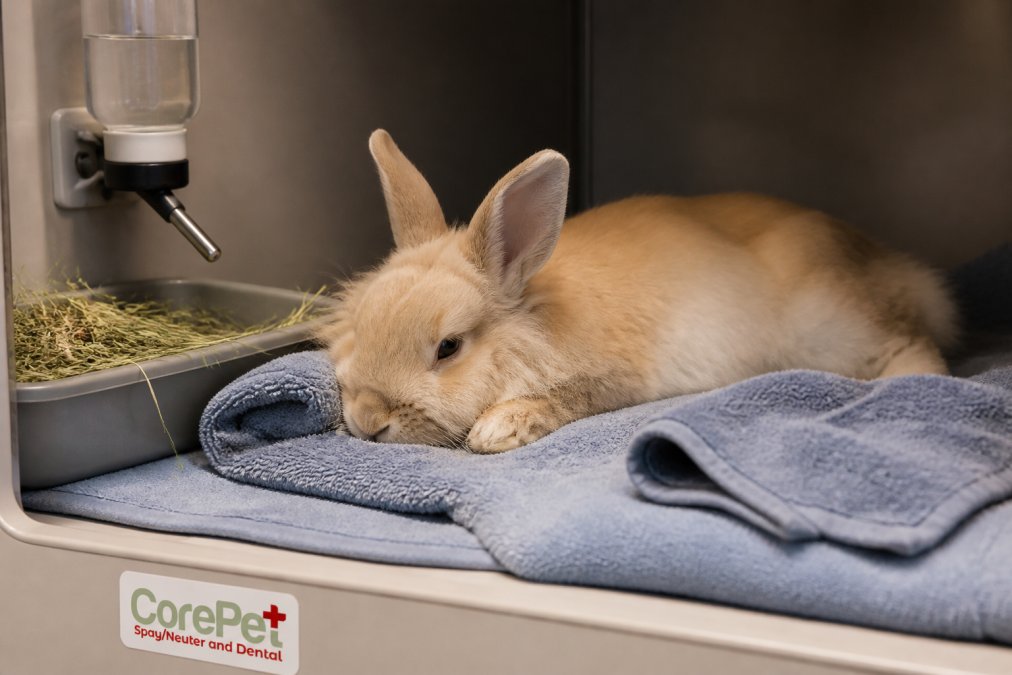
Rabbit spay and neuter recovery is generally quick but requires a specific care routine. Most rabbits resume eating within hours of waking from anesthesia, a critical sign of recovery. Core post-operative care involves keeping the rabbit quiet, clean, and eating.
Owners should prepare a quiet, warm, and clean indoor space for the rabbit, away from loud noises and other pets. Monitor the incision site for redness, swelling, or discharge. If the rabbit licks or chews at the sutures, a veterinarian will advise on whether an Elizabethan collar or soft recovery suit is necessary.
Prepare a recovery kit before the surgery. Stock it with critical care food (in case the rabbit’s appetite is slow to return), a syringe for water or food, and paper-based bedding that won’t stick to the incision site. This preparation makes the immediate post-op period much less stressful for both owner and pet.
Ensuring the rabbit is eating and passing stool is the most important indicator of healthy recovery. Offer fresh hay, leafy greens, and water immediately. If the rabbit has not eaten within 12 hours, contact your veterinarian, as this can lead to gastrointestinal stasis. With proper care, most rabbits heal with minimal complications within a few days.
Making the choice to spay or neuter rabbit companions is a profound commitment to their long-term well-being. The procedure prevents fatal cancers, curbs problematic behaviors, and contributes to a calmer pet. For residents of New Hampshire looking for a provider that focuses exclusively on surgical care, CorePet offers a dedicated, fear-free environment. Book an appointment to discuss the right timing for your pet’s surgery.
Frequently Asked Questions
What are the health risks of not spaying a female rabbit?
Unspayed female rabbits face a very high risk of developing uterine adenocarcinoma, a form of reproductive cancer, as they age. Spaying removes the uterus and ovaries, eliminating this risk entirely. It also prevents other serious conditions like ovarian cysts and uterine infections (pyometra), which can be life-threatening. Spaying before sexual maturity offers the strongest protection.
How does neutering affect a male rabbit’s behavior?
Neutering a male rabbit typically reduces territorial behaviors like spraying urine, mounting, and aggression. This makes them calmer and easier to bond with other rabbits. The surgery removes the testicles, which lowers hormone levels that drive these behaviors. Neutering also prevents testicular cancer and helps with litter training, as neutered rabbits are less likely to mark their territory.
At what age is it best to spay a female rabbit?
Female rabbits can be spayed as soon as they reach sexual maturity, which is typically around 4 to 6 months of age. Spaying at this age provides the best protection against uterine cancer, as the risk increases significantly with each year of life. Your veterinarian can assess your rabbit’s overall health and recommend the safest timing for the procedure.