Table of Contents
- Can Cats Eat Before Neuter Surgery? What You Need to Know
- How Long to Fast a Cat Before Surgery
- Can Cats Drink Water Before Surgery?
- What to Do the Night Before Cat Neutering
- What to Do If a Cat Eats Before Neuter Surgery
- Why Fasting Matters Before Anesthesia
- Age and Health: Why One Rule Does Not Fit All
- Questions to Ask Before Surgery Day
- Frequently Asked Questions
Last Updated: October 15, 2026
Can Cats Eat Before Neuter Surgery? What You Need to Know
No. Cats should not eat before neuter surgery, and the exact timing comes from the clinic performing the operation.
This guide from CorePet, a locally owned surgery center in Bedford, New Hampshire focused on spay, neuter, and dental procedures, covers how fasting works.
Neuter surgery is routine, but anesthesia changes how the body handles food, and a full stomach can cause serious problems.
The fasting window is not universal. A healthy adult cat, a young kitten, and a cat on medication may all get different instructions. Always follow the schedule your clinic gives you for your specific cat.
How Long to Fast a Cat Before Surgery
Most clinics ask owners to stop offering food the night before surgery, often around 10 p.m. or after midnight, depending on age and health.
A common approach is removing food 6 to 8 hours before the procedure, though some clinics use a shorter window for kittens under about 16 weeks.
If a cat eats before neuter surgery, call the clinic and report the meal timing so staff can decide whether to proceed or reschedule.
Never hide a meal from your clinic. If your cat ate when it should not have, saying nothing risks vomiting and aspiration during anesthesia. A quick phone call protects your cat.
Can Cats Drink Water Before Surgery?
Water is usually allowed longer than food, often up to a few hours before surgery, though some clinics cut it off about 2 hours prior.
Food in the stomach is the main concern during anesthesia; water clears faster and keeps a cat hydrated.
| What | Typical guidance | Why |
|---|---|---|
| Food | Withhold the night before, often 6-8 hours | Prevents vomiting during anesthesia |
| Water | Allowed longer, often until a few hours before | Keeps the cat hydrated |
| Treats | Treated like food, withheld | Counts as food in the stomach |
Treats and wet food count as food, so a small snack breaks the fast just like a full meal. If a cat drinks water during the cutoff window, mention it to the clinic.
What to Do the Night Before Cat Neutering
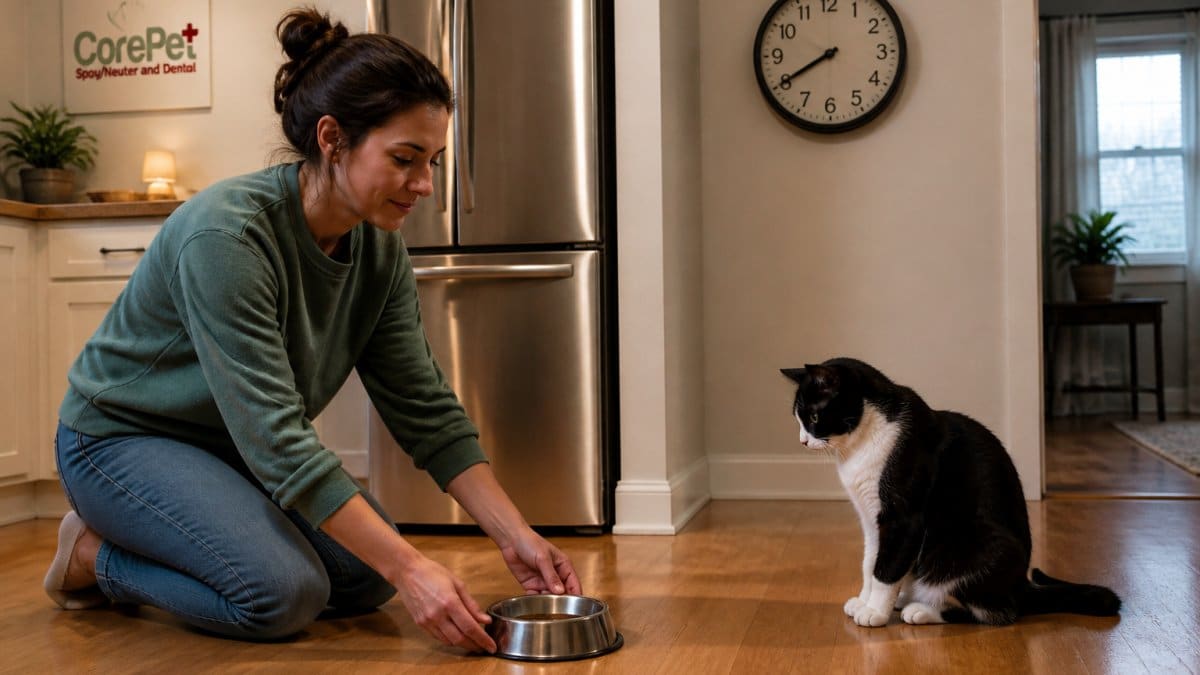
Feed the usual meal earlier in the evening, then pick up the food bowl at the time the clinic set, keeping water available until the clinic’s cutoff.
- Confirm the surgery date and drop-off time
- Feed the usual meal early, then remove food at the set time
- Remove water at the clinic’s cutoff
- Keep the cat indoors and away from other pets’ food
- Set out the carrier and a quiet recovery space
- On the morning of surgery, offer no food or treats
Keep the cat indoors, since a cat that slips outside can find scraps or eat from a neighbor’s bowl, breaking the fast. Leave the carrier out for a day or two with a soft blanket inside.
If you have more than one pet, feed them in separate rooms the night before. A cat that eats another pet’s food can break its fast without anyone noticing until the morning.
What to Do If a Cat Eats Before Neuter Surgery
Call the veterinary clinic right away and report what the cat ate and when, so staff can keep the appointment, delay surgery, or reschedule.
If surgery gets delayed or rescheduled, ask the clinic for a new fasting schedule.
Why Fasting Matters Before Anesthesia
Fasting protects a cat from one of the main risks of anesthesia: vomiting while unconscious.
Under anesthesia, the muscles that normally keep food down relax, so a full stomach can send food into the airway and lungs, a serious, sometimes life-threatening problem.
Young kittens and cats with certain health conditions need individual guidance, and CorePet builds fasting and prep instructions around each pet’s age, health, and medication needs.
Age and Health: Why One Rule Does Not Fit All
A young kitten and a senior cat should not follow the same fasting schedule, because age changes how a cat handles a stretch without food.
Kittens under about 16 weeks have less stored energy, so many clinics shorten the window or adjust it by weight, while cats on medication, cats with diabetes, and cats recovering from illness may need a tailored plan.
A general number from a website is only a starting point, the clinic handling the procedure knows the cat’s history. If surgery is delayed or moved, ask for a fresh fasting plan.
Questions to Ask Before Surgery Day
Ask the clinic what time food and water should be removed, whether treats and wet food are included in the cutoff, what to do if the cat eats by accident, and what time drop-off is.
Write the answers down, since on a busy morning it is easy to forget the exact times. Owners in New Hampshire can ask about the clinic’s process for fasting, prep, and aftercare.
Getting the fasting schedule right takes a little planning, but it protects a cat during one of the most common procedures it will ever have. CorePet handles spay, neuter, and dental procedures for dogs, cats, and rabbits, with a focus on safe, individualized care and clear instructions. Book an appointment with CorePet and get a prep plan built around your cat.
Frequently Asked Questions
Can cats eat before neuter surgery?
No. Your cat should have no food for the period your veterinarian instructs, typically the night before surgery. Food in the stomach during anesthesia can cause vomiting and aspiration, which is dangerous. Always follow your specific clinic’s instructions, as fasting times vary based on your cat’s age and health. If your cat accidentally eats, call the clinic right away to report what and when.
How long should a cat fast before neutering?
Most clinics ask you to withhold food starting the night before surgery, often after 9 p.m. or 10 p.m. for a morning appointment. Kittens under 16 weeks may need a shorter fast, sometimes only 4 to 6 hours, because they cannot safely go without food as long as adults. Your veterinarian will give you an exact cutoff time based on your cat’s age and the scheduled procedure.
What happens if my cat eats before surgery?
Call your veterinary clinic immediately and report what your cat ate and when. The surgeon may postpone the procedure to allow the stomach to empty, or may adjust the anesthesia plan. Never bring your cat to surgery without disclosing that it ate. Hiding this information puts your cat at real risk during the procedure. Most clinics will reschedule rather than proceed unsafely.