Table of Contents
- What Is Tooth Resorption in Cats?
- Signs of Oral Pain in Cats: Early Warning Signals
- Stages of Feline Tooth Resorption and What Each Means
- Frequently Asked Questions
Last Updated: September 17, 2026
What Is Tooth Resorption in Cats?
Tooth resorption in cats is a progressive condition where the body breaks down and absorbs tooth structure, starting with the root and moving toward the crown. This process, also called feline odontoclastic resorptive lesions (FORL), affects the enamel, dentin, and pulp cavity of the tooth. According to research from veterinary dental organizations, tooth resorption is one of the most common oral diseases in cats, impacting cats of all ages but appearing more frequently in older animals. The condition develops when inflammatory cells attack healthy tooth tissue, gradually destroying what should be permanent structure. Pet owners in New Hampshire often don’t realize their cat has this problem until pain becomes severe enough to change eating habits or behavior, which is why learning how to identify tooth resorption in cats is so important.
Signs of Oral Pain in Cats: Early Warning Signals
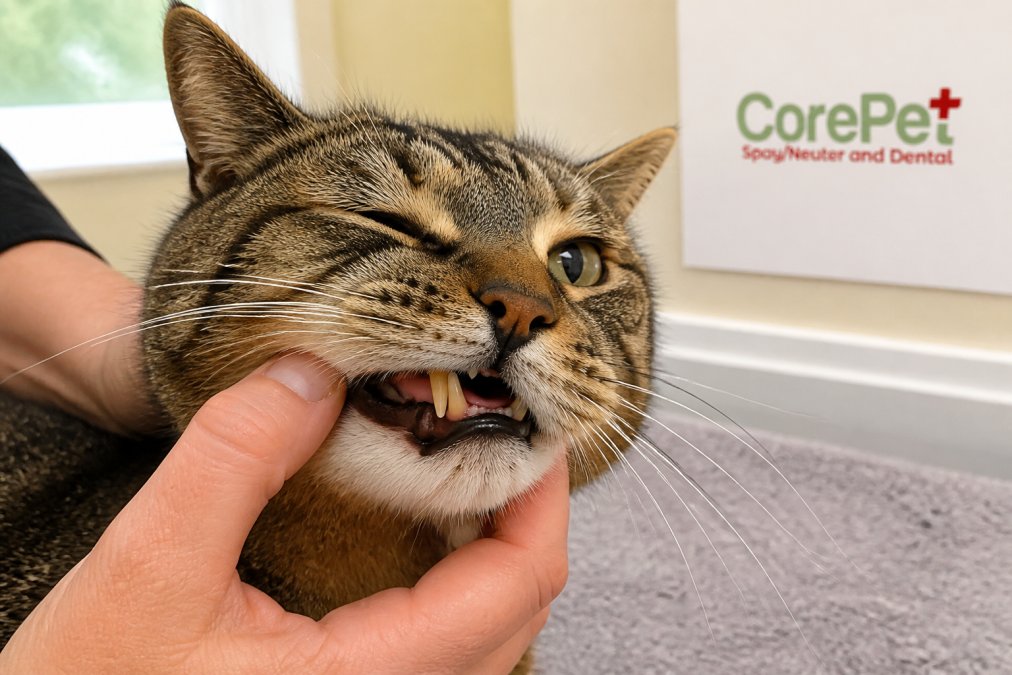
Cats mask pain well, making early detection challenging. Watch for jaw chattering, excessive salivation, dropping food, reduced appetite, pawing at the mouth, bleeding gums, bad breath, irritability, or reluctance to groom.
Anorexia often appears when lesions reach the pulp cavity, where nerve endings cause significant pain. Many cats eat less and lose weight gradually, which owners sometimes attribute to age rather than dental disease. Early detection makes treatment more straightforward and less invasive.
Stages of Feline Tooth Resorption and What Each Means
Tooth resorption progresses through distinct stages, each requiring different management approaches. Understanding where your cat’s condition sits helps guide treatment decisions.
Stage 1 and 2 involve lesions confined to the root surface or dentin with mild pain; radiography reveals damage cats may not yet show symptoms for.
Stage 3 marks lesions reaching the pulp cavity, when most cats show behavioral changes and pain management becomes important.
Stage 4 involves extensive tooth loss requiring extraction or crown amputation; cats adapt well and show immediate pain relief.
Intraoral X-rays are essential to stage lesions accurately; without radiography, damage remains hidden. Early detection allows pain management and monitoring, while advanced stages require surgical intervention.
Pet owners who notice signs of oral pain should seek professional evaluation promptly. CorePet focuses on dental procedures for cats, using modern surgical techniques and advanced diagnostic imaging to help you understand how to identify tooth resorption in cats and address resorptive lesions. Book an appointment to have your cat’s oral health evaluated.
Frequently Asked Questions
What are the early behavioral signs of tooth resorption in cats?
Early signs include jaw chattering, excessive drooling, reduced appetite, and avoiding hard food. Your cat may paw at their mouth, show reluctance to eat, or become withdrawn. Some cats exhibit behavioral changes like irritability or difficulty grooming themselves. These symptoms suggest oral discomfort and warrant a veterinary dental examination with intraoral X-rays to confirm tooth resorption.
How do veterinarians diagnose tooth resorption in cats?
Veterinarians use intraoral X-rays to visualize lesions on tooth roots and the pulp cavity that aren’t visible during a physical exam alone. Radiography reveals the extent of resorption and helps stage the condition. During the examination, your vet will also assess gingival inflammation, check for enamel loss, and evaluate the periodontal ligament. This diagnostic imaging is essential for determining the appropriate treatment plan.
What happens if feline tooth resorption is left untreated?
Untreated tooth resorption causes progressive pain and can lead to tooth loss, difficulty eating, weight loss, and anorexia. The lesions expose sensitive dentin and the pulp cavity, creating chronic discomfort. Severe cases may result in jaw fractures or secondary infections.