Table of Contents
- Why Soft Food Matters After Dental Surgery
- Step-by-Step Methods to Soften Dry Food
- How Long to Feed Soft Food After Dog Tooth Extraction
- Frequently Asked Questions
Last Updated: September 19, 2026
Why Soft Food Matters After Dental Surgery
Dental surgery requires careful post-operative care. Hard kibble can damage the surgical site, cause bleeding, or create infection risk. Understanding how to soften dry food for dental recovery ensures your pet eats well during this critical healing window while protecting the healing area.
Pets recover faster when they eat nutrient-dense meals that don’t stress the surgical site.
Step-by-Step Methods to Soften Dry Food
Warm Water Soaking (Best for Most Pets)
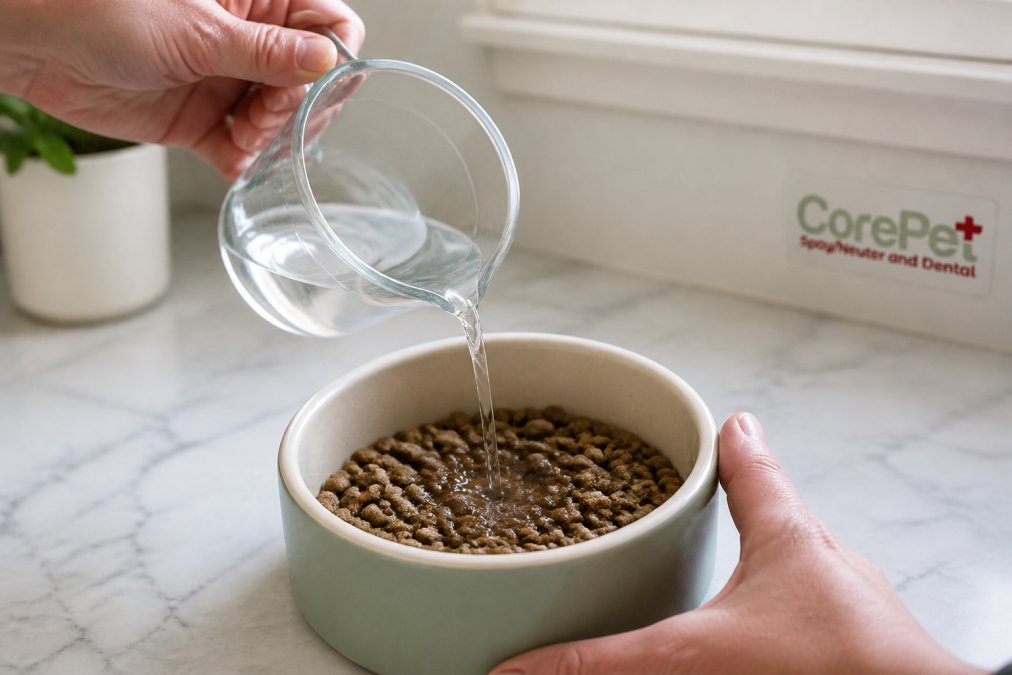
Pour dry kibble into a bowl, add warm water until fully submerged, and wait 5-10 minutes for softening. This method preserves nutrition while creating a safe, easy-to-eat consistency.
Broth-Based Softening
Replace water with low-sodium chicken or beef broth for added flavor and nutrition. Use broth without onions, garlic, or excessive salt, and soak for 5-8 minutes until soft.
Mashed or Blended Approach
For pets needing ultra-soft food, blend softened kibble with a small amount of plain yogurt or wet food. Use a fork to mash the mixture into a paste-like consistency. This creates maximum softness while maintaining nutritional value. Serve immediately after preparation.
Temperature Matters
Always use lukewarm water or broth, never hot. Hot liquids can damage sensitive gum tissue. Cold water takes longer to soften kibble. Lukewarm temperature is the safest choice for healing mouths.
How Long to Feed Soft Food After Dog Tooth Extraction
Recovery timelines vary by procedure type and individual healing. Most pets need soft food for 7-10 days after extraction or dental surgery. Your veterinarian will provide specific guidance based on the procedure and your pet’s response.
Watch for these signs that your pet is ready to return to normal food:
- Gums show reduced swelling
- Your pet eats soft food without hesitation
- No bleeding or discharge from the surgical site
- Your pet shows normal energy levels
Never rush the transition. Returning to hard kibble too early risks reopening the surgical site. Gradual transitions work best, mix soft food with regular kibble for 2-3 days before returning fully to normal meals.
During recovery, focus on nutrient-dense soft foods that support healing. Protein helps rebuild tissue. Vitamins and minerals reduce inflammation. Hydration speeds recovery. Each meal during this window matters for faster healing and comfort.
Pet owners in New Hampshire can consult with CorePet’s dental team about recovery nutrition.
Frequently Asked Questions
How long should my dog eat soft food after a dental extraction?
Most pets benefit from a soft food diet for 7-10 days following oral surgery or tooth extraction. Your veterinarian may recommend extending this period if healing is slower or if multiple teeth were removed. Watch for signs of normal healing, such as reduced swelling and improved appetite. Always follow post-operative care instructions from your surgical team, as recovery timelines vary based on the extent of the procedure and your pet’s individual healing response.
Can I use warm water to soften my dog’s dry kibble?
Yes, warm water is one of the safest and most effective methods to soften dry food for dental recovery. Pour lukewarm (not hot) water over the kibble and let it soak for 5-10 minutes until it reaches a mashed consistency. Avoid boiling water, which can damage nutrients and create a temperature that burns your pet’s mouth. Always test the temperature before offering it to your pet. This method preserves the nutritional content of the food while making it easy to chew and swallow.
What are signs my pet is struggling to eat after dental surgery?
Watch for difficulty chewing, dropping food from the mouth, excessive drooling, or reluctance to eat despite hunger. Some swelling and mild discomfort are normal in the first few days, but severe pain, bleeding, or refusal to eat after day three may indicate a complication. If your pet shows signs of infection, such as fever or discharge from the surgical site, contact your veterinary team immediately. Proper soft food preparation and pain management help minimize these issues during the healing process.
Dental surgery recovery requires attention to nutrition and feeding methods. Softening dry food protects healing tissues while keeping your pet nourished. CorePet’s dental team focuses on comprehensive aftercare guidance, including post-operative feeding strategies that support faster healing and comfort. Book an appointment to discuss your pet’s dental recovery plan.