Table of Contents
- What Happens When Pet Dental Disease Is Left Untreated
- Stages of Periodontal Disease in Dogs and Cats
- Recognizing Signs of Dental Pain in Pets
- Frequently Asked Questions
Last Updated: September 20, 2026
What Happens When Pet Dental Disease Is Left Untreated
When pet dental disease untreated progresses from mild inflammation to severe systemic infection, the damage accelerates. When plaque and tartar accumulate on teeth, bacteria colonize beneath the gum line and enter the bloodstream, triggering organ damage and chronic pain. What happens if pet dental disease is left untreated depends on how long the infection persists, but the consequences are serious: tooth loss, bone deterioration, and potentially life-threatening complications affecting the heart, liver, and kidneys.
Most pet owners don’t realize that oral bacteria don’t stay confined to the mouth. Once periodontal disease advances, the infection spreads throughout the body. Early intervention stops this progression. At CorePet, we focus on dental procedures.
Stages of Periodontal Disease in Dogs and Cats
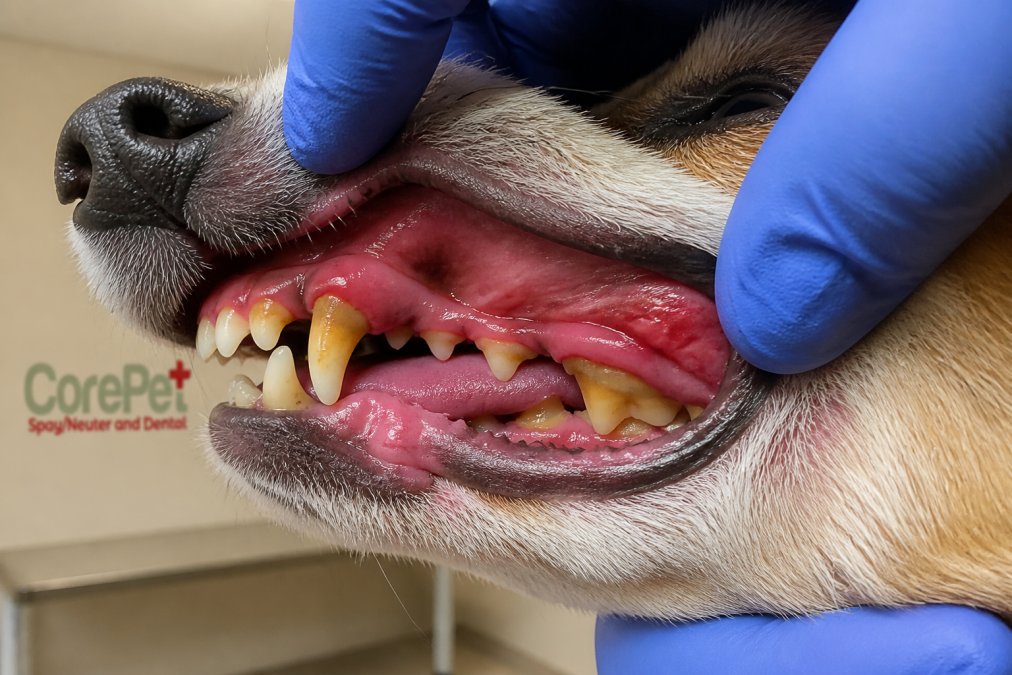
Periodontal disease develops in predictable stages, each one more damaging than the last. Stage one begins with gingivitis: mild inflammation of the gums caused by plaque buildup. The gums appear red and swollen, but the tooth root remains intact. At this point, professional cleaning can fully reverse the damage.
Stage two marks the transition to early periodontitis. The infection penetrates below the gum line, creating periodontal pockets where bacteria multiply. Bone loss begins, though it may not be visible without dental X-rays. Tooth mobility increases slightly, and bad breath becomes noticeable.
By stage three, moderate periodontitis has established itself. Significant bone loss is evident on radiographs. Teeth become loose, and gum recession exposes the sensitive root surface. Systemic infection intensifies as bacterial toxins enter the bloodstream with greater frequency.
Stage four represents advanced disease. Severe bone loss means teeth are barely anchored. Oral pain becomes constant. The risk of organ damage, kidney failure, heart disease, liver complications, reaches critical levels. At this stage, tooth extraction often becomes necessary.
Recognizing Signs of Dental Pain in Pets
Pets mask pain instinctively, so owners often miss early warning signs. Bad breath is frequently the first clue, though many attribute it to normal “dog breath” or assume it’s temporary. Halitosis that persists beyond a day or two indicates active bacterial infection.
Behavioral changes signal dental pain: reluctance to eat, dropping food from the mouth, or favoring one side while chewing. Some pets stop playing with toys or become withdrawn. Excessive drooling, facial swelling, or pawing at the mouth are urgent indicators requiring immediate evaluation.
Visible signs include red or bleeding gums, loose teeth, or pus discharge around tooth roots. Root exposure from gum recession appears as a darker line at the base of the tooth. Discolored teeth, yellow or brown staining, indicate tartar accumulation and underlying infection.
Professional dental examination with radiographs remains the only reliable way to assess periodontal disease severity. Many infections exist below the gum line, invisible to the naked eye. Early detection through regular veterinary checkups prevents pet dental disease untreated from progressing to advanced stages where systemic complications develop.
Frequently Asked Questions
Can untreated pet dental disease lead to organ damage?
Yes. When periodontal disease progresses, bacteria from infected gums enter the bloodstream and can reach vital organs including the heart, liver, and kidneys. This systemic infection can cause serious complications like endocarditis, hepatic disease, and kidney failure. Early treatment and preventative care significantly reduce this risk.
What are the signs of dental pain in pets?
Common signs include bad breath, difficulty eating or chewing on one side, drooling, swollen or bleeding gums, loose or missing teeth, and behavioral changes like irritability or reduced appetite. Some pets hide pain effectively, so regular veterinary examinations and dental X-rays are essential for early detection.
How often should my pet have professional dog teeth cleaning?
Most pets benefit from professional cleaning every 1-3 years, depending on their individual risk factors, breed, age, and home care routine. Your veterinarian can recommend a schedule based on your pet’s oral health status and examine their teeth during annual wellness visits to catch problems early.
Pet dental disease left untreated becomes a progressive threat to your pet’s overall health and quality of life. Early intervention, professional cleaning, consistent at-home care, and regular monitoring, stops the infection before it spreads. CorePet focuses on dental procedures that protect your pet’s long-term wellness. Schedule a consultation to assess your pet’s oral health and learn how professional care can prevent serious complications down the road.