Table of Contents
- How to Tell if Your Cat Has a Toothache: Key Warning Signs
- Cat Dental Disease Symptoms: What to Look For
- How to Brush Cat Teeth and Perform Home Oral Exams
- Cat Bad Breath Causes and When to Seek Veterinary Care
How to Tell if My Cat Has a Toothache: Signs & Steps
Last Updated: July 2, 2026
Knowing how to tell if my cat has a toothache can mean the difference between early intervention and serious complications. Cats are notoriously stoic about pain and won’t always show obvious signs of dental distress. Below, we’ll show you exactly how to spot dental problems and what steps to take next.
Common Signs of Dental Pain in Cats
Your cat’s behavior often signals oral discomfort. When a toothache develops, cats may become withdrawn or irritable, favor one side of their mouth while eating, or eat more slowly than usual. A normally social cat that suddenly hides could be experiencing oral pain.
Bad breath is one of the most reliable early warning signs. A sudden shift toward foul-smelling breath suggests bacterial growth or infection, indicating inflammation of the gums and periodontal disease developing beneath the surface. Tartar buildup typically appears as brown or yellow crusting along the gum line.
Physical symptoms include facial swelling around the cheeks or jaw, excessive drooling, repeated pawing at the face, bleeding from the mouth, or difficulty opening the jaw fully. These suggest advancing dental problems requiring immediate attention.
If your cat stops eating or drinks only water for more than 24 hours, this is a veterinary emergency. Dental pain can lead to anorexia, and prolonged fasting causes serious metabolic complications in cats.
Cat Dental Disease Symptoms: What to Look For
Gingivitis, the earliest stage of gum disease, causes mild inflammation and redness along the gum line. If you gently lift your cat’s lip, you’ll see a distinct red line separating healthy pink gum from the tooth surface.
As disease advances, periodontal disease develops beneath the gum line. Plaque hardens into tartar, and bacteria colonize the space between tooth and gum. Your cat may show increased drooling, reluctance to groom their face, and lethargy.
Advanced cases may involve tooth resorption, where tooth structure dissolves from the inside out. Feline odontoclastic resorptive lesions (FORL) are particularly common in cats and cause severe pain. Affected cats often refuse hard food entirely.
Check your cat’s mouth weekly by gently lifting the lip and looking at the gum line and tooth surfaces. Early detection of tartar or gum redness allows you to address the problem before it progresses to extraction.
| Symptom | Early Stage | Advanced Stage | Emergency |
|---|---|---|---|
| Bad breath | Mild odor change | Strong halitosis | Foul, accompanied by swelling |
| Eating behavior | Slower eating | Avoids hard food | Refuses all food |
| Drooling | Occasional | Frequent | Excessive with blood |
| Gum appearance | Red line at margin | Swollen, receding | Bleeding, pus present |
| Behavior | Subtle irritability | Withdrawn, lethargic | Extreme lethargy, pain response |
How to Brush Cat Teeth and Perform Home Oral Exams
Regular brushing is the single most effective way to prevent dental disease in cats. Use a soft-bristled toothbrush designed for cats or a finger brush. Apply only cat-specific toothpaste (never human toothpaste, which contains harmful fluoride).
Begin by touching the toothbrush to your cat’s front teeth without pressure. Let your cat lick the toothpaste off, then gradually increase contact over several days. Focus on outer tooth surfaces where plaque accumulates most. Most cats tolerate 30-60 seconds initially.
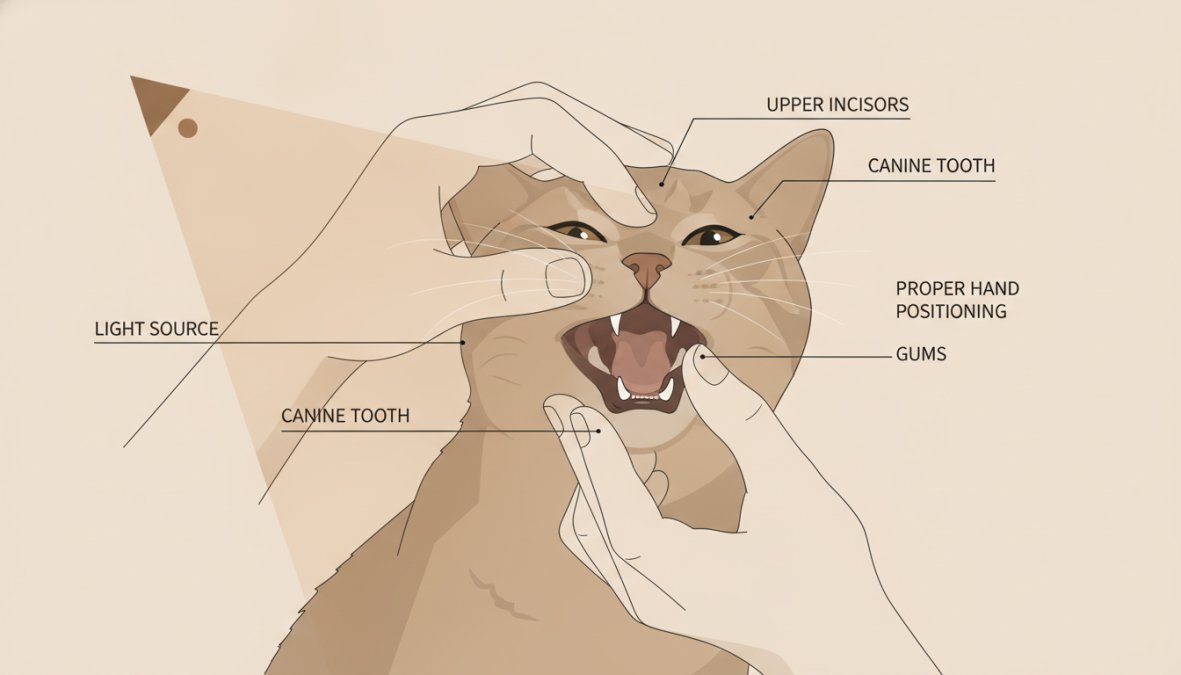
For home oral examinations, choose a relaxed moment with good lighting. Gently lift your cat’s upper lip and examine the gum line for redness, swelling, or bleeding. Look for visible tartar and missing teeth. Press gently on the gum tissue; healthy gums are firm and pale pink, while diseased gums feel spongy and bleed easily. If your cat shows pain, stop immediately and contact your veterinarian.
Home brushing works best for cats under 5 years old without existing dental disease. Older cats or those with advanced periodontal disease may require professional cleaning under anesthesia first.
Cat Bad Breath Causes and When to Seek Veterinary Care
Bad breath in cats stems primarily from bacterial overgrowth in the mouth. When plaque and tartar accumulate, anaerobic bacteria thrive in gaps between teeth and gums, producing sulfur compounds that create foul odor. This indicates active infection and inflammation.
Other causes include stomatitis, oral ulcers, or systemic disease like kidney disease, diabetes, or liver disease. This is why veterinary evaluation is essential to determine the source.
Schedule a veterinary appointment if you notice persistent bad breath, visible tartar, bleeding from the mouth, difficulty eating, excessive drooling, or facial swelling. Professional dental cleaning requires anesthesia, allowing your veterinarian to examine teeth below the gum line using dental radiographs and remove tartar thoroughly. Services like Spay Neuter Dental can help you find professional dental care for your cat.
Never attempt to remove tartar from your cat’s teeth at home using scrapers or other tools. This can damage enamel and cause pain. Only professional veterinary cleaning is safe and effective.
After professional cleaning, continue home brushing to maintain oral health. Provide soft or wet food for several days if your cat had teeth extracted. Follow all post-operative instructions carefully and monitor extraction sites for excessive bleeding or swelling.
Preventing future dental disease involves consistent home care and regular veterinary check-ups. Feed a combination of wet and dry food; some cats benefit from dental-specific dry food formulated to reduce plaque through mechanical action. Ensure your cat has access to fresh, clean water daily.
Understanding how to tell if my cat has a toothache helps you act before serious complications develop. Early detection through regular home exams and prompt professional care prevents pain, tooth loss, and systemic infection.
Frequently Asked Questions
What are the most common signs that my cat has a toothache?
The most obvious signs include reluctance to eat, especially hard food; drooling or excessive salivation; pawing at the mouth or face; bad breath (halitosis); and behavioral changes like irritability or hiding. You may also notice swelling around the jaw or face, or your cat vocalizing more than usual. If you observe any of these signs, a veterinary examination is important to rule out serious dental disease like gingivitis or periodontal disease.
How can I safely check my cat's teeth at home?
Start by choosing a calm moment when your cat is relaxed. Gently lift your cat's lip to examine the visible teeth and gums. Look for tartar buildup (yellowish-brown deposits), redness or swelling of the gums, or any missing or broken teeth. Use good lighting and move slowly to avoid stressing your cat. If your cat resists, don't force the examination, contact your veterinarian instead. Home checks can help you spot early warning signs of dental problems.
Can a cat's toothache go away on its own?
Dental pain in cats typically does not resolve without professional intervention. Conditions like periodontal disease, gingivitis, and tooth resorption (odontoclastic resorptive lesions) require veterinary treatment. Without care, these conditions worsen, causing increased pain, infection, and potential tooth loss. Early detection through home observation and veterinary dental radiographs can prevent complications. If you suspect your cat has a toothache, scheduling a dental examination is the best course of action.
What should I do if I think my cat has dental pain?
Contact your veterinarian promptly for a dental examination. Your vet can perform a thorough oral assessment, take dental radiographs if needed, and recommend appropriate treatment, which may include professional dental cleaning, tooth extraction, or pain management. In the meantime, you can offer soft, wet food if your cat is having difficulty eating. Avoid delaying care, as dental disease can lead to systemic health issues and significant discomfort for your cat.
Dental disease in cats progresses silently, often causing severe pain before owners notice anything wrong. CorePet’s dental surgery team has the advanced surgical techniques and modern equipment needed to address even complex oral problems safely. Whether your cat needs a routine cleaning or tooth extraction, our locally owned practice in Bedford, New Hampshire provides individualized care at reasonable costs. Book an appointment today to protect your cat’s oral health.
This article was written using GrandRanker