Table of Contents
- Is Dental Cleaning Safe for Cats? The Short Answer
- Understanding Anesthesia in Feline Dental Procedures
- Risks of Anesthesia-Free Dental Cleaning for Cats
- What Happens During Professional Feline Dental Cleaning
Last Updated: July 1, 2026
Is Dental Cleaning Safe for Cats? The Short Answer
Yes, when performed by a qualified veterinarian using proper anesthesia protocols and pre-operative screening. Professional dental cleaning is one of the safest and most important health investments you can make for your feline companion. Untreated periodontal disease leads to pain, tooth loss, and systemic infections that spread to vital organs.
Understanding Anesthesia in Feline Dental Procedures
Modern anesthetic protocols combined with advanced monitoring equipment have made dental procedures remarkably safe for cats. Pre-anesthetic bloodwork screens for kidney disease, liver dysfunction, heart conditions, and blood clotting disorders, all factors influencing how your cat metabolizes anesthetic drugs. IV fluids maintain hydration and blood pressure, while continuous monitoring tracks heart rate, oxygen levels, and body temperature throughout the cleaning.
Recovery typically takes 2-4 hours, with your cat returning to normal behavior within 24 hours. Mild nausea or vomiting in the first few hours is normal and usually resolves without intervention.
Request isoflurane or sevoflurane gas anesthesia if available, these agents are metabolized more quickly and are safest for feline patients. Confirm your veterinarian uses heart rate monitors, pulse oximeters, and blood pressure cuffs during the procedure.
Risks of Anesthesia-Free Dental Cleaning for Cats
Anesthesia-free dental cleaning cannot perform subgingival cleaning, the removal of tartar below the gum line where periodontal disease actually develops. Without anesthesia, only visible tartar on the tooth crown is addressed while disease progresses beneath the gums undetected.
The stress of restraint during anesthesia-free cleaning elevates blood pressure and heart rate, posing real danger for cats with underlying heart conditions. Without anesthesia, your veterinarian cannot safely examine the entire mouth, take full-mouth dental x-rays, or identify tooth resorption, a common condition in cats often requiring extraction. Research consistently shows anesthesia-free cleaning does not prevent or treat periodontal disease.
What Happens During Professional Feline Dental Cleaning
After anesthesia and IV fluids are initiated, your veterinarian performs a full-mouth examination, probing each tooth to assess gum health and identify pockets indicating periodontal disease.
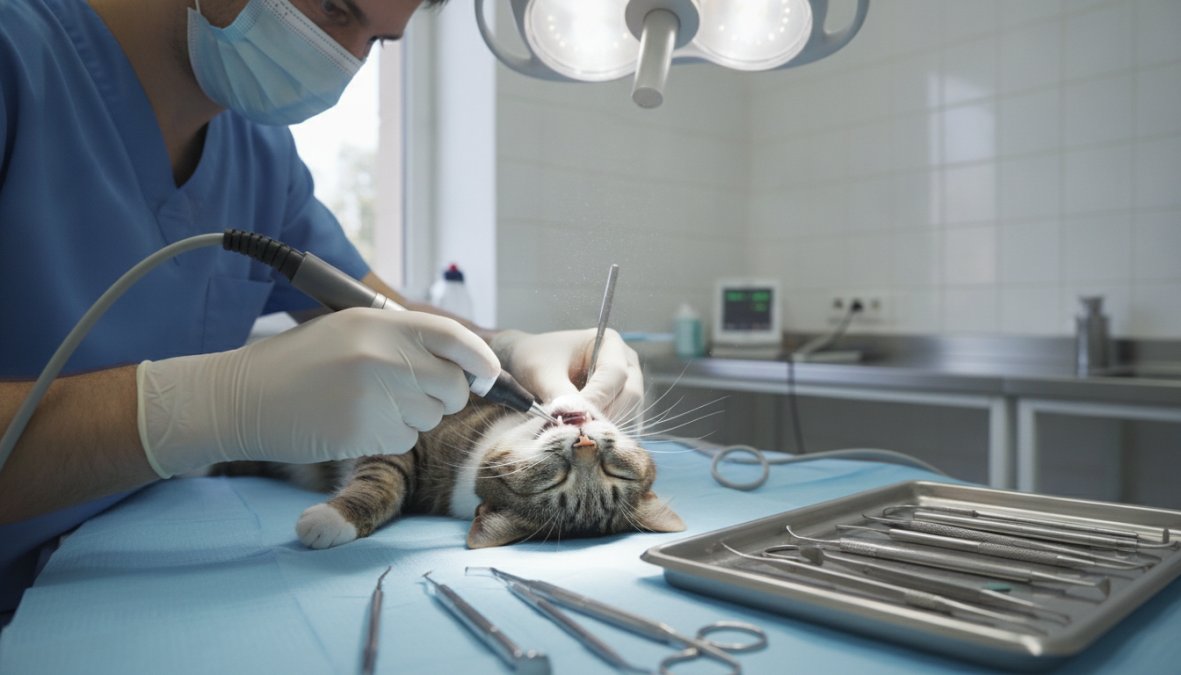
Full-mouth dental x-rays reveal disease below the gum line and identify tooth resorption, a painful condition where tooth structure gradually dissolves. Ultrasonic scaling removes tartar from above and below the gum line, followed by polishing to smooth the tooth surface and reduce future tartar accumulation. If tooth resorption or severe periodontal disease is identified, extraction may be necessary. Cats function well with fewer teeth and often experience better quality of life without diseased teeth causing chronic pain.
Post-operative pain management begins before your cat wakes up, with local anesthetics often injected around extracted teeth and oral pain medications prescribed for home use, typically 3-7 days depending on procedure extent.
If your veterinarian does not take full-mouth dental x-rays, ask why. X-rays are essential for identifying disease and planning treatment. Any feline dental cleaning without x-rays is incomplete.
Factors Influencing Dental Cleaning Price and What’s Included
Cost varies based on your cat’s oral health status and location. A cat with minimal tartar costs less than one requiring extractions or extensive treatment.
Typical inclusions in a professional dental cleaning package:
- Pre-anesthetic bloodwork and physical examination
- IV fluids and anesthetic monitoring
- Full-mouth dental x-rays
- Ultrasonic scaling and polishing
- Extraction of diseased teeth (if needed)
- Post-operative pain medications
- Follow-up examination within 1-2 weeks
Ask your veterinarian for an itemized estimate before the procedure and discuss the possibility of additional extractions discovered during x-rays.
Why Anesthesia Is Necessary for Pets
Anesthesia is essential for effective feline dental cleaning. Without it, your veterinarian cannot perform subgingival cleaning that treats periodontal disease. Cats cannot cooperate during dental procedures, and attempting cleaning without anesthesia causes stress, fear, and often injury. General anesthesia allows your veterinarian to work safely and thoroughly while your cat experiences no pain or anxiety.
Signs Your Cat Needs a Dental Exam
Bad breath is often the first sign owners notice, indicating bacterial infection in the mouth. Visible tartar buildup along the gum line, yellow or brown discoloration, and red or swollen gums all suggest periodontal disease.
Behavioral changes signal oral pain: eating more slowly, chewing on only one side, dropping food, or refusing dry food. Excessive drooling, especially if bloodstained, indicates oral pain or infection. Swelling around the jaw or face suggests serious infection requiring immediate attention.
Schedule a dental examination if you notice bad breath, visible tartar, behavioral changes around eating, or facial swelling. Early intervention prevents tooth loss and systemic infection.
The Importance of Pre-Anesthetic Bloodwork
Pre-anesthetic bloodwork reveals underlying conditions influencing anesthetic risk and helps your veterinarian adjust the anesthetic protocol accordingly. Testing screens for kidney disease, common in older cats and affecting how anesthetic drugs are metabolized, liver dysfunction impacting drug processing, and anemia affecting oxygen-carrying capacity.
Results guide your veterinarian’s anesthetic choices, allowing adjusted dosing for cats with reduced kidney or liver function. Bloodwork also identifies blood clotting disorders, increasing bleeding risk during extractions. The cost of pre-anesthetic bloodwork, typically $75-150, is one of the best investments in your cat’s safety.
Preparing Your Cat for a Dental Procedure
Most veterinarians request fasting for 6-8 hours before the procedure to reduce vomiting risk during anesthesia. Water is usually allowed until a few hours before the appointment.
Discuss any medications your cat takes with your veterinarian. Some should be continued the morning of the procedure; others should be withheld. Ask about post-operative care before the procedure: pain medication dosing, activity restrictions, and when your cat can resume normal eating. Most cats can eat soft food within hours of waking; dry food should be withheld for 24 hours. Activity should be restricted for 24-48 hours.
If your cat requires tooth extractions during the cleaning, ask your veterinarian about Spay Neuter Dental services, which can coordinate comprehensive care for your pet’s surgical and dental needs in one convenient visit.
Cats with untreated dental disease often suffer silently, experiencing chronic pain until teeth are lost or infection spreads. Professional dental cleaning prevents this suffering and extends your cat’s healthy lifespan. Schedule a dental examination today and give your cat the gift of a healthy mouth and pain-free life.
Frequently Asked Questions
Is it safe to put a cat under anesthesia for dental cleaning?
Yes, when performed by experienced veterinarians with proper pre-anesthetic bloodwork and monitoring equipment, anesthesia for dental cleaning is safe for most cats. Pre-operative bloodwork identifies any underlying health concerns, and IV fluids and anesthetic monitoring during the procedure help minimize risks. Cats without serious health conditions tolerate dental anesthesia well, and the benefits of professional cleaning, preventing periodontal disease and tooth resorption, typically outweigh anesthesia risks.
What are the risks of anesthesia-free dental cleaning for cats?
Anesthesia-free cleaning cannot address subgingival disease, the most damaging form of periodontal disease that occurs below the gum line. Without proper anesthesia, veterinarians cannot perform full-mouth dental x-rays, probe teeth thoroughly, or extract diseased teeth safely. This approach may create a false sense of security while allowing serious conditions like gingivitis and tooth resorption to progress untreated, ultimately causing more pain and tooth loss.
How often do cats need professional dental cleanings?
Most cats benefit from annual dental exams, with professional cleanings recommended every 1-3 years depending on oral health status. Cats with existing periodontal disease may need more frequent cleanings and monitoring. Regular at-home brushing and preventative care can extend the time between professional cleanings. Your veterinarian can recommend a schedule based on your cat's individual needs and risk factors.
What should I do to prepare my cat for a dental cleaning procedure?
Schedule a pre-operative dental exam and bloodwork to ensure your cat is a good candidate for anesthesia. Follow your veterinarian's fasting instructions the night before (typically 6-8 hours). Arrange for a quiet recovery space at home with easy access to food, water, and a litter box. Ask your vet about post-operative pain management and any activity restrictions. Have a list of your cat's current medications ready to discuss with the surgical team.
This article was written using GrandRanker