Table of Contents
- Why IV Fluid Therapy Is Necessary During Pet Surgery
- Veterinary Anesthesia Safety Protocols and IV Fluid Management
- Benefits of IV Fluids for Pets and Anesthesia Monitoring for Dogs and Cats
- Frequently Asked Questions
Last Updated: September 18, 2026
Why IV Fluid Therapy Is Necessary During Pet Surgery
Is intravenous fluid therapy necessary during surgery? Yes. IV fluid therapy surgery maintains hemodynamic stability, prevents hypovolemia, and supports organ function while pets are under anesthesia. Without fluid support, surgical patients face dangerous drops in blood pressure, reduced oxygen delivery to tissues, and potential organ damage.
Anesthesia depresses cardiovascular function and impairs blood pressure regulation; surgical trauma compounds this stress. IV fluids act as a buffer, replacing fluids lost through bleeding and respiration while maintaining adequate circulating volume and protecting against life-threatening complications.
CorePet integrates IV fluid therapy into every surgical case because it reduces surgical risk and improves recovery outcomes.
Veterinary Anesthesia Safety Protocols and IV Fluid Management
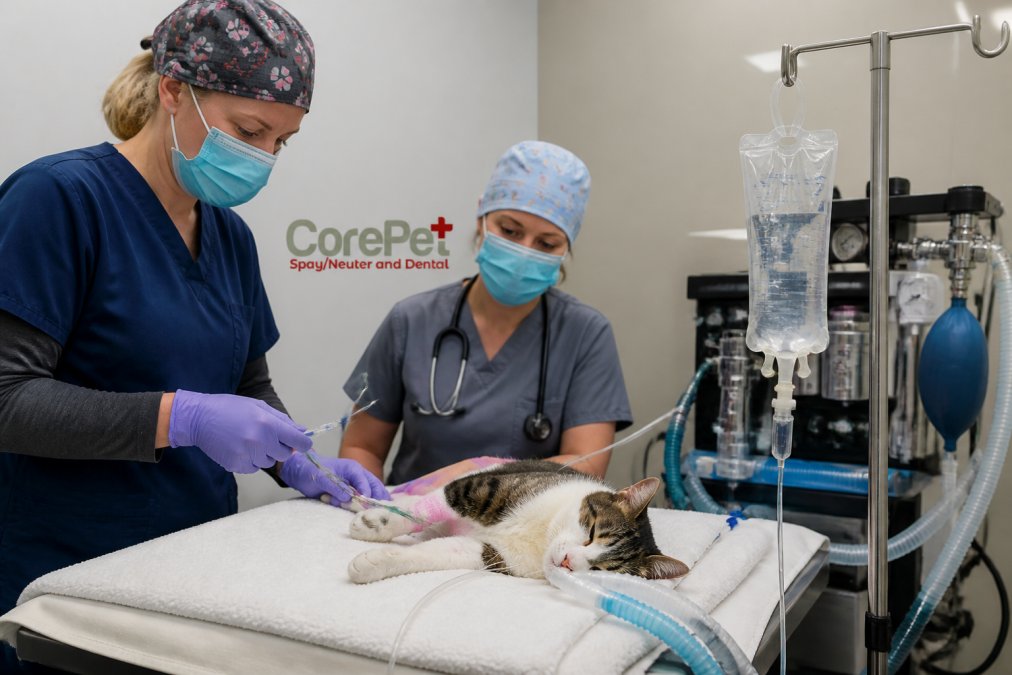
Veterinary anesthesia safety protocols require IV access before induction, allowing the surgical team to deliver fluids, medications, and emergency drugs if complications arise.
Anesthesia monitoring equipment tracks vital signs during surgery; IV fluids maintain blood pressure and adequate perfusion, preventing oxygen deprivation to critical organs.
Crystalloid solutions like lactated Ringer’s are standard, restoring electrolyte balance and circulating volume based on the pet’s weight, procedure duration, and estimated blood loss.
Withholding IV fluids creates hidden risks, slower recovery, increased pain, kidney stress, and higher infection risk, that far exceed any short-term savings.
Benefits of IV Fluids for Pets and Anesthesia Monitoring for Dogs and Cats
IV fluids accelerate wound healing, support immune function, and reduce post-operative nausea, allowing pets to wake smoothly and resume eating sooner.
Well-hydrated dogs and cats maintain consistent blood pressure, enabling smoother anesthesia and faster recovery; rabbits, especially sensitive to anesthetic stress, benefit from careful fluid management.
IV fluids maintain renal perfusion after surgery, preventing acute kidney injury and supporting post-operative pain and inflammation management.
Pets that receive comprehensive perioperative fluid management return home stronger, heal faster, experience less post-operative pain, and resume eating sooner.
CorePet’s approach to IV fluid therapy surgery reflects current veterinary standards, with every surgical patient receiving individualized fluid planning based on their medical history, procedure, and risk factors.
IV fluid therapy during surgery isn’t an add-on, it’s essential veterinary care. Pets undergoing spay, neuter, dental, or other surgical procedures need hemodynamic support to stay safe. CorePet prioritizes this standard across every procedure, ensuring dogs, cats, and rabbits receive the fluid management and anesthesia monitoring they need to wake safely and recover well. Ready to schedule your pet’s surgery with a team that prioritizes safety and individualized care? Book an appointment with CorePet today.
Frequently Asked Questions
Why do pets need IV fluids during surgery?
IV fluids maintain blood pressure, deliver oxygen-carrying fluids to vital organs, and prevent hypovolemia (dangerously low blood volume) during anesthesia. Anesthesia depresses cardiovascular function, which can drop blood pressure significantly. IV fluids support hemodynamic stability and help your pet recover safely from surgical trauma.
Are IV fluids mandatory for all veterinary surgical procedures?
IV fluids are considered standard of care for most surgical procedures in pets, especially spay, neuter, and dental surgery. Your veterinarian may recommend IV therapy based on your pet’s age, health status, and the complexity of the procedure. A pre-surgical consultation will clarify whether IV fluids are recommended for your specific pet.
What happens if my pet doesn’t receive IV fluids during surgery?
Without IV fluid support, your pet faces increased risk of hypovolemia, which can compromise kidney function, reduce oxygen delivery to tissues, and slow surgical recovery. IV fluids also allow your veterinary team to administer medications and respond quickly to any complications during the procedure.