Table of Contents
- How to Monitor Pet Breathing After Surgery: The Basics
- How to Count Dog Breaths Per Minute
- Normal Respiratory Rate for Dogs After Surgery
- Signs of Respiratory Distress in Pets After Surgery
Last Updated: June 29, 2026
How to Monitor Pet Breathing After Surgery: The Basics
Learning to monitor pet breathing after surgery is critical during recovery. Respiratory monitoring is the single most important indicator of normal healing. Normal breathing patterns change after surgery due to anesthesia and pain medications, your job is noticing when something shifts from expected to concerning.
Set a phone reminder for specific monitoring times during the first 48 hours after surgery. Consistent observation makes it easier to spot trends.
How to Count Dog Breaths Per Minute
Counting your dog’s respiratory rate requires only a clock and one minute of observation.
Step-by-step process:
- Wait for your dog to rest. Your dog should be calm and lying down, not panting or moving around.
- Observe the chest wall. Watch the side of your dog’s chest. Each expansion (inhale) and contraction (exhale) counts as one breath.
- Count for 15 seconds, then multiply by four. Start your timer, count complete breath cycles, and multiply by 4 for breaths per minute.
- Record the number. Write down the time and respiratory rate to track trends.
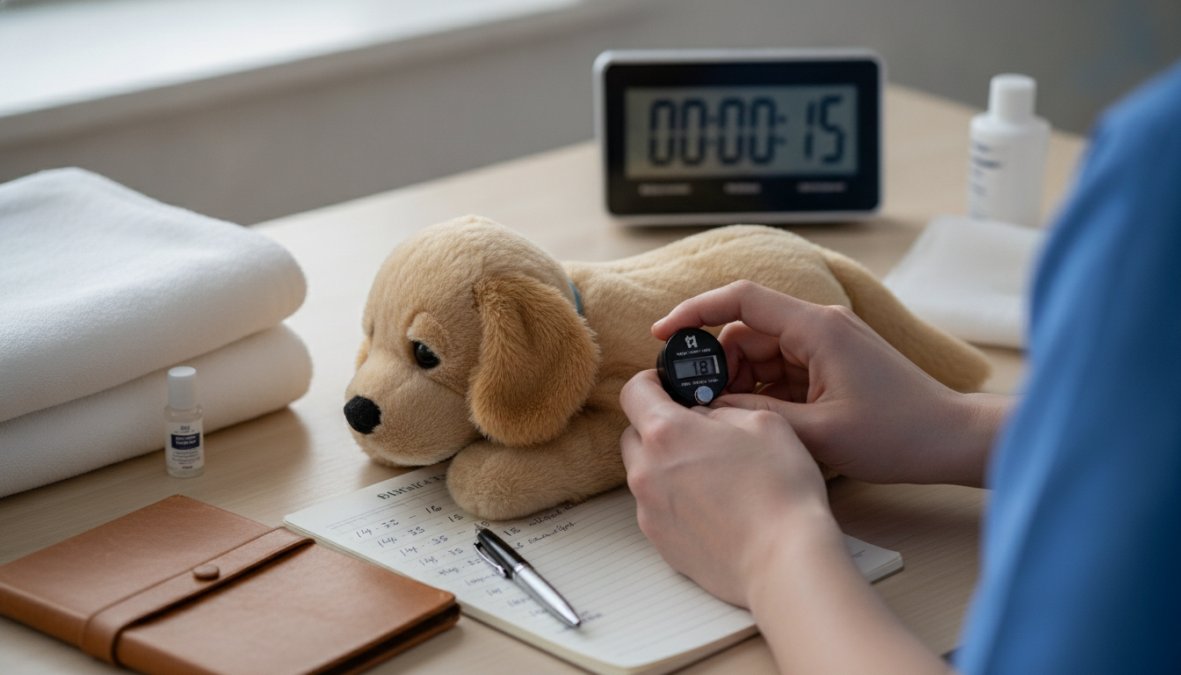
The 15-second method is quick and reduces the chance your dog will move during the count. If your dog is heavily sedated immediately after surgery, very slow breathing is normal as anesthesia wears off.
A normal resting respiratory rate for dogs typically falls between 10 and 30 breaths per minute, though this varies by breed, age, and individual metabolism.
Normal Respiratory Rate for Dogs After Surgery
What constitutes "normal" depends on how long ago the procedure was, the surgery type, and your dog’s baseline.
Immediately post-operative (first 2-6 hours), expect slower breathing than normal due to anesthesia and pain medications, rates of 8-15 breaths per minute are typical. By 24 hours post-op, most dogs return closer to baseline: 12-30 breaths per minute for healthy adults. Puppies and toy breeds often breathe faster, up to 40 breaths per minute.
Distinguish between panting and labored breathing. Panting is rapid, shallow breathing accompanying stress, pain, or temperature regulation, all common after surgery. Labored breathing involves visible effort: abdominal heaving, flaring nostrils, or gasping. Labored breathing is abnormal.
Common factors elevating respiratory rate include pain, anxiety, fever, and medication effects. If breathing climbs but returns to baseline within hours and your dog seems comfortable, this is usually not concerning. Elevated breathing persisting beyond 24 hours warrants veterinary contact.
A respiratory rate above 40 breaths per minute sustained for more than 30 minutes, especially with restlessness, warrants an immediate call to your veterinary clinic.
Signs of Respiratory Distress in Pets After Surgery
Respiratory distress means your dog is struggling to breathe, not just breathing faster.
Clinical signs include:
- Nasal flaring: Nostrils widen visibly with each breath
- Abdominal effort: Belly and sides heave noticeably
- Open-mouth breathing at rest: Mouth breathing even when calm
- Cyanosis (blue gums): Gum tissue appears pale, white, or blue instead of healthy pink
- Abnormal sounds: Wheezing, crackling, or rattling during breathing
- Lethargy with shallow breathing: Unusual weakness paired with very shallow breaths
- Gasping or choking: Struggling to catch breath
Any single sign warrants immediate veterinary contact. Post-operative complications triggering distress include pulmonary edema, aspiration pneumonia, or allergic reactions. Normal post-op breathing looks calm and rhythmic; distress looks effortful and uncomfortable.
When to Call Your Veterinarian in Bedford, New Hampshire
Call during business hours (non-emergency):
- Respiratory rate consistently elevated but below 40 breaths per minute
- Mild panting that comes and goes
- Your dog seems uncomfortable but eats and drinks normally
- Incision looks slightly red or has minor swelling
Call emergency services immediately:
- Respiratory rate sustained above 40 breaths per minute
- Any sign of respiratory distress (nasal flaring, abdominal effort, open-mouth breathing at rest)
- Pale, white, or blue gums
- Collapse or loss of consciousness
- Severe bleeding from incision
- Inability to stand or move normally
- Vomiting or inability to keep food/water down beyond 12 hours
Keep post-operative instructions with contact numbers visible. When you call, have your dog’s respiratory count ready and describe the current rate, duration, baseline, and other symptoms. If your dog underwent Spay Neuter Dental or another surgical procedure, your veterinary clinic can provide specific post-operative guidance tailored to the type of surgery performed.
Post-Operative Recovery Timeline and What to Expect
Hours 0-6 (immediate post-op): Breathing is slow and shallow (8-15 breaths per minute). Your dog may seem confused or unusually quiet. Keep your dog warm, quiet, and prevent jumping.
Hours 6-24: Anesthesia wears off. Breathing gradually normalizes toward baseline. Your dog may seem restless as pain medications wear off. Mild panting is common. Eating and drinking typically begin by 12-18 hours.
Days 2-7: Recovery accelerates. Breathing matches pre-surgery baseline by day 2. Energy and appetite improve. Incision healing begins.
Weeks 2-4: Full recovery. Breathing is completely normal. Activity restrictions remain in place, but your dog should seem like themselves.
Keep a simple recovery log: date, time, respiratory rate, appetite, activity level, and observations. This becomes invaluable if you need veterinary care.
Monitoring Vital Signs Beyond Breathing
While respiratory rate is primary, other vital signs provide context.
Heart rate: Normal resting is 60-100 beats per minute. Feel the heartbeat on the inside of the back leg or left chest. Elevated heart rate paired with elevated respiratory rate and lethargy suggests pain or infection.
Body temperature: Normal is 101.5°F (measured rectally). Fever above 103°F can indicate infection.
Mucous membrane color: Gums should be pink. Press a fingertip on the gum and release; color should return in under 2 seconds. Pale gums suggest poor circulation.
Appetite and hydration: Your dog should eat within 12-24 hours and drink normally. Persistent vomiting or refusal to eat suggests complications.
Elevated respiratory rate alone with normal temperature and good appetite is usually less concerning than elevated respiratory rate paired with fever and lethargy.
Differentiating Panting from Labored Breathing
Panting is rapid, shallow breathing through an open mouth, a normal response to heat, stress, pain, or excitement. It looks vigorous but not distressed.
Labored breathing is effortful, uncomfortable-looking breathing. Your dog’s entire body seems engaged; the abdomen heaves, ribs flare, nostrils widen. It looks like your dog is struggling.
The key difference: panting is something your dog is doing; labored breathing is something your dog cannot control. After surgery, some panting is expected. Labored breathing is not.
| Characteristic | Panting | Labored Breathing |
|---|---|---|
| Effort level | Vigorous but controlled | Visibly strained, effortful |
| Body position | Any position | Often sitting, reluctant to lie down |
| Sound | Rapid, rhythmic | May include wheezing or gasping |
| Response to rest | Slows when calm | Continues even at rest |
| Gum color | Pink, normal | May be pale or blue |
| Veterinary concern | Usually low | High, seek immediate evaluation |
Post-operative breathing monitoring protects your dog during the most vulnerable recovery window. The process requires only observation, a timer, and willingness to contact your veterinarian when something seems off. Trust your instincts and reach out early if concerned.
Frequently Asked Questions
What is a normal respiratory rate for dogs after surgery?
A normal resting respiratory rate for dogs typically ranges from 10 to 30 breaths per minute at rest. After surgery, your dog may breathe slightly faster due to anesthesia recovery and post-operative stress, but rates should gradually return to baseline within 24-48 hours. If your dog's respiratory rate consistently exceeds 40 breaths per minute at rest, contact your veterinarian.
How do I count my pet's breaths per minute accurately?
Count your pet's breaths while they are resting and calm. Watch the rise and fall of their chest or belly for 30 seconds, then multiply by two to get breaths per minute. Alternatively, count for a full 60 seconds for greater accuracy. Ensure your pet is not panting, exercising, or stressed during the count, as these factors artificially elevate respiratory rate.
What are the signs of respiratory distress in pets after surgery?
Warning signs include labored breathing with visible abdominal effort, nasal flaring, open-mouth breathing, excessive panting, lethargy, pale or blue-tinged mucous membranes, and difficulty lying down comfortably. Dyspnea (difficulty breathing) and tachypnea (rapid breathing) are clinical signs requiring immediate veterinary intervention. Any gasping or wheezing warrants an emergency call to your vet.
When should I call my veterinarian about my pet's breathing after surgery?
Contact your emergency vet immediately if your pet shows signs of respiratory distress, has a respiratory rate above 40 breaths per minute at rest, displays lethargy or confusion, has pale mucous membranes, or shows difficulty breathing. Also call during regular hours if breathing remains elevated beyond 48 hours post-surgery or if you notice any incision site complications that could affect recovery.
This article was written using GrandRanker