Table of Contents
- Why Safe Spay Surgery for Rabbits in NH Matters More Than You Think
- At What Age Should a Rabbit Be Spayed or Neutered
- Finding Rabbit-Savvy Vets in NH for Spay and Neuter Surgery
- Preparing Your Rabbit for Surgery: Step-by-Step
- What to Expect During Safe Spay Surgery for Rabbits in NH
- Rabbit Spay Recovery Tips: Post-Operative Care at Home
- Cost of Rabbit Spay Surgery in NH: What to Expect
- Conclusion: Giving Your Rabbit the Safest Start
Last Updated: May 21, 2026
Deciding whether and when to spay your rabbit is one of the most consequential health decisions you’ll make as a pet owner, and finding safe spay surgery for rabbits NH requires knowing exactly what to look for in a surgical team. At CorePet, we work with rabbit owners across New Hampshire every week, and the questions we hear most often are the same: Is surgery really necessary? Is my rabbit too old? What does recovery actually look like? Below, we answer all of that and more, including what most guides leave out about pre-surgical prep, post-operative pain management, and how to find a genuinely rabbit-savvy veterinarian in your area.
Here’s what most general pet health guides get wrong: they treat rabbit spay surgery as a minor, routine procedure equivalent to a cat spay. Rabbit anatomy and physiology are fundamentally different, and the surgical risks are higher when the wrong team is involved. The good news is that with the right exotic animal specialist, those risks drop dramatically.
Why Safe Spay Surgery for Rabbits NH Matters More Than You Think
Rabbits are not small cats. Their reproductive systems, anesthetic tolerances, and recovery needs differ enough from dogs and cats that a general practice veterinarian without exotic animal experience can inadvertently turn a routine procedure into a serious complication. Safe spay surgery for rabbits NH is not just about finding any licensed vet, it’s about finding one who operates on rabbits regularly and understands their specific vulnerabilities.
The stakes are real. Does (female rabbits) have a bicornuate uterus, meaning the uterus has two distinct horns that both require careful surgical attention. Rabbits are also obligate nasal breathers with a sensitive respiratory system, which makes anesthetic management more demanding than in most companion animals.
The good news is that New Hampshire rabbit owners have access to qualified exotic animal specialists who treat reproductive health as preventative medicine, not reactive care. The earlier you act, the better the outcomes.
Uterine Cancer Risk in Does: The Case for Preventative Medicine
Uterine cancer is one of the most serious health threats facing intact female rabbits. According to House Rabbit Society’s rabbit health resources, uterine adenocarcinoma is among the most common cancers in unspayed does, with risk increasing significantly after age two. By age five, a large proportion of intact does have some form of uterine disease.
A rabbit spay performed before age two removes this risk entirely. That is not a marginal benefit, it is the difference between a rabbit who lives a full, healthy life and one who requires emergency surgery or palliative care years later. Spaying a doe is preventative medicine in the clearest possible sense.
The bicornuate uterus also makes rabbits prone to uterine infections (pyometra) and endometrial hyperplasia, conditions that can become life-threatening quickly. Removing the reproductive organs before disease sets in is the most reliable way to protect your doe’s long-term health.
Spaying a doe before age two eliminates her uterine cancer risk entirely. Waiting until symptoms appear often means operating on a compromised patient, which raises surgical risk significantly.
Behavioral Improvements: Hormonal Aggression, Litterbox Habits, and Bonding
Intact rabbits can be genuinely difficult to live with. Hormonal aggression in both does and bucks is well-documented: biting, lunging, territorial spraying, and destructive behavior all stem from reproductive hormones that disappear after the animal is fixed. Many rabbit owners report dramatic behavioral improvements within weeks of surgery.
Litterbox habits improve substantially in altered rabbits. Intact bucks especially tend to mark territory with urine and fecal pellets outside the litterbox. After neutering, most bucks become reliably litter-trained within a few weeks.
Bonding between rabbits is also far more successful when both animals are altered. Unneutered bucks will attempt to mount does relentlessly, and two intact does will often fight. Fixed rabbits form stable, affectionate pairs and groups, which matters significantly for their social wellbeing.
At What Age Should a Rabbit Be Spayed or Neutered
The recommended age for rabbit spay or neuter surgery depends on the sex of the animal and when it reaches sexual maturity. Does typically reach sexual maturity between four and six months of age; bucks slightly earlier, around three to five months. Most rabbit-savvy veterinarians recommend waiting until the rabbit is at least four to six months old before scheduling surgery, allowing the body to develop sufficiently for safe anesthesia and tissue handling.
For does, the window between six months and two years represents the ideal surgical period. Operating before uterine disease develops, while the rabbit is young and resilient, produces the best outcomes. For bucks, neutering shortly after sexual maturity prevents unwanted behaviors from becoming entrenched habits and eliminates testicular cancer risk.
Scheduling surgery too early, before four months, increases anesthetic risk because young rabbits have less metabolic reserve. Scheduling too late, particularly for does, means operating on a reproductive system that may already show early pathological changes.
Is a Rabbit Ever Too Old for Surgery
Age alone does not disqualify a rabbit from surgery. A rabbit is too old for surgery when its overall health status, not its age, makes anesthetic risk unacceptably high. Many rabbit-savvy veterinarians successfully operate on rabbits aged six, seven, or even eight years old when pre-surgical bloodwork and a thorough physical exam confirm the animal is healthy enough to tolerate anesthesia.
The key is pre-surgical assessment. Older rabbits should have bloodwork reviewed before any procedure to check kidney and liver function, both of which affect how the body processes anesthetic agents. A rabbit with normal organ function at age six is a far safer surgical candidate than a younger rabbit with underlying disease.
The honest answer: if your older rabbit is intact and you’re concerned about uterine cancer or behavioral issues, the conversation with a rabbit-savvy vet is worth having. Do not assume age is a barrier without a proper evaluation.
Finding Rabbit-Savvy Vets in NH for Spay and Neuter Surgery
This is the section every national rabbit health guide skips entirely, and it is the most important one for New Hampshire rabbit owners. Knowing that you need an exotic animal specialist is useful. Knowing where to actually find one in NH, and how to vet them before you book, is what makes the difference between a safe outcome and a preventable complication.
How to Locate a Rabbit-Savvy Veterinarian in New Hampshire
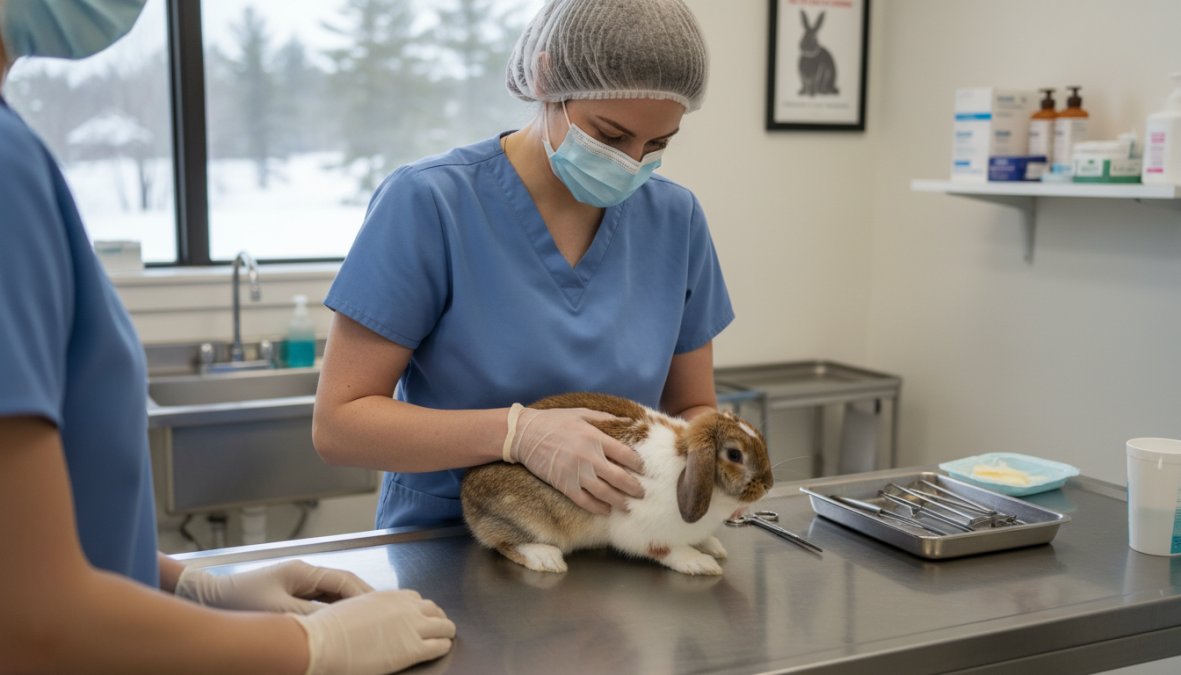
New Hampshire has a smaller pool of exotic animal specialists than larger states, which means rabbit owners sometimes drive past the nearest general practice to reach a vet with genuine rabbit surgery experience. That drive is worth it. The following approaches are the most reliable ways to identify qualified providers in the state:
1. The House Rabbit Society Vet Listing
The House Rabbit Society’s national vet directory allows you to filter by state. The listing is practitioner-submitted and peer-reviewed by rabbit rescue volunteers who have direct experience with the vets listed. Search for New Hampshire and cross-reference any result against the questions below before booking.
2. The Association of Exotic Mammal Veterinarians (AEMV) Member Directory
The AEMV member directory lists veterinarians who have committed to ongoing education in exotic mammal medicine. Membership does not guarantee rabbit surgery volume, but it is a strong signal that the practice takes exotic species seriously. Filter by New Hampshire or by zip code proximity to the NH border.
3. NH Rabbit Rescue Networks
Local rabbit rescues maintain informal but highly accurate lists of vets they trust with their animals. Organizations actively placing rabbits in New Hampshire homes, including those operating through Petfinder listings in the state, typically have direct, firsthand knowledge of which practices handle rabbit surgeries well and which do not. Contacting a local rescue and asking for their vet referral list is often the fastest path to a reliable recommendation.
4. CorePet (NH-Based Spay and Neuter Specialist)
CorePet operates in New Hampshire as a surgery-focused practice specializing exclusively in spay, neuter, and dental procedures. Because rabbit surgeries are a core part of the caseload rather than an occasional add-on, the team maintains the monitoring protocols, anesthetic experience, and post-operative care standards specific to exotic species. Pricing is listed transparently on the CorePet website before you book.
The Five Questions to Ask Any NH Vet Before Booking Rabbit Surgery
Once you have a shortlist of practices, a five-minute phone call with the front desk or a technician will tell you most of what you need to know. Ask these questions specifically, and pay attention to whether the answers are confident and specific or vague and hedged:
| Question | What a Strong Answer Sounds Like |
|---|---|
| How many rabbit spay or neuter surgeries does this practice perform per month? | A specific number, ideally in double digits or at minimum several per month |
| Does the practice use isoflurane or sevoflurane for gas anesthesia maintenance? | A direct yes to one or both, with no hesitation |
| What monitoring equipment is used during rabbit procedures? | Pulse oximetry, capnography, and temperature monitoring named specifically |
| What is the post-operative pain management protocol sent home with the rabbit? | Meloxicam or another named NSAID, with a dosing duration |
| Do you fast rabbits before surgery? | A clear no, any practice that fasts rabbits is applying dog-and-cat protocols to a species where fasting causes GI stasis |
A practice that cannot answer these questions specifically, or that answers the fasting question incorrectly, is not your safest option regardless of proximity or price.
Red Flags to Watch For
Not every practice that lists "exotics" on its website has meaningful rabbit surgery volume. Watch for these warning signs during your initial contact:
- Vague answers about surgical volume. "We see rabbits occasionally" is not the same as a practice that performs rabbit surgeries weekly.
- Recommending pre-surgical fasting. This is the clearest signal that the practice is applying dog-and-cat protocols to a rabbit patient.
- No mention of active warming during surgery. Rabbits lose body heat rapidly under anesthesia; a practice without a warming protocol is operating without a critical safety measure.
- No take-home pain medication. Sending a rabbit home without meloxicam or an equivalent NSAID is below the current standard of care.
- Reluctance to discuss anesthetic monitoring specifics. A confident, experienced team will answer these questions without hesitation.
The single fastest way to find a trustworthy rabbit vet in NH is to contact a local rabbit rescue and ask who they use. Rescues have firsthand, repeated experience with local practices and no financial incentive to recommend anyone, their referrals are the most reliable signal available.
What Makes an Exotic Animal Specialist Safer for Rabbit Surgery
An exotic animal specialist brings specific training in the physiology and anesthetic needs of non-traditional companion animals. For rabbits, this matters because rabbits are induced ovulators with a stress response that can cause serious complications under anesthesia if not properly managed. They also have a high vagal tone, meaning their heart rate can drop dangerously in response to surgical stimulation if the anesthetic plane is not carefully maintained.
Exotic specialists understand that rabbits should not be fasted before surgery the way dogs and cats are, that their temperature drops rapidly under anesthesia and must be actively managed, and that post-operative gut motility is a critical recovery metric. These are not details a general practitioner encounters routinely. They are the difference between a smooth recovery and a serious complication.
Preparing Your Rabbit for Surgery: Step-by-Step
Preparing rabbit for surgery correctly reduces anesthetic risk and speeds recovery. Unlike dogs and cats, rabbits should NOT be fasted before surgery. Their gastrointestinal systems require continuous movement, and withholding food can trigger GI stasis, a potentially fatal condition. Confirm this with your veterinarian, but the current consensus among rabbit-savvy vets is clear: keep food and water available until the rabbit arrives at the clinic.
Here is a practical pre-surgical checklist:
- Schedule a pre-surgical wellness exam at least one week before the procedure
- Request bloodwork for rabbits over three years of age or any rabbit with health concerns
- Confirm the practice uses isoflurane or sevoflurane for gas anesthesia maintenance
- Prepare a clean, quiet recovery cage at home before surgery day
- Bring the rabbit’s preferred hay and a small amount of familiar bedding to reduce stress
- Avoid handling the rabbit excessively the morning of surgery to minimize stress
- Confirm post-operative pain management will be provided before discharge
Do NOT fast your rabbit before surgery. Withholding food triggers GI stasis, which can be more dangerous than the surgical procedure itself. Confirm with your vet that food should remain available until the clinic visit.
Pre-Surgical Fasting: What the Research Actually Says
The no-fasting protocol for rabbits is one of the most important differences between rabbit and cat/dog surgical preparation, and it is also the area where owners most often receive incorrect advice from practices unfamiliar with rabbit care. According to the Association of Exotic Mammal Veterinarians’ clinical guidelines, rabbits cannot vomit and therefore do not face the aspiration risk that makes pre-surgical fasting necessary in dogs and cats.
Fasting a rabbit for even a few hours can slow gut motility enough to trigger GI stasis, a condition where the digestive system slows or stops. GI stasis is painful, potentially fatal, and significantly complicates post-operative recovery. The correct protocol is to allow the rabbit to eat normally until the time of the clinic visit, then proceed with surgery on a full stomach.
This is a clear case where the standard dog-and-cat protocol is actively harmful when applied to rabbits. It is also a reliable litmus test for whether a practice has genuine rabbit surgery experience.
What to Expect During Safe Spay Surgery for Rabbits NH
A properly conducted rabbit spay follows a specific sequence designed to minimize anesthetic exposure time and maintain the rabbit’s body temperature throughout the procedure. The surgical team should have continuous monitoring in place from induction through recovery, including pulse oximetry, capnography to measure CO2 levels, and temperature monitoring.
The procedure itself involves removing the uterus and ovaries (ovariohysterectomy) through a small ventral midline incision. In experienced hands, the surgery typically takes under thirty minutes. Minimizing time under anesthesia is a priority because rabbits are sensitive to hypothermia and prolonged anesthetic exposure increases the risk of GI stasis post-operatively.
Anesthesia and Surgical Safety: Isoflurane and Rabbit Anatomy
Isoflurane is the gold standard anesthetic gas for rabbit surgery, and sevoflurane is an acceptable alternative. Both allow precise control of anesthetic depth and clear quickly from the system on recovery. Rabbit anatomy presents specific challenges: their small body mass means temperature drops rapidly under anesthesia, their respiratory rate is fast and must be monitored carefully, and their cardiovascular system is sensitive to certain pre-anesthetic medications.
A rabbit-savvy surgical team will use active warming throughout the procedure, typically a warm water circulating blanket or forced-air warming system. They will also monitor the rabbit closely during the recovery period, which is often the most vulnerable phase. Rabbits should be kept warm, quiet, and closely observed until they are fully ambulatory and eating.
According to veterinary anesthesia guidelines from the American College of Veterinary Anesthesia and Analgesia, multimodal analgesia (combining more than one pain management approach) produces better outcomes in exotic species than single-drug protocols.
Rabbit Spay Recovery Tips: Post-Operative Care at Home
Post-operative care at home is where rabbit spay recovery tips matter most. The first 48 to 72 hours after surgery are the highest-risk period for GI stasis, incision complications, and pain-related stress. A rabbit that stops eating within the first few hours after returning home needs veterinary attention promptly.
Set up a recovery cage before surgery day. The cage should be:
- Small enough to restrict jumping and running (a playpen-style enclosure works well)
- Lined with soft, clean bedding such as fleece or paper-based litter
- Stocked with fresh hay, water, and a small amount of the rabbit’s regular pellets
- Kept in a quiet, temperature-stable area away from other pets
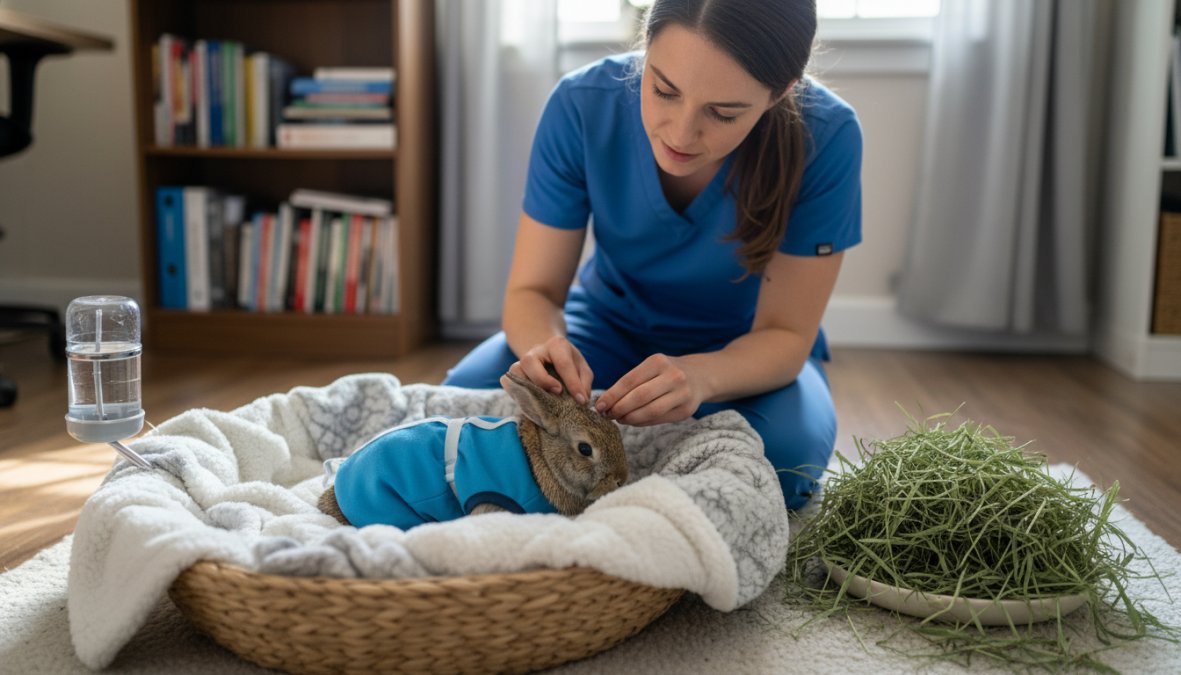
Monitor the incision daily for redness, swelling, discharge, or signs that the rabbit is chewing at the sutures. An e-collar (cone) is sometimes necessary but can be stressful for rabbits; discuss alternatives with your vet, such as a soft recovery suit.
Offer your rabbit’s favorite leafy greens during recovery to encourage eating. GI motility depends on the rabbit consuming fiber, and a rabbit that is eating hay and greens within a few hours of returning home is recovering well.
Post-Operative Pain Management Protocols
Pain management after rabbit spay surgery is non-negotiable, and a practice that sends a rabbit home without prescribed analgesia is not meeting the current standard of care. Rabbits are prey animals that instinctively hide pain, which means an owner cannot rely on behavioral cues alone to assess discomfort.
A standard post-operative pain protocol for rabbit spay surgery typically includes:
- A non-steroidal anti-inflammatory drug (NSAID) such as meloxicam, administered orally for three to five days post-surgery
- Opioid analgesia during the immediate recovery period at the clinic
- Potentially a local anesthetic block at the incision site during surgery
Meloxicam is well-tolerated in rabbits and is the most commonly prescribed take-home analgesic. It reduces inflammation, controls pain, and supports gut motility by keeping the rabbit comfortable enough to eat. Confirm your surgical team’s pain management protocol before the procedure, and ask specifically what medications will be sent home.
Cost of Rabbit Spay Surgery in NH: What to Expect
Cost is one of the most common reasons rabbit owners delay spay surgery, and it is also one of the topics most veterinary guides refuse to address honestly. This section gives you a realistic framework for what rabbit spay surgery costs in New Hampshire, why exotic animal procedures cost more than equivalent dog-and-cat surgeries, and, critically, what options exist if cost is a genuine barrier.
Why Rabbit Spay Surgery Costs More Than a Cat Spay
The price difference between a cat spay and a rabbit spay at the same practice is not arbitrary. It reflects real differences in what the procedure requires:
- Specialized anesthetic monitoring equipment. Rabbits require capnography, pulse oximetry, and active warming throughout the procedure. Not every general practice maintains this equipment for small exotic patients.
- Longer active monitoring time. Rabbits are vulnerable during recovery in ways cats and dogs are not. A rabbit-savvy practice keeps the patient under close observation until it is fully ambulatory and eating, this takes staff time.
- Lower surgical volume. A general practice that performs rabbit surgeries occasionally cannot spread equipment and training costs across a high case volume the way a dog-and-cat focused practice can. Specialty volume practices like CorePet, which focus exclusively on spay, neuter, and dental procedures, can offer more consistent pricing because rabbit surgeries are a routine part of the caseload.
- Exotic animal training. Veterinarians and technicians with exotic mammal training have invested in continuing education that general practitioners have not. That expertise has a cost, and it is the expertise that makes the procedure safe.
Understanding these cost drivers helps you evaluate quotes accurately. A significantly lower quote from a general practice with no stated rabbit surgery experience is not necessarily a better deal, it may reflect lower overhead because the practice lacks the monitoring and protocols that make the surgery safe.
Realistic Cost Framework for NH Rabbit Owners
Because veterinary pricing varies by practice, region, and individual patient factors, specific dollar figures can be misleading without context. What follows is a framework for understanding what line items to expect and how they add up:
| Service | Notes for NH Rabbit Owners |
|---|---|
| Pre-surgical wellness exam | Often required before surgery can be scheduled; may be bundled or billed separately |
| Pre-surgical bloodwork | Strongly recommended for rabbits over three years old; adds to total cost but reduces anesthetic risk |
| Spay surgery (doe, ovariohysterectomy) | The largest single line item; exotic animal pricing is typically higher than equivalent cat procedures |
| Neuter surgery (buck, orchiectomy) | Generally less expensive than a spay due to shorter procedure time and less complex anatomy |
| Anesthesia and monitoring | Should be included in the surgical fee at any rabbit-savvy practice; confirm this when you get a quote |
| Post-operative pain medication (meloxicam) | Should be dispensed at discharge; ask whether it is included in the surgical fee or billed separately |
| E-collar or recovery suit | Optional; discuss with your vet whether your rabbit will need one |
| Follow-up exam | Some practices include a post-operative check; others bill separately |
CorePet lists current pricing transparently on the CorePet website so you know the full cost before you book, with no surprises at discharge. Asking for a written estimate before scheduling is reasonable at any practice, and any reputable provider will give you one.
Financial Assistance and Low-Cost Options for NH Rabbit Owners
Cost should not be the reason a rabbit goes unspayed. Several concrete options exist for New Hampshire owners who need financial assistance, and knowing where to look before you need surgery gives you more options than searching in a crisis.
Veterinary Payment Plans
Many NH veterinary practices accept third-party financing through CareCredit or Scratchpay. Both offer promotional periods with deferred interest for qualifying applicants, which can spread the cost of surgery over several months. Ask your practice whether they accept either program before your appointment, enrollment takes minutes and approval is often immediate.
Local Humane Societies and Rabbit Rescues
Some NH humane societies and rabbit-specific rescues offer reduced-cost spay and neuter programs for owned pets, not just animals in their care. These programs are typically funded through grants and have limited slots, so availability changes. Calling your nearest NH humane society directly and asking whether they have a current low-cost program for rabbits, or know of one, is the fastest way to find active options.
The Humane Society of the United States Low-Cost Spay/Neuter Database
The HSUS low-cost spay/neuter program database allows you to search by zip code for programs in your area. Coverage for exotic animals like rabbits varies by program, but the database is updated regularly and worth checking before assuming no options exist in your region.
Breed and Species-Specific Rescue Assistance
Some rabbit rescue organizations offer financial assistance for veterinary care to owners who adopted from them or who can demonstrate financial need. If you adopted your rabbit from a NH rescue, contact them directly, many have emergency vet funds or can connect you with resources they do not advertise publicly.
Negotiating a Payment Plan Directly with the Practice
For owners with an established relationship with a veterinary practice, asking directly for an in-house payment plan is worth doing. Many practices will work with long-term clients on a payment schedule for elective procedures, particularly when the alternative is the rabbit going without surgery entirely.
If cost is a concern, call CorePet directly before assuming surgery is out of reach. Transparent pricing and a clear conversation about what is included in the fee is the starting point, not the end of the conversation.
The Long-Term Cost Argument for Spaying Early
The most honest framing of rabbit spay cost is a comparison against the alternative. An intact doe who develops uterine adenocarcinoma, which, according to the House Rabbit Society, becomes increasingly common in unspayed does after age two, will require either emergency surgery on a compromised patient or palliative care. Emergency exotic animal surgery costs significantly more than elective surgery on a healthy rabbit, and the outcomes are worse. Uterine infections (pyometra) follow the same pattern: treatable early, life-threatening and expensive late.
A rabbit spay performed once, at a predictable cost, during the optimal window before age two, is the most cost-effective reproductive health decision available to a rabbit owner. The financial case for early surgery is as strong as the medical one.
Conclusion: Giving Your Rabbit the Safest Start
Finding safe spay surgery for rabbits in NH is not about finding the nearest vet, it’s about finding the right one: an exotic animal specialist with genuine rabbit surgery experience, modern monitoring equipment, and a clear post-operative pain management protocol.
Rabbit owners in New Hampshire deserve access to spay and neuter care that meets the highest surgical standards without requiring a drive to a major metro area. CorePet is a locally owned surgery center that focuses exclusively on spay, neuter, and dental procedures, which means every rabbit that comes through the door receives individualized care from a team that performs these surgeries routinely. Pricing is transparent and listed on the CorePet website. Book an appointment with CorePet and give your rabbit the safest, most informed start to a long, healthy life.
Frequently Asked Questions
Why is it important to find an exotic animal specialist for rabbit spay surgery in NH?
Rabbits have unique anatomy, including a bicornuate uterus, and respond differently to anesthesia than dogs or cats. A rabbit-savvy veterinarian or exotic animal specialist understands safe isoflurane protocols, proper pain management, and the signs of surgical complications specific to rabbits. Choosing a general practice without rabbit experience increases risk. In NH, seeking a vet with documented exotic animal experience is one of the most important steps toward a safe spay outcome for your doe.
At what age should a rabbit be spayed or neutered?
Most does (female rabbits) can be spayed once they reach sexual maturity, typically around 4 to 6 months of age. Bucks (males) are generally ready for neutering around 3 to 4 months. Spaying early, before the first heat cycle, is often recommended to reduce the risk of uterine cancer and prevent unwanted litters. Your rabbit-savvy vet in NH can confirm the ideal timing based on your rabbit's individual size, breed, and overall reproductive health.
How much does rabbit spay surgery cost in NH, and is financial help available?
The cost of rabbit spay surgery in NH varies depending on the clinic, your rabbit's size, and any pre-surgical bloodwork required. Specialty surgery centers like CorePet are transparent about pricing, visit the CorePet pricing page for current rates. Some low-cost clinic programs and rabbit rescue organizations in New England may also offer financial assistance or referrals to affordable altered rabbit surgery options. Always confirm what is included in the quoted price, such as anesthesia, pain management, and post-operative care.
How do I prepare my rabbit for spay surgery, and should I fast them beforehand?
Unlike dogs and cats, rabbits should NOT be fasted before surgery. Because rabbits are induced ovulators with a constantly moving digestive system, withholding food can cause dangerous GI slowdown. When preparing your rabbit for surgery, keep hay and water available until the clinic instructs otherwise, avoid stressful handling the morning of the procedure, and bring familiar bedding to reduce anxiety. Confirm pre-surgical requirements directly with your NH veterinarian, as protocols may vary slightly by clinic.
How long is recovery after rabbit spay surgery, and what does post-op care involve?
Most rabbits return to normal activity within 10 to 14 days after a spay procedure. Immediately after surgery, keep your rabbit in a clean, quiet recovery cage away from other pets. Monitor the incision site daily for redness or discharge. Encourage eating, GI stasis is a serious post-operative risk. Pain management typically includes prescribed oral meloxicam. Follow your vet's guidance on activity restrictions, and contact the clinic right away if your rabbit stops eating, drinking, or producing droppings.
This article was written using GrandRanker