Table of Contents
- Why Rabbit Dental Disease Is So Common
- Rabbit Malocclusion Symptoms and Signs of Overgrown Rabbit Teeth
- Rabbit Dental Care Diet: The First Line of Defense
- Prevention, Monitoring, and Local Veterinary Care
- Frequently Asked Questions
Last Updated: September 28, 2026
Why Rabbit Dental Disease Is So Common
Dental disease is one of the most frequently diagnosed health problems in pet rabbits, and the risk of dental disease in rabbits is higher than most owners realize. CorePet, a locally owned surgery center serving New Hampshire, focuses on spay, neuter, and dental procedures for dogs, cats, and rabbits.
The visible incisors get attention, but the cheek teeth at the back cause most serious problems; they rely on constant wear from fibrous food, and when that wear stops, they keep growing. Owners often miss early stages because rabbits hide discomfort well.
Rabbit Malocclusion Symptoms and Signs of Overgrown Rabbit Teeth
Rabbit malocclusion symptoms usually appear gradually; the most reliable early warning is a change in eating behavior.
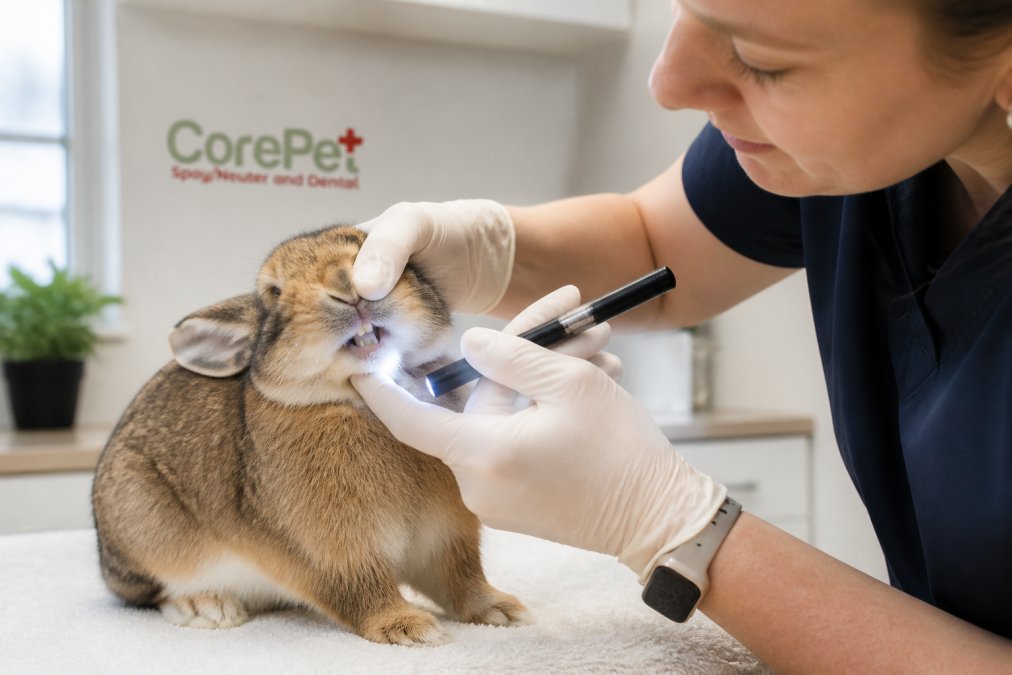
Signs of overgrown rabbit teeth include dropping food or chewing on one side, reduced appetite or refusal of hard foods like hay, weight loss despite interest in food, drooling or a wet chin, facial swelling or a jaw lump, watery eyes or discharge, and reduced grooming. Advanced dental disease may cause a dental abscess; anorexia and dysphagia warrant prompt evaluation. A veterinarian confirms the diagnosis through a mouth examination, often with skull radiographs; complex cases may need a CT scan.
Do not wait for obvious facial swelling before seeking care. By the time swelling appears, the underlying dental disease is often advanced and harder to manage.
Rabbit Dental Care Diet: The First Line of Defense
The single most effective way to lower the risk of dental disease in rabbits is a hay-based diet. Grass hay, available at all times, provides the fiber that wears down cheek teeth and incisors.
A proper rabbit dental care diet includes unlimited fresh grass hay, a measured portion of plain pellets rather than a free-fed bowl, daily leafy greens, limited treats, and fresh water. A common mistake is treating pellets as the main food source; pellets are soft and do little to wear the teeth, while hay does the work.
Offer hay in a rack rather than on the floor. Rabbits eat more of it when it stays clean and dry, and more hay eaten means more natural wear on the teeth.
Prevention, Monitoring, and Local Veterinary Care
Preventative health for rabbits centers on diet, routine checkups, and home monitoring. A rabbit that eats well and maintains weight is usually wearing its teeth properly, but silent problems can still develop.
Each week: weigh your rabbit, check that hay is being eaten, look for drooling or a wet chin, feel along the jaw for lumps or swelling, watch for watery eyes or nasal discharge, and confirm normal droppings and appetite. Rabbits treated early generally have a better prognosis than those treated after weight loss sets in.
For owners searching for a rabbit dental care provider near me in New Hampshire, choosing a clinic that works with rabbits regularly matters. CorePet focuses on spay, neuter, and dental procedures for dogs, cats, and rabbits, and can be reached to schedule an appointment.
Frequently Asked Questions
What are the early warning signs of dental disease in rabbits?
Watch for dropping food, weight loss, drooling, watery eyes, and reduced appetite. A rabbit with dental disease may also grind its teeth, avoid hard pellets, or produce smaller droppings. Facial swelling or a runny nose can signal advanced problems. Because rabbits hide pain well, these signs often appear after the condition has progressed. Regular home checks and prompt veterinary attention improve outcomes significantly.
How does a rabbit’s diet impact their dental health?
A hay-based diet is essential. Chewing hay wears down rabbit teeth, which grow continuously throughout life. Rabbits fed mostly pellets and soft treats develop overgrown teeth and malocclusion faster. Offer unlimited grass hay, limited pellets, and leafy greens. This simple change reduces the risk of dental disease in rabbits and supports overall digestive health.
How often should a rabbit have a professional dental exam in New Hampshire?
Most veterinarians recommend a dental check at least once a year, and every six months for rabbits with a history of dental problems. During the exam, a vet can spot early signs of overgrown rabbit teeth before they cause serious issues. If you notice symptoms between visits, book an appointment sooner. CorePet offers dental services for rabbits in New Hampshire.
Dental disease in rabbits rarely appears without warning, but the early signs are easy to miss without knowing what to watch for. CorePet provides focused dental care for rabbits, along with spay and neuter procedures, using modern surgical techniques and individualized attention at reasonable costs. If a rabbit is showing any of the signs covered here, booking an appointment with CorePet is the next step toward protecting its health.