Table of Contents
- Spay vs Neuter Recovery Time: Key Differences
- Signs of Complications After Spay Surgery
- How to Prevent Pets from Licking Incisions
- Frequently Asked Questions
Last Updated: September 7, 2026
Deciding between spay vs neuter surgery recovery comes down to understanding that while both require similar post-operative care, timelines and risks differ based on your pet’s sex and the surgery’s invasiveness. A spay (ovariohysterectomy) is internal abdominal surgery, while a neuter (castration) is external and less invasive. This guide from CorePet, a locally owned surgery center in New Hampshire, breaks down what to expect during recovery for each.
Spay vs Neuter Recovery Time: Key Differences
Spay surgery recovery time is generally longer and requires stricter activity restriction than neuter recovery, typically spanning 10 to 14 days before normal activity.
Neuter surgery recovery is typically shorter, with most pets back to normal within 5 to 7 days. However, swelling and the risk of incision site infection still require diligent monitoring.
| Aspect | Spay Recovery (Female) | Neuter Recovery (Male) |
|---|---|---|
| Typical Recovery Period | 10-14 days | 5-7 days |
| Primary Risks | Internal bleeding, hernia | Swelling, scrotal hematoma |
| Activity Restriction | Strict, no jumping or running | Moderate, leash walking only |
The most common mistake owners make is assuming a male pet’s faster recovery means the activity restriction can be relaxed early. Allowing vigorous play during the first week after a neuter can still lead to swelling or opening of the incision site.
Signs of Complications After Spay Surgery
Monitoring the incision site is the most critical part of post-operative care after a spay. While some redness and mild swelling are normal in the first 48 hours, certain signs require immediate veterinary attention.
Contact your veterinarian right away if you notice persistent redness that spreads, firm or enlarging swelling, yellow/green/bloody discharge, broken or missing sutures, or an incision that opens at the edges.
Beyond the surgical site, monitor behavior. Lethargy lasting over 24 hours, loss of appetite, vomiting, or difficulty urinating are reasons to call your vet. Sudden significant pain, excessive panting, or pale gums may signal internal bleeding.
Trust your instincts. If something about the incision site or your pet’s demeanor seems off, an early call to the veterinarian is always the right choice. Prompt attention prevents minor issues from becoming major health problems.
How to Prevent Pets from Licking Incisions
Preventing your pet from licking the incision is non-negotiable for a smooth recovery from both spay and neuter surgery. Licking introduces bacteria to the surgical site and can break down sutures or delay healing.
The most reliable method is an Elizabethan collar (E-collar or cone). While many pets resist it at first, most adjust within 24 to 48 hours. A properly fitted E-collar extends just past the nose.
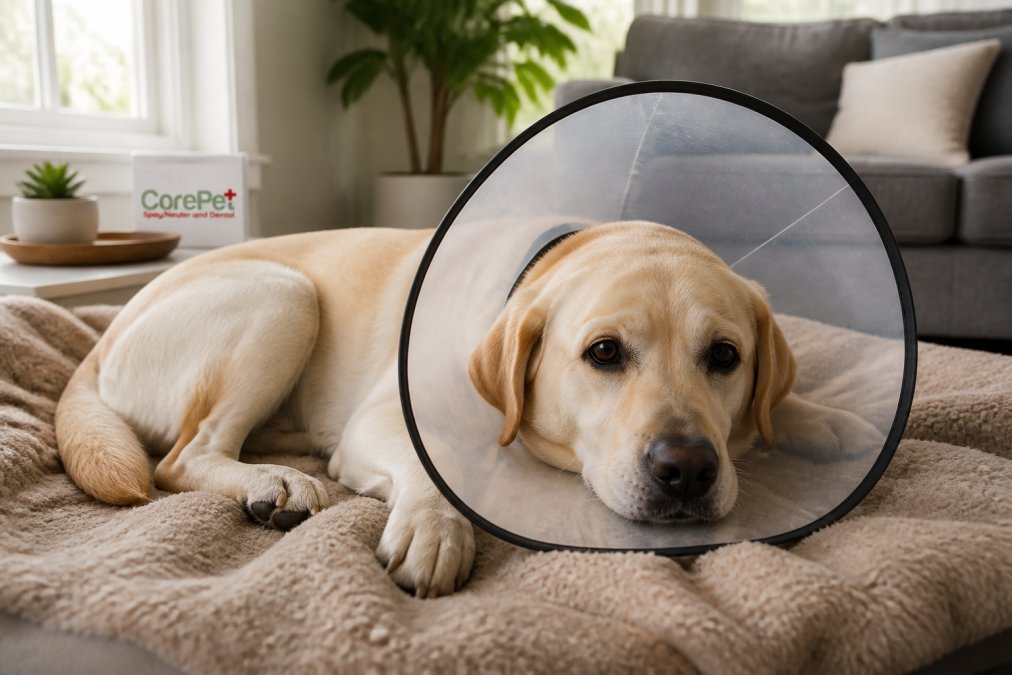
For pets that find a traditional cone distressing, inflatable collars are often more comfortable, particularly for shorter-snouted pets. Recovery suits are another option but not foolproof. Regardless of method, the collar or alternative must stay on at all times, including overnight.
A common mistake is removing the collar during meals or while the pet sleeps. This is exactly when licking is most likely to occur undetected. Keep the collar on during these moments, and feed your pet in a way that accommodates the cone, such as using a flat, wide bowl.
Following your veterinarian’s pain management and medication schedule is just as important as preventing licking. Keep your pet in a quiet environment, stick to leash walking for bathroom breaks only, and avoid running, jumping, and rough play for the full recovery period.
For pet owners in New Hampshire looking for a dedicated surgery center that focuses on spay, neuter, and dental procedures, CorePet offers a fear-free environment with modern surgical techniques.
Recovery after spay or neuter surgery is manageable when you understand the key differences in healing timelines and know what to watch for. Full recovery relies on strict activity restriction, diligent monitoring of the incision site, and preventing licking with an E-collar. If you are preparing for your pet’s surgery in New Hampshire, CorePet provides safe, affordable, and respectful care. Book an appointment with CorePet for a smooth surgical experience and a confident recovery plan.
Frequently Asked Questions
Is recovery easier for spay or neuter?
Neuter recovery is generally easier because it is a less invasive procedure. Neutering is an external surgery on the testicles, while a spay involves entering the abdomen to remove the uterus and ovaries. This means spay surgery recovery time is often longer, and the incision site requires more careful monitoring for swelling or discharge. Your veterinarian will provide specific post-operative care instructions based on the procedure your pet received.
How long does a pet need to be restricted after surgery?
Most pets need 10 to 14 days of restricted activity after both spay and neuter surgeries. This means no running, jumping, or rough play. Short, leashed walks for bathroom breaks are usually allowed. Keeping your pet calm during the recovery period is essential to prevent the incision from reopening. A quiet environment and crate rest can help enforce these activity restrictions.
What are the signs of infection after pet surgery?
Monitor the incision site daily for signs of complications after spay surgery or neuter. Watch for excessive redness, swelling, discharge, or a foul odor. If the wound feels hot to the touch or your pet develops a fever, lethargy, or a decreased appetite, contact your veterinarian immediately. Sutures that come loose or an incision that opens up also require urgent veterinary attention.