Table of Contents
- Veterinary Dental Cleaning for Pets: What to Expect
- Signs of Dental Disease in Dogs and When to Book a Cleaning
- Pet Dental Cleaning Under Anesthesia: Safety and What Happens
- Dog Dental Cleaning Aftercare and Home Care Between Visits
- Frequently Asked Questions
Last Updated: October 4, 2026
Veterinary Dental Cleaning for Pets: What to Expect
Veterinary dental cleaning for pets removes plaque and tartar below the gumline, where infection starts.
Dental disease is one of the most common conditions veterinarians diagnose in adult dogs and cats. The American Veterinary Medical Association notes that by age three, most dogs and cats show some evidence of periodontal disease, the AVMA resources on pet dental care. Bad breath is often the first visible clue, and by then tartar has typically formed.
A dental cleaning is a medical procedure, not cosmetic grooming: it includes a full oral examination, dental X-rays in many cases, and treatment of disease under the gumline.
Signs of Dental Disease in Dogs and When to Book a Cleaning
Book a dental cleaning when you notice bad breath, yellow-brown buildup, red or swollen gums, drooling, dropping food, or chewing on one side. Pets hide oral pain, so also watch for pawing at the face, reluctance to eat hard food, loose teeth, bleeding gums, or jaw swelling.
Plaque is the soft daily film of bacteria; tartar is plaque that has hardened onto the tooth. Brushing removes plaque, but only a professional cleaning can remove tartar, especially below the gumline. If it has been more than a year since the last cleaning, schedule a dental consultation; small breeds, flat faces, crowded teeth, or a history of gum disease need cleanings more often.
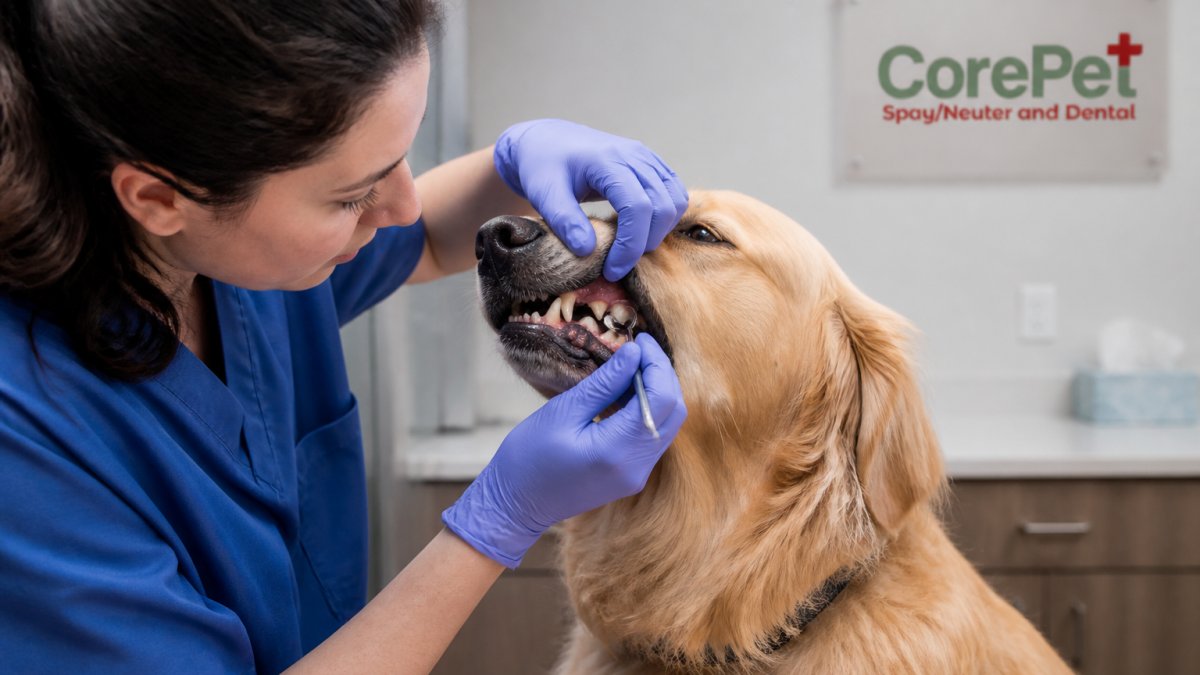
Never try to scrape tartar off a pet’s teeth at home with a dental pick or fingernail. This scratches the enamel, which gives bacteria more places to attach and can make buildup worse.
Pet Dental Cleaning Under Anesthesia: Safety and What Happens
A professional dental cleaning is performed under general anesthesia so the veterinarian can examine every tooth, clean below the gumline, and take dental X-rays without pain or stress. The sequence: pre-anesthetic examination and bloodwork, anesthetic induction with monitoring, full oral examination, dental X-rays, removal of plaque and tartar above and below the gumline, extraction if a tooth is too damaged to save, then polishing and recovery.
Anesthesia-free cleaning removes only visible tartar above the gumline, leaving disease-causing deposits below untouched, and cannot include X-rays, extractions, or probing.
The value of a veterinary dental cleaning comes from what happens below the gumline. If a service skips anesthesia, it skips the part of the mouth where disease actually lives.
Dog Dental Cleaning Aftercare and Home Care Between Visits
Recovery is usually quick. Most pets go home the same day, though they may be groggy for several hours and should be kept quiet, warm, and away from stairs while wobbly. For the first day or two, offer soft food if the gums are tender, follow pain medication instructions, and never give human pain relievers, which can be toxic to dogs and cats.
Home dental care determines how long results last. Brush daily with a pet toothbrush and pet toothpaste (never human toothpaste), working along the outer surfaces where tartar builds fastest, and use veterinary dental chews or a dental diet as a supplement, not a replacement.
Wrap a strip of gauze around your finger and rub it along the gumline if a pet refuses a toothbrush. It still disrupts plaque, and it helps the pet get used to having its mouth handled.
Frequently Asked Questions
Why do pets need anesthesia for a dental cleaning?
Anesthesia keeps your pet still and comfortable while the veterinarian cleans above and below the gumline, where plaque and tartar hide. It also allows a full oral examination, dental X-rays, and safe removal of diseased teeth if needed. Pre-anesthetic bloodwork and monitoring during the procedure help lower risk for most healthy pets. Your vet will assess your pet’s individual health before recommending anesthesia.
How can I tell if my pet needs a professional dental cleaning?
Watch for bad breath, yellow or brown buildup on teeth, red or swollen gums, drooling, dropping food, or chewing on one side. These are common signs of dental disease in dogs and cats. Even without obvious symptoms, most pets benefit from a veterinary dental examination and routine cleaning once a year. Your vet can confirm whether tartar and plaque have built up below the gumline.
What should I expect after my pet’s dental cleaning?
Most pets go home the same day and may seem tired or groggy from anesthesia for a few hours. Follow your vet’s instructions on food, water, and any pain medication. Check the mouth daily for swelling or bleeding, and keep up home dental care with brushing and vet-approved dental chews. Contact your vet if your pet refuses to eat, vomits, or shows signs of pain after the first day.