Table of Contents
Last Updated: June 20, 2026
How to Prepare Diabetic Pets for Surgery: Key Steps Before the Procedure
Preparing diabetic pets for surgery requires careful planning, diabetes adds complexity and narrows the margin for error. This guide from CorePet, a locally owned veterinary surgery center in Bedford, New Hampshire, covers anesthesia risks, hypoglycemia warning signs, and post-operative care. Most pet owners assume their regular diabetes routine applies on surgery day. It does not. Fasting requirements, insulin timing, and blood glucose targets all shift significantly when surgery is involved.
Diabetic pets face unique physiological stress during anesthesia. Fasting lowers blood glucose, anesthetic agents can alter insulin sensitivity, and surgical stress triggers hormonal responses that spike glucose levels unpredictably. According to American Veterinary Medical Association guidance on anesthesia protocols, pre-surgical assessment and individualized planning are essential for patients with metabolic conditions like diabetes.
Understanding Diabetic Pet Anesthesia Risks
Anesthesia in diabetic pets carries risks that do not apply to healthy animals. The core problem is metabolic instability. Fasting drops blood glucose, stress hormones released during sedation push glucose back up, and anesthetic agents can blunt or amplify insulin sensitivity depending on the drug class used. The result is a glucose level that can swing dramatically during a single procedure.
Hypoglycemia during anesthesia is particularly dangerous because the sedated animal cannot show behavioral warning signs. Hyperglycemia impairs wound healing and increases infection risk post-operatively. Veterinary teams typically monitor blood glucose at multiple points: before induction, intraoperatively, and in recovery. Some patients require a dextrose drip to maintain safe glucose levels.
Cats with diabetes tend to be more insulin-resistant than dogs and may have more unpredictable glucose responses under stress. Your veterinary team should factor species-specific and individual patient history into the anesthesia protocol.
Managing Insulin for Pets Before Surgery
Managing insulin for pets before surgery depends on your pet’s current insulin type, dose, frequency, and how well their diabetes is controlled in the weeks leading up to the procedure.
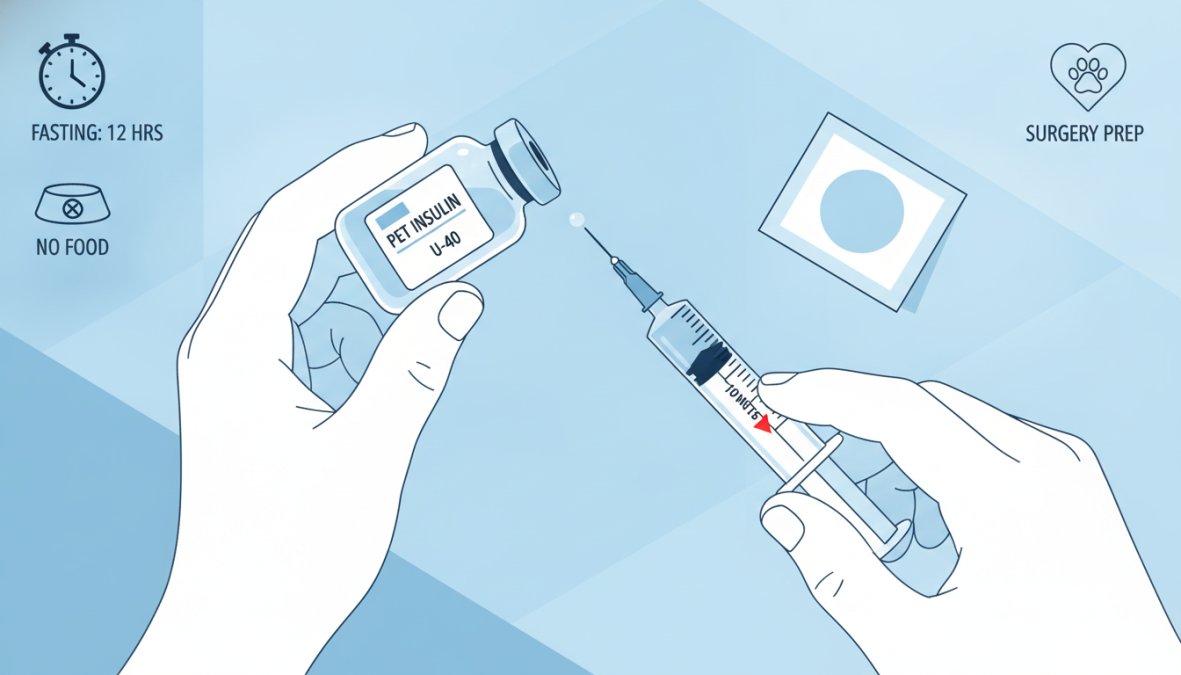
Most veterinarians reduce the insulin dose on the morning of surgery, typically to half the normal dose or less, and withhold food as instructed. However, this must be confirmed with your specific veterinary team.
Pre-surgery insulin checklist to review with your veterinarian:
-
Confirm the exact insulin dose for the morning of surgery (often 25-50% of normal dose)
-
Confirm the fasting window (typically 8-12 hours)
-
Ask whether your pet’s blood glucose will be checked at home before departure
-
Bring your pet’s insulin, syringes, and glucose monitoring supplies to the clinic
-
Provide a 2-week blood glucose log if you monitor at home
-
Ask what blood glucose range the team is targeting before induction
In the 48-72 hours before surgery, ensure your pet’s diabetes is as well-controlled as possible. Poorly controlled diabetes significantly increases surgical risk. Bring a written log of your pet’s last 7-10 blood glucose readings to the pre-surgical appointment.
Recognizing Signs of Hypoglycemia in Pets
Hypoglycemia is the most important risk to recognize in the 24 hours surrounding surgery. When a diabetic pet receives insulin but does not eat, glucose levels can drop to dangerous levels quickly.
Early signs of hypoglycemia in pets:
-
Weakness or sudden lethargy
-
Disorientation or confusion
-
Trembling or muscle twitching
-
Glassy or unfocused eyes
-
Reluctance to stand or walk
Severe hypoglycemia signs (require immediate veterinary attention):
-
Seizures
-
Loss of consciousness
-
Unresponsiveness to name or touch
-
Paddling limbs while lying down
If your pet shows any early signs before you leave for surgery, contact your veterinary clinic immediately. Post-operatively, hypoglycemia risk continues during recovery. Diabetic pets coming out of anesthesia may be slow to eat, and the insulin dose given pre-surgery can still be active. Trembling, non-responsiveness, or seizures are not normal recovery signs.
Post-Operative Care for Diabetic Dogs and Cats
Post-operative care for diabetic dogs and cats requires more active monitoring than standard surgical recovery. The first 48 hours are the most critical window.
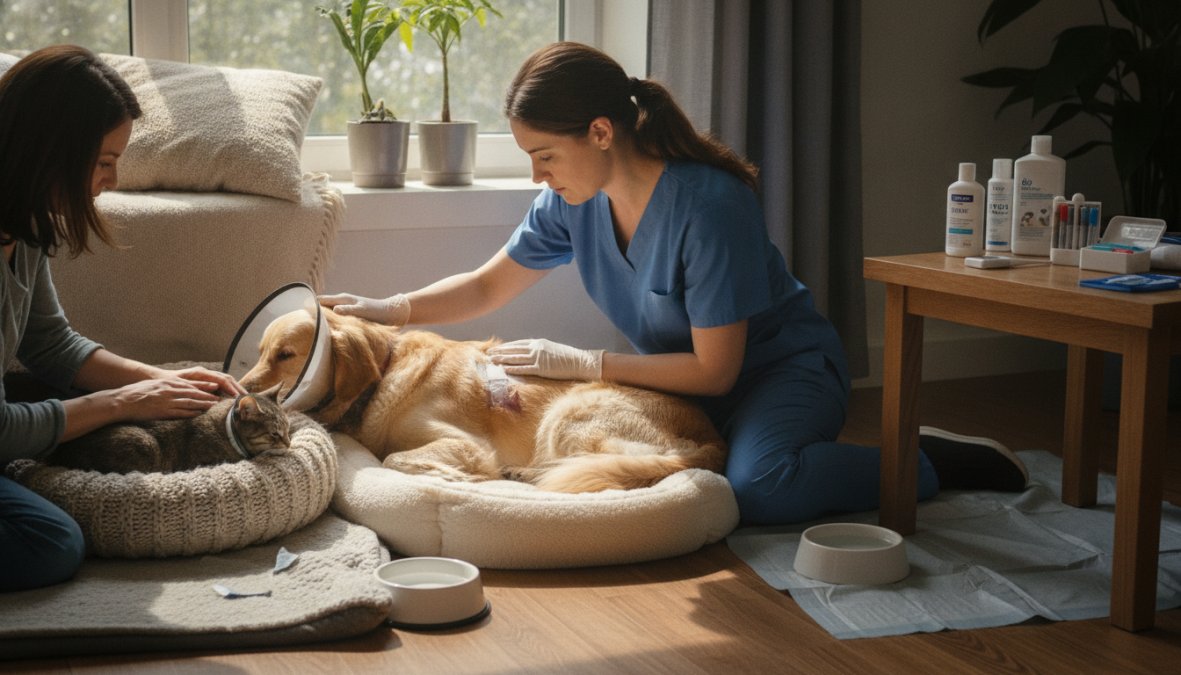
The primary challenge is re-establishing the normal insulin and feeding routine while accounting for reduced appetite after anesthesia. Most diabetic pets do best when they return to their regular meal and insulin schedule within 24 hours of surgery, but this depends on whether they are eating. A common mistake is giving a full insulin dose to a pet that has not eaten post-surgery.
Post-op monitoring priorities for diabetic pets:
-
Incision site: Check twice daily for redness, swelling, discharge, or signs of licking. Diabetic animals have slower wound healing and higher infection risk.
-
Blood glucose: Monitor at home if your veterinarian advises, especially in the first 3-5 days post-surgery.
-
Appetite: Track food intake carefully and report significant reductions promptly.
-
Activity level: Follow exercise restriction instructions precisely.
-
Elizabethan collar: Use consistently to prevent licking at the incision site.
The recovery timeline for diabetic pets generally mirrors that of non-diabetic animals for the surgical wound itself, but glucose regulation may take several days to restabilize. Stress, reduced appetite, and altered activity level all affect insulin requirements.
Preparing a diabetic pet for surgery is more demanding than standard pre-surgical care, and the stakes are higher when blood glucose management is involved. CorePet, based in Bedford, New Hampshire, specializes in Spay Neuter Dental procedures, using modern surgical techniques and individualized care protocols to ensure the safest possible outcomes for every patient, including those with complex medical histories like diabetes.
Frequently Asked Questions
Is surgery safe for diabetic pets?
Yes, surgery can be safe for diabetic pets when properly prepared. The key is working closely with your veterinarian to manage blood sugar levels before, during, and after the procedure. Anesthesia carries some additional risks for diabetic pets, but modern veterinary techniques and careful monitoring minimize these dangers. Pre-operative blood work and adjusted insulin protocols help ensure a successful outcome. Your veterinarian will assess your pet's specific health status to determine if surgery is appropriate and what precautions are needed.
How do I manage my pet's insulin on the day of surgery?
Managing insulin for pets before surgery requires careful coordination with your veterinarian. Most commonly, you'll skip or reduce the morning insulin dose on surgery day, depending on your pet's fasting status and blood sugar readings. Your vet may recommend checking blood glucose levels before anesthesia. After surgery, insulin resumption timing depends on when your pet can eat and their post-operative recovery progress. Never adjust insulin doses without explicit veterinary guidance, as improper management can lead to dangerous blood sugar fluctuations during the critical recovery period.
What signs of hypoglycemia should I watch for after my pet's surgery?
Watch for trembling, weakness, lethargy, confusion, loss of appetite, or seizures—these are signs of hypoglycemia in pets. Some diabetic pets may also exhibit restlessness or anxiety. During post-operative care for diabetic dogs and cats, monitor blood sugar levels regularly as directed by your veterinarian. If you notice any warning signs, contact your vet immediately. Keep fast-acting glucose sources (like honey or glucose tablets) on hand. Post-surgical stress and reduced food intake can lower blood sugar, making vigilant monitoring essential during the first 48-72 hours of recovery.
What should I ask my veterinarian before scheduling surgery for my diabetic pet?
Ask about pre-operative blood work requirements, insulin adjustment protocols, fasting instructions, anesthesia options suitable for diabetic pets, and post-operative monitoring plans. Inquire about pain management strategies and how they interact with insulin therapy. Ask what complications to watch for and when to contact the clinic. Discuss the recovery timeline and when your pet can resume normal activity levels. Clarify whether your veterinarian has experience with diabetic pet surgical care. At CorePet in Bedford, New Hampshire, our team focuses on safe, individualized surgical care and can answer all your pre-surgery questions in detail.
This article was written using GrandRanker