Table of Contents
- Signs of Infection at the Incision Site
- Dog Spay Recovery Timeline and What’s Normal Healing
- Preventing Your Dog from Licking the Spay Incision
- Frequently Asked Questions
Last Updated: September 21, 2026
Signs of Infection at the Incision Site
Warning signs of infection after dog spay appear at the surgical wound. A healthy incision looks clean with minimal redness and swelling that decreases daily; an infected incision shows clear red flags demanding immediate attention.
Visual red flags include increased redness or warmth, swelling that worsens after day three, yellow or green discharge, foul odor, suture separation, and bruising that spreads beyond the first few days.
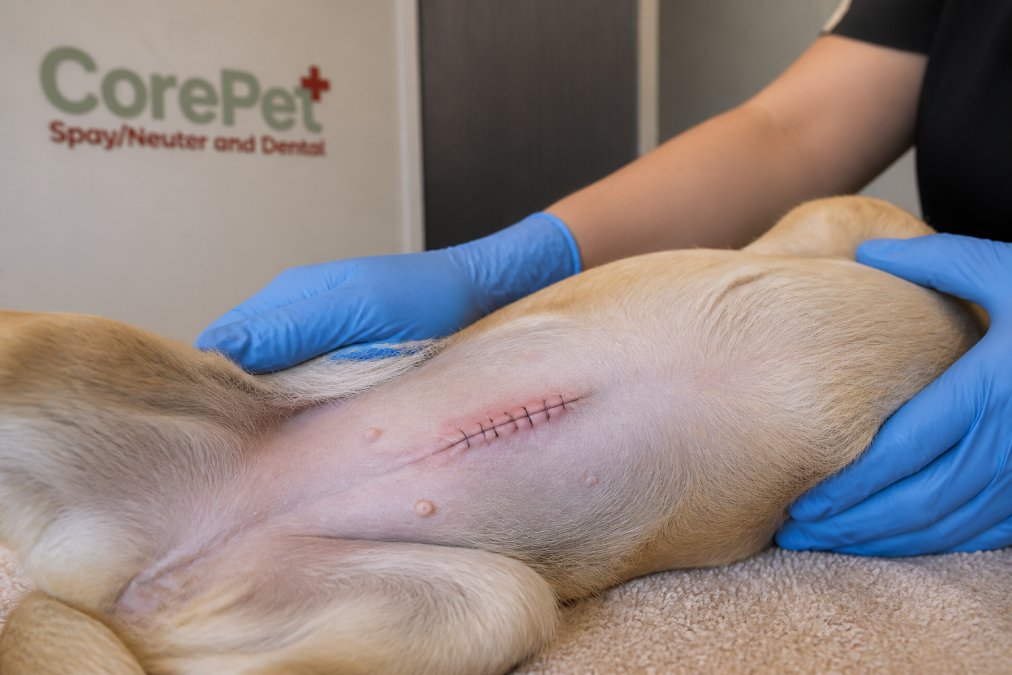
Check the incision daily; infection develops quickly. Contact a veterinarian immediately if the wound looks or smells wrong, as waiting allows infection to spread deeper. Untreated infections can lead to serious complications like pyometra, a life-threatening uterine infection that requires emergency care.
Dog Spay Recovery Timeline and What’s Normal Healing
Understanding normal recovery helps you spot problems faster.
Days 1-3: Mild swelling, redness, and minor bruising are normal. Days 4-7: Swelling decreases, redness fades, and sutures remain intact. Days 8-14: Redness nearly disappears and the wound feels less tender. Beyond day 14: The incision hardens and most dogs show minimal signs by three weeks.
Abnormal healing includes worsening swelling after day three, spreading redness, or any discharge. Behavioral changes like lethargy, refusing food, or trembling signal infection even if the incision appears normal.
Follow pain medication instructions exactly; dogs in pain move more, lick the incision, and delay healing.
Preventing Your Dog from Licking the Spay Incision
Licking is the fastest way to infect a clean wound; your dog’s mouth contains bacteria that introduce infection directly into the incision.
An E-collar is the most reliable prevention method, worn constantly except during supervised eating and bathroom breaks.
Alternative barriers:
- Dog surgical suit, Fabric covers the incision without restricting movement like a cone does
- Bandaging, Wrap the area with sterile gauze and medical tape (change daily)
- Onesie or baby shirt, Pulls fabric over the incision to block access
Behavioral management:
- Keep your dog calm and confined to a small space
- Limit running, jumping, and rough play for two weeks
- Separate your dog from other pets that may lick the wound
- Redirect licking with toys or treats when you catch it happening
Some dogs lick despite barriers. Watch for anorexia (refusing food), hiding, or constant attention to the incision area. These behaviors suggest your dog is focused on the wound and at high risk for infection.
CorePet focuses on safe, individualized post-operative care for dogs, cats, and rabbits in New Hampshire. After your pet’s Spay Neuter Dental procedure, our team provides detailed recovery instructions. Proper wound care in the first two weeks determines healing success.
Frequently Asked Questions
What are the early warning signs of infection after a dog spay?
Early infection signs include increased redness, swelling, or heat around the incision site, purulent discharge or foul odor, and behavioral changes like lethargy or loss of appetite. Some dogs also show trembling or hide more than usual. If you notice any of these within the first two weeks post-operative, contact your veterinarian immediately. Early intervention prevents the infection from becoming systemic.
How long does normal dog spay recovery take, and when should swelling go down?
Most dogs show steady improvement over the first 7-10 days. Minor swelling and bruising are normal initially and typically resolve within two weeks. The incision should appear progressively cleaner and less inflamed. If swelling worsens after day 5 or persists beyond two weeks, this may indicate a problem. Your veterinarian can determine whether you’re seeing normal healing or early signs of infection.
What’s the best way to prevent my dog from licking her spay incision?
An e-collar (cone) is the most effective method and should be worn during all unsupervised time for at least 10-14 days. Some dogs tolerate soft recovery collars or inflatable collars better than traditional cones. Keep your dog calm and restrict jumping and running, which can irritate the incision. Monitor the site frequently; if your dog has licked the area, contact your veterinarian to assess for wound contamination.
Contact a veterinarian immediately if you notice purulent discharge, spreading redness, suture separation, or behavioral changes like lethargy or refusing food. Early intervention prevents serious complications and keeps your dog safe during recovery.