Table of Contents
- What Surgical Safety Standards Apply to Rabbit Spays?
- Rabbit Spay Anesthesia and Preoperative Care
- Rabbit Spay Recovery and Complications to Watch For
- Frequently Asked Questions
Last Updated: October 6, 2026
What Surgical Safety Standards Apply to Rabbit Spays?
Surgical safety standards for rabbit spays protect a rabbit before, during, and after surgery, covering preoperative assessment, anesthesia, sterile technique, monitoring, and postoperative care. This CorePet guide walks through what those standards look like in practice for owners in New Hampshire.
Rabbits are not small cats. Their anatomy and physiology make every stage of surgery different, from anesthesia response to how quickly their digestive system can shut down under stress.
A rabbit spay is not simply a smaller version of a cat spay. The safety standards are different because the patient is different, and a clinic that treats them the same is a clinic worth questioning.
Rabbit Spay Anesthesia and Preoperative Care
Anesthesia is the biggest risk point in a rabbit spay, and preoperative assessment is how a veterinary team reduces that risk. A thorough workup typically includes a physical exam, weight check, and bloodwork.
Rabbits are prone to stress responses that affect heart rate and breathing, so calm handling matters as much as the drugs used. Many clinics combine injectable and inhaled anesthetics with dedicated monitoring of heart rate, respiratory rate, and body temperature.
Preoperative care also means fasting guidance, though rabbits should not be fasted the way dogs and cats often are, since their digestive systems need to keep moving.
Questions worth asking before booking:
- Who monitors anesthesia, and how are vital signs tracked?
- What pain management is included, before and after surgery?
- Is the rabbit kept warm during and after the procedure?
A rabbit that stops eating before surgery is a bigger concern than one that skips a single meal. Bring up any change in appetite, fecal output, or behavior during the preoperative call, not after arrival.
Rabbit Spay Recovery and Complications to Watch For
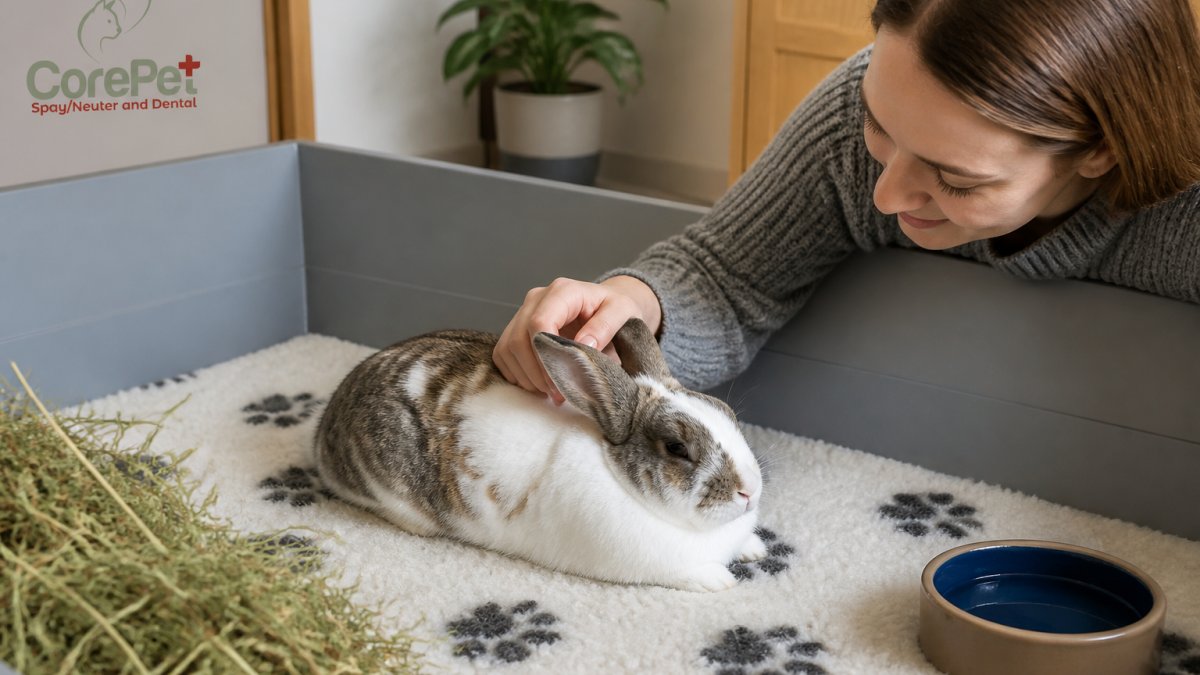
Recovery is where many rabbit spay complications show up, and the first 24 to 48 hours matter most. A rabbit should be eating, drinking, and producing fecal output within a reasonable window; if any stop, call the clinic right away.
GI stasis is the complication owners hear about most, and it is serious. When a rabbit stops eating, gut motility slows and can spiral quickly; pain, stress, and dehydration raise the risk, which is why pain management and a quiet recovery space are part of the safety standard.
Other signs to watch for include:
- Swelling, redness, or discharge at the incision site
- Labored breathing or unusual lethargy
- Drooling or grinding teeth, which can indicate pain
If any appear, contact the veterinary team rather than waiting.
A rabbit that is quiet and not eating after surgery is not “just resting.” That combination can point to GI stasis or uncontrolled pain, and delaying a call to the clinic can turn a manageable issue into an emergency.
Every rabbit spay carries some risk, and the difference between a smooth recovery and a serious complication often comes down to how carefully the standards are followed at each stage. CorePet focuses exclusively on spay, neuter, and dental procedures, using modern surgical techniques and equipment to support safe, individualized care for dogs, cats, and rabbits. If you are weighing options in New Hampshire, start by asking the questions above, then book an appointment with CorePet to walk through preoperative assessment, anesthesia monitoring, and postoperative care for your rabbit.
Frequently Asked Questions
What anesthesia is used for rabbit spay surgery?
Veterinarians typically use injectable anesthetics combined with inhaled isoflurane or sevoflurane for rabbit spays. The exact protocol depends on your rabbit’s age, weight, and health status. Because rabbits cannot vomit, fasting before anesthesia is not recommended the way it is for dogs and cats. Ask your veterinarian which agents they plan to use and how they monitor vital signs like heart rate, respiratory rate, and body temperature throughout the procedure.
How can I tell if my rabbit is recovering normally after a spay?
A normally recovering rabbit eats within 12 to 24 hours, produces fecal output, and moves around its enclosure without excessive lethargy. Your veterinarian should provide written postoperative care instructions covering pain management, incision checks, and diet requirements. If your rabbit refuses food, stops producing droppings, or shows labored breathing, contact your veterinary team immediately. Gastrointestinal stasis is the most common post-surgical concern because it can develop quickly when a rabbit stops eating.
What questions should I ask before my rabbit’s spay?
Ask how many rabbit spays the veterinarian performs monthly, what anesthetic monitoring equipment they use, whether pain medication is included in the quote, and what emergency protocols exist if something goes wrong during surgery. Request a written estimate that itemizes bloodwork, anesthesia, surgical fees, and take-home medication. A provider focused on surgical safety will answer these questions directly and provide transparent costs before the appointment.