Table of Contents
- Is Spay Surgery Safe for Older Dogs?
- Senior Dog Anesthesia Safety
- Preoperative Testing for Senior Dogs
- Frequently Asked Questions
Last Updated: October 16, 2026
Is Spay Surgery Safe for Older Dogs?
Many pet owners worry about spaying an older dog. Whether is spay surgery safe for older dogs has a straightforward answer: yes, when proper precautions are taken. Age alone doesn’t disqualify a dog, overall health, veterinary evaluation, and careful anesthesia planning matter most.
The difference between a safe procedure and a risky one comes down to preparation: a veterinarian who assesses the individual dog, not just their age, can make surgery a reasonable choice.
Senior Dog Anesthesia Safety
Anesthesia is the concern most owners raise first, and it is a fair one. Older dogs don’t process anesthetic drugs the same way younger dogs do, liver and kidney function decline, body fat rises, and cardiac output can drop. That is why American Animal Hospital Association (AAHA) guidelines emphasize patient-specific protocols over weight-based dosing alone.
What makes anesthesia safer for a senior dog is a chain of decisions:
- Pre-anesthetic bloodwork for liver enzymes, kidney values, and blood glucose
- A tailored drug protocol, shorter-acting injectables and inhalant maintenance allow faster adjustment and recovery
- IV fluids to support blood pressure and kidney perfusion
- Continuous monitoring of heart rate, respiratory rate, blood pressure, SpO2, and temperature
- Active warming, older dogs lose body heat faster
- A dedicated staff member monitoring the patient
In senior patients, the anesthesia itself is often not the main risk, undiagnosed heart disease, dehydration, or hidden infection are bigger variables, and the pre-surgical workup catches them. When ruled out or managed, many older dogs recover in a timeframe similar to younger dogs.
Ask your veterinarian these four questions before scheduling: (1) Who will monitor my dog during the procedure? (2) What monitoring equipment will be used? (3) Will IV fluids and active warming be part of the plan? (4) What is the plan if my dog’s blood pressure drops during surgery? Clear answers are a good sign.
Age alone is not a reason to skip anesthesia. A 12-year-old with normal bloodwork and a healthy heart is often a better candidate than a 4-year-old with undiagnosed mitral valve disease. Focus on organ function and stability, not birthdays.
Preoperative Testing for Senior Dogs
Preoperative testing is where safety for an older dog is built. The goal isn’t to clear every dog, it’s to find issues that would change the anesthesia plan, timing, or decision to operate.
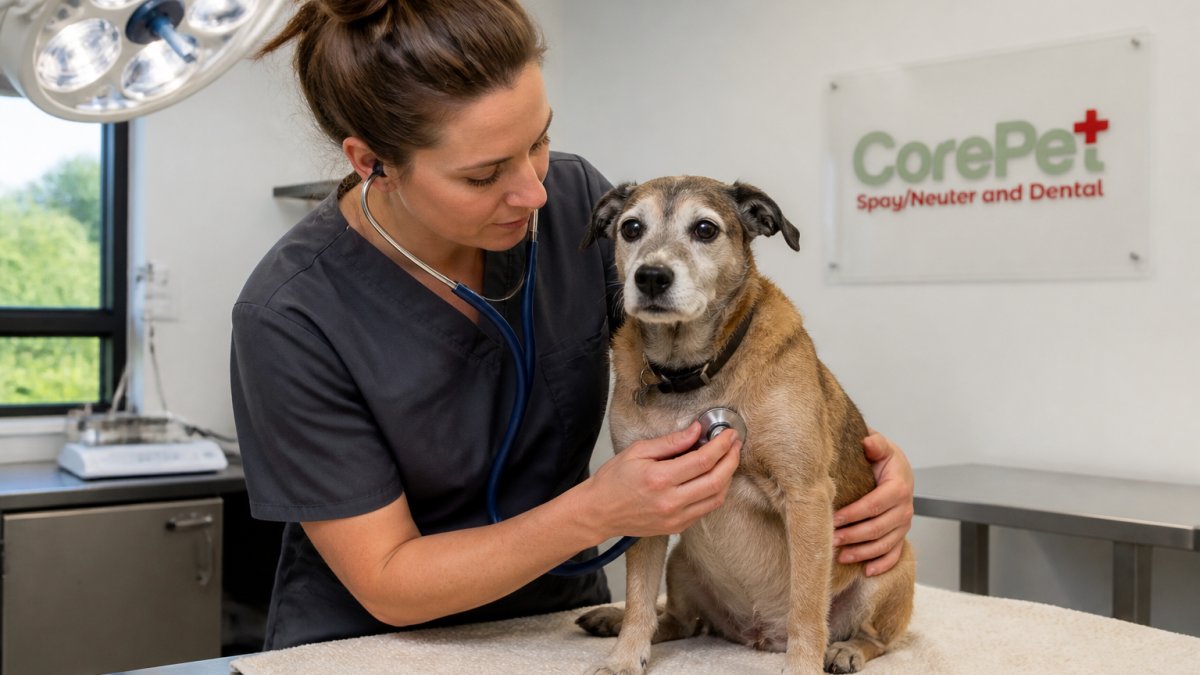
A senior workup typically includes:
- Complete physical examination, heart and lung auscultation, hydration, body condition, oral cavity, and lymph nodes
- Complete blood count (CBC), screens for anemia, infection, and platelet abnormalities affecting bleeding risk
- Serum chemistry panel, liver enzymes, kidney values, glucose, and electrolytes
- Urinalysis, detects urine concentration, protein loss, and urinary tract infection
- Thoracic radiographs, look for heart enlargement, lung disease, or metastasis
- Blood pressure measurement, hypertension is common and changes drug selection
- ECG, used when a murmur or arrhythmia is heard
What the results change matters most. Elevated kidney values mean different IV fluid rates and avoided drugs; a heart murmur may prompt an echocardiogram; a low platelet count may postpone surgery. A mild, stable liver enzyme elevation with otherwise normal values is often still a reasonable surgical candidate, the trend matters more than a single number.
Do not skip preoperative bloodwork to save time or money. A dog can look completely normal on the outside and still have early kidney or liver changes that make a standard anesthetic protocol unsafe. The bloodwork is what turns a guess into a plan.
Testing also identifies when spaying becomes medically urgent rather than elective. Pyometra, a bacterial uterine infection, is a life-threatening emergency most common in unspayed middle-aged and older dogs; surgery may be needed within hours, and delaying clearly outweighs the anesthetic risk. Findings like a mammary mass or ovarian tumor can shift the conversation from ‘should we spay?’ to ‘how soon can we spay?’
For owners in New Hampshire, the next step is to ask your veterinarian for a written estimate and a clear explanation of which tests are recommended and why. If cost is a barrier, ask whether a low-cost spay and neuter clinic in New Hampshire can perform the surgery and whether they require the same preoperative testing for senior dogs, some do, some do not, and that difference matters for an older patient.
Frequently Asked Questions
Is it safe to spay an older dog?
Spay surgery can be safe for older dogs when proper precautions are taken. A thorough preoperative evaluation, including bloodwork and a physical examination, helps identify any underlying health concerns. Modern anesthesia protocols designed for senior pets, combined with careful monitoring during and after surgery, significantly reduce surgical risk. Your veterinarian will assess your individual dog’s overall health and age to determine if spay surgery is appropriate.
What preoperative testing should a senior dog have before spay surgery?
Before spay surgery, senior dogs typically need bloodwork to check liver and kidney function, a physical examination to assess overall health, and sometimes additional imaging or tests based on individual risk factors. These preoperative tests help your veterinarian plan anesthesia safely and identify any conditions that might affect recovery. Discuss your dog’s complete medical history with your veterinarian to determine which tests are necessary for your pet.
How long does recovery take for an older dog after spay surgery?
Recovery timelines vary, but most older dogs show improvement within 7-10 days after spay surgery. Full healing typically takes 2-3 weeks. Senior dogs may recover more slowly than younger dogs, so limiting activity, monitoring the incision for signs of infection, and following postoperative care instructions are essential. Your veterinarian will provide specific recovery guidelines and schedule follow-up visits to ensure your dog is healing properly.
Pet owners in New Hampshire who are considering spay surgery for an older dog should start with a conversation with a veterinarian focused on surgical care. CorePet’s team can discuss your dog’s individual situation, explain what preoperative testing will reveal, and outline what recovery looks like. The goal is safe, compassionate care that respects both your dog’s age and their health needs. Schedule a consultation to learn whether spay surgery is the right choice for your senior companion.