Last Updated: November 16, 2026
Quick Summary
To give pets liquid medication safely, measure the exact dose with an oral syringe rather than a household teaspoon, then slide the tip into the side of the mouth behind the lower teeth and press the plunger slowly in small amounts so the pet can swallow. The syringe method is the most reliable way to give a dog liquid medicine.
- Guessing a dose with a household teaspoon can leave a pet under- or over-medicated.
- Fill the oral syringe with the measured dose before restraining the dog gently.
- Slide the syringe tip into the cheek pouch behind the lower teeth.
- Press the plunger slowly in small amounts so the dog can swallow.
- Never mix medicine into a full meal unless the veterinarian confirms it is safe.
Table of Contents
- Step 1: Measure and Prepare the Liquid Medication
- Step 2: How to Give a Dog Liquid Medicine with a Syringe
- Step 3: How to Give a Dog Liquid Medicine Without a Syringe
- Frequently Asked Questions
Step 1: Measure and Prepare the Liquid Medication
Learning how to administer liquid medication to pets starts with an accurate dose. Measuring liquid medication accurately matters from the first step.
Guessing a dose with a household teaspoon can leave a pet under- or over-medicated. Follow the label and your veterinarian’s instructions exactly.
Step 2: How to Give a Dog Liquid Medicine with a Syringe
The syringe method is the most reliable way to give a dog liquid medicine, putting the full dose where it belongs with less waste than food mixing.
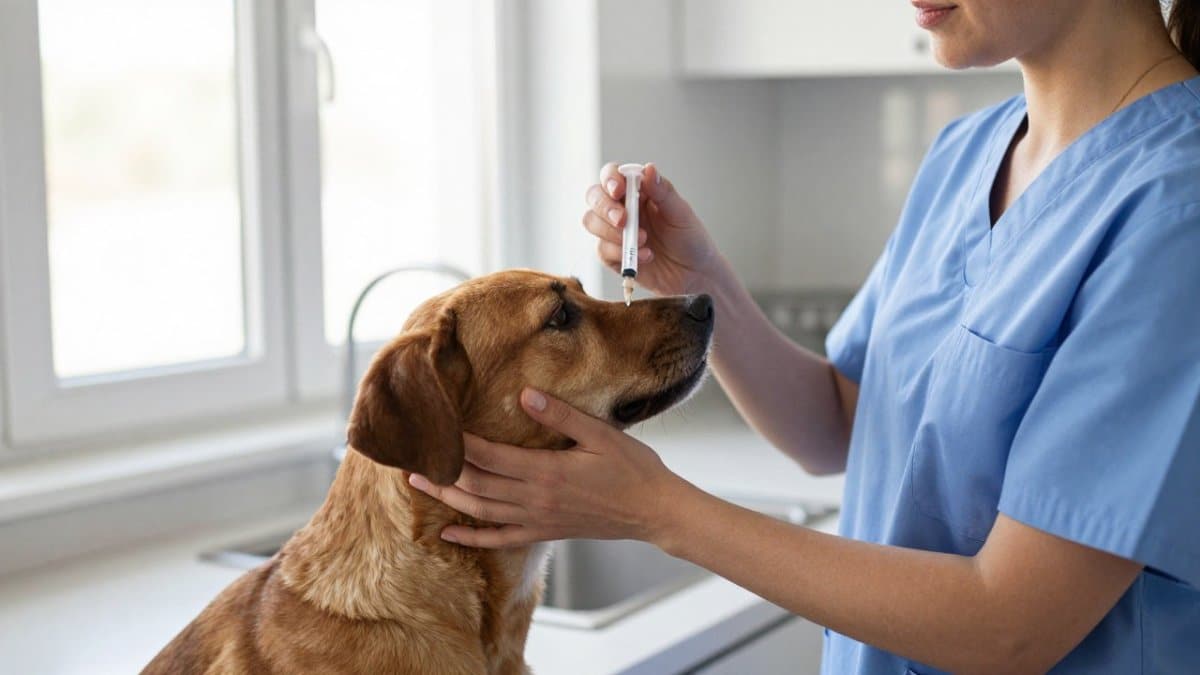
- Fill the oral syringe with the measured dose
- Hold the dog’s head gently, without squeezing the muzzle
- Slide the tip into the side of the mouth, behind the lower teeth, into the cheek pouch
- Press the plunger slowly in small amounts so the dog can swallow
Dogs that tense up or pull away may be stressed. Our guide to signs of veterinary anxiety in dogs and cats explains what to watch for.
Step 3: How to Give a Dog Liquid Medicine Without a Syringe
Some dogs fight the syringe no matter how gently it is used. A dropper works for small doses, and a little canned food can hide the medicine when the label allows it. Never mix medicine into a full meal unless the veterinarian confirms it is safe, because a dog that eats only part of the bowl gets only part of the dose.
For dogs that bite or panic during dosing, forcing the syringe is not the answer. Our article on alternatives to sedation for nervous pets covers lower-stress options worth discussing with your vet. If a pet needs a procedure such as a neuter or dental cleaning, scheduling it with your veterinarian is also a good time to ask about calmer at-home dosing techniques.
When a dog fights the syringe, these alternatives can help get the dose down.
| Method | Best for | Key point |
|---|---|---|
| Oral syringe | Most reliable dosing | Put full dose in cheek pouch, press slowly |
| Dropper | Small doses | Works when a dog fights the syringe |
| Canned food | Hiding medicine | Only when the label allows it |
| Full meal | Not recommended | Dog eating part of bowl gets part of dose |
Dosing a resistant pet can feel overwhelming, but the right technique makes it safer and calmer. CorePet is a locally owned surgery center in New Hampshire focused on spay, neuter, and dental procedures for dogs, cats, and rabbits, with modern equipment and individualized care. If your pet needs a routine procedure and you have questions about medication beforehand, the team can help. Get started with CorePet and book an appointment for clear, respectful guidance.
Frequently Asked Questions
How do you give an unwilling dog liquid medicine?
Stay calm and avoid a wrestling match. Try a two-person approach: one person gently holds the dog steady while the other places the syringe into the cheek pouch and gives the liquid slowly in small amounts. If your dog still refuses, ask your veterinarian whether the medication can be mixed with a small amount of wet food, or whether a different form of the drug is available. Never force a struggling pet, and never scold them afterward.
What should you do if your pet spits out liquid medication?
Do not automatically give another full dose, since you may not know how much was swallowed. Check the medication label or call your veterinarian for guidance on whether to re-dose. To reduce spitting next time, give the liquid slowly in small amounts into the cheek pouch rather than the back of the throat, and keep the pet’s head level, not tilted up. If spitting happens often, ask about a different formulation.
Can you mix liquid medication with food?
Only if your veterinarian or the medication instructions say it is allowed. Some drugs work differently or are absorbed poorly when mixed with food, and a pet that eats only part of the meal may get an incomplete dose. If mixing is approved, use a small amount of wet food the pet will finish in one sitting, and confirm the whole dose was consumed. Cornell University College of Veterinary Medicine guidance describes giving liquid by syringe in small amounts rather than assuming every medication can go in food.