Last Updated: November 3, 2026
Quick Summary
Water additives help reduce oral bacteria, plaque, and tartar between brushings by circulating active ingredients through the mouth with every drink. Enzymatic formulations have been linked to plaque reductions of 34-42% and tartar reductions of 28-37%, though they do not remove existing tartar or replace brushing or professional cleanings.
- Additives work on soft plaque before it mineralizes, so daily use matters more than occasional use.
- Reducing bacterial load tends to improve breath odor and lessen gingival inflammation.
- Dogs often accept flavored additives more readily, while cats may prefer flavorless formulas.
- Follow the label dilution exactly, since over-concentrating may reduce water intake.
- Offer a second bowl of plain water during the first week of introduction.
Table of Contents
- How Water Additives Support Pet Teeth and Gums
- Choosing a VOHC Approved Water Additive for Dogs
- Why Professional Dental Cleaning for Pets Still Matters
- Frequently Asked Questions
How Water Additives Support Pet Teeth and Gums
Water additives for pet teeth are liquid products added to drinking water to help reduce oral bacteria, plaque, and tartar between brushings. This guide from CorePet explains the benefits of water additives for pet teeth, which products carry meaningful evidence, and where an additive fits into a complete dental care routine for dogs and cats in New Hampshire.
Active ingredients circulate through the mouth with every drink, reaching surfaces a toothbrush misses. According to market research on dental water additives for dogs, enzymatic formulations have been associated with plaque reductions in the range of 34-42% and tartar reductions of 28-37%. A separate study indexed by the National Center for Biotechnology Information found that a water additive containing pomegranate reduced dental deposit accumulation and improved gingival health in dogs.
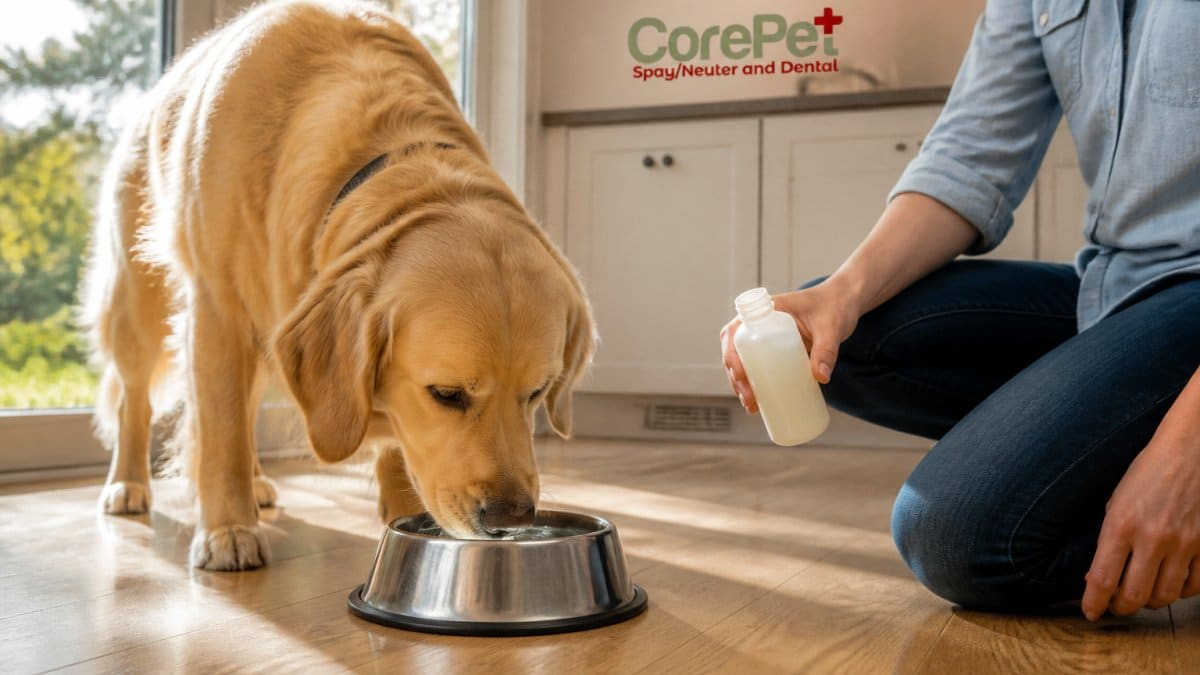
Water additives help control the biofilm that hardens into tartar, but they do not remove existing tartar or replace brushing or professional cleanings. Veterinary guidance summarized by North Mountain Animal Hospital on VOHC-approved water additives positions additives as a practical option for pets that resist a toothbrush, not a substitute for veterinary dental care.
Plaque and tartar control. Additives work on soft plaque before it mineralizes, so daily use matters more than occasional use.
Breath and gum health. Reducing bacterial load tends to improve breath odor and lessen the gingival inflammation that precedes periodontal disease.
Cats and dogs compared. Dogs often accept flavored additives more readily; cats can be more sensitive to scent and texture, so a flavorless formula and slow introduction may work better.
Watch out: if a pet drinks noticeably less after an additive is introduced, stop and reassess.
For how additives compare with brushing and professional cleanings, see pet dental cleaning vs at home brushing; the risks of untreated dental disease are covered in pet dental disease left untreated.
Here is a quick look at what water additives can and cannot do for your pet’s teeth.
| Benefit or Limit | What the Article States |
|---|---|
| Plaque reduction | Enzymatic formulations linked to 34-42% plaque reduction |
| Tartar reduction | Enzymatic formulations linked to 28-37% tartar reduction |
| Pomegranate additive | Reduced dental deposits and improved gingival health in dogs |
| Biofilm control | Helps control biofilm that hardens into tartar |
| Existing tartar | Does not remove tartar already formed |
| Brushing and cleanings | Does not replace brushing or professional cleanings |
| Breath and gums | Lower bacterial load tends to improve breath and gum health |
| Cats vs dogs | Dogs accept flavored additives more readily; cats may prefer flavorless |
Choosing a VOHC Approved Water Additive for Dogs
The Veterinary Oral Health Council awards a seal to products demonstrating plaque or tartar control in controlled testing, and a VOHC-accepted product can be a useful starting point when comparing labels.
How to use an additive correctly. Follow the label dilution exactly; over-concentrating does not improve results and may reduce water intake. Refresh the bowl daily, and check with a veterinarian before adding product to a bowl shared with a pet that has a medical condition.
Safety and side effects. Most pets tolerate these products well; some show loose stool or mild stomach upset in the first days, which usually settles with a slower introduction. Any pet with a known sensitivity, kidney condition, or medication regimen should be cleared by a veterinarian first.
Water intake and palatability. Offer a second bowl of plain water during the first week. Flavorless formulas reduce refusal risk, particularly in cats.
Why Professional Dental Cleaning for Pets Still Matters
Water additives slow plaque formation but cannot scale tartar off a tooth or clean below the gumline, where periodontal disease does its damage. Veterinary professionals generally describe additives as home care support rather than a replacement for professional treatment.
A veterinary dental exam under anesthesia allows full assessment and cleaning of surfaces no home product can reach. For owners weighing the decision, what a veterinary dental cleaning involves walks through the process, the benefits of professional pet dental cleaning make the case, and how to prepare for pet dental services covers what to expect beforehand.
CorePet is a locally owned surgery center in New Hampshire focused on spay, neuter, and dental procedures for dogs, cats, and rabbits. To discuss your pet’s dental needs or schedule a procedure, book an appointment with CorePet.
Frequently Asked Questions
Do dental water additives for dogs actually work?
Research points to modest but real effects. Some research on dental water additives for dogs reports reductions in plaque and tartar, though results vary by product. Water additives are not a substitute for brushing or professional care, but they can slow plaque and tartar buildup between cleanings, especially for pets that resist a toothbrush.
Are water additives safe for long-term use in dogs and cats?
Most veterinary-reviewed additives are formulated for daily use, but safety depends on the specific product and your pet’s health. Read the product label for active ingredients and dosing, and watch for changes in water intake, smell, or palatability after introducing an additive. Pets with kidney, liver, or other health conditions should be cleared by a veterinarian first. If you notice reduced drinking or any adverse reaction, stop use and call your vet.
Can water additives replace professional dental cleanings?
No. Water additives help reduce oral bacteria and slow plaque formation, but they do not remove existing tartar or treat periodontal disease. Veterinary professionals recommend them as part of a home dental care routine alongside brushing and dental chews, with professional dental cleaning for pets when tartar and gum disease are present. Skipping cleanings lets disease progress under the gumline, where an additive cannot reach.