Last Updated: November 19, 2026
Quick Summary
The best foods to eat after anesthesia surgery are water first, then small amounts of soft, plain food such as plain cooked chicken, soft rice, or a small portion of regular food moistened with warm water. Offer a spoonful at a time rather than a full bowl, and follow the discharge instructions given after surgery.
- Offer a small amount of water once your pet is fully awake and standing.
- Follow the discharge instructions given after surgery before feeding.
- Give plain cooked chicken, soft rice, or moistened regular food.
- Feed a spoonful at a time, not a full bowl.
- If food comes back up, pause and call the clinic.
Table of Contents
- What to Eat After Surgery With Anesthesia
- What to Avoid Eating After Surgery
- What to Eat After Surgery to Avoid Constipation
- Frequently Asked Questions
What to Eat After Surgery With Anesthesia
Choosing the right foods to eat after anesthesia surgery is a common concern for pet owners in New Hampshire. Start with water, then small amounts of soft, plain food.
- Water first. Offer a small amount once your pet is fully awake and standing.
- Wait for the go-ahead. Follow the discharge instructions given after surgery.
- Plain, soft food. Plain cooked chicken, soft rice, or a small portion of regular food moistened with warm water.
- Small portions. A spoonful at a time, not a full bowl.
- Watch for nausea. If food comes back up, pause and call the clinic.
Anesthesia can slow digestion and cause mild nausea. Many pets feel off for the first day. Rushing a full meal too soon can be hard on a recovering stomach, so a slow, gradual approach is generally advisable. Ask your veterinarian about feeding guidance for your pet.
For a cat recovering from a spay, our step-by-step feeding guide for cats after spay surgery walks through portions and timing. For dental work, this guide on softening dry food for dental recovery covers the practical steps. Owners comparing procedures can review spay versus neuter recovery timelines.
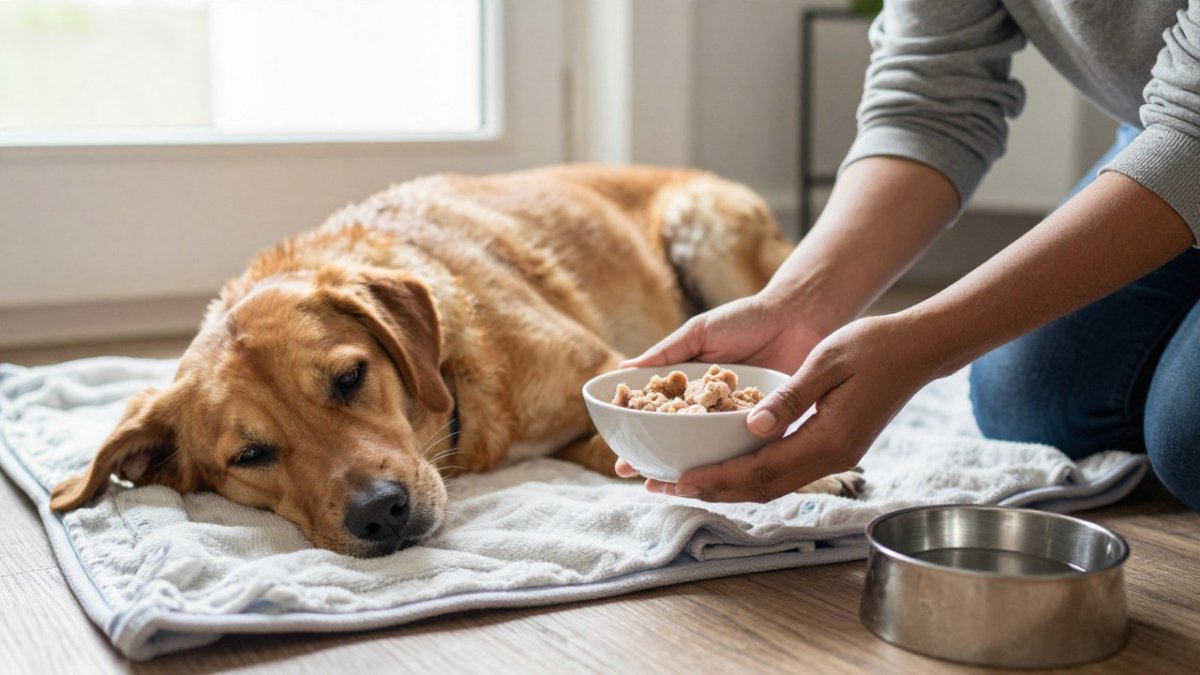
Here is the step-by-step feeding approach the article recommends after anesthesia.
| Step | What to do |
|---|---|
| 1 | Offer a small amount of water once fully awake and standing |
| 2 | Follow the discharge instructions given after surgery |
| 3 | Offer plain cooked chicken, soft rice, or moistened regular food |
| 4 | Give a spoonful at a time, not a full bowl |
| 5 | If food comes back up, pause and call the clinic |
What to Avoid Eating After Surgery
Greasy, fried, and heavily seasoned food are generally hard on a stomach still clearing anesthesia, so many owners avoid them in the first days of recovery. Carbonated drinks, rich treats, and table scraps are also commonly avoided. Confirm specific dietary instructions with your veterinarian.
Plain and bland wins early on. Save variety for when your pet is eating normally again. For broader recovery care after a spay, see this post-spay care guide for dogs.
What to Eat After Surgery to Avoid Constipation
Fiber and fluids are commonly associated with healthy digestion after surgery. Anesthesia and pain medication can slow the gut, so constipation is seen in some pets in the first days. Ask your veterinarian before adding fiber or changing your pet’s diet.
Watch out: straining with no result, vomiting, or a painful belly after surgery needs a call to the clinic. This guide on post-surgery complications in pets explains which signs warrant a call.
Recovery diets vary by procedure and by pet. CorePet is a locally owned surgery center in New Hampshire focused on spay, neuter, and dental procedures for dogs, cats, and rabbits. The team uses modern surgical techniques and equipment, and sends each pet home with clear discharge instructions. Book an appointment with CorePet and get a recovery plan built for your pet.
Frequently Asked Questions
What’s the best thing to eat after anesthesia?
Start with small amounts of clear fluids, then move to soft, bland foods like plain toast, applesauce, or mashed potatoes. Once those stay down, add lean protein such as chicken, fish, eggs, or tofu. Follow your discharge instructions, and for pets, ask your veterinarian before changing their food.
What should I avoid eating after surgery?
Skip greasy and fried foods, carbonated drinks, and heavily spiced meals in the first day or two. These can worsen nausea and slow digestion while anesthesia wears off. Also limit alcohol and very large meals. For pets recovering from spay, neuter, or dental surgery, avoid table scraps and hard treats until your veterinarian clears them. If nausea or vomiting persists, contact your clinician rather than pushing food.
What foods can help prevent constipation after surgery?
Fiber and fluids work together. Try whole grains, fruits, vegetables, beans, and legumes, and drink water throughout the day. Prunes or applesauce can help some people. For pets, canned pumpkin or a vet-approved fiber supplement may be suggested, but never give human laxatives without guidance. Pain medication and reduced activity can slow the gut, so mention constipation to your clinician if it lasts more than a couple of days.