Quick Summary
Recovering from orthopedic surgery in dogs works best with a planned approach: restricted activity, close watch of the surgical site, and pain managed as directed. Recovery timelines depend on the procedure, the dog’s age and health, and the surgeon’s instructions, so follow the surgeon’s protocol closely.
- Keep the dog confined to a quiet area with a padded bed and non-slip footing.
- Use a leash for bathroom walks and avoid unsupervised activity.
- Check the incision daily for redness, swelling or discharge.
- Give pain medication exactly as prescribed.
- Contact your veterinarian promptly if the incision opens or the limb cannot bear weight.
Table of Contents
- Dog Orthopedic Surgery Recovery Timeline, Week by Week
- How to Care for a Dog After Orthopedic Surgery at Home
- Dog Orthopedic Surgery Recovery Complications to Watch For
- Frequently Asked Questions
Recovering from orthopedic surgery in dogs requires a planned approach, and many owners find the first weeks the hardest. Dogs generally recover better when activity is restricted, the surgical site is watched closely, and pain is managed as directed. A 2024 study of canine trauma patients reported survival to discharge of 98.9% (836/845) in its two surgical groups, versus 92.2% (724/785) in the nonsurgical group (Surgical interventions and outcome in a population of canine trauma patients). Those figures measure survival, not recovery time, so the day-to-day work of healing still falls to the owner and the veterinary team.
This guide explains what to expect at home after surgery.
Dog Orthopedic Surgery Recovery Timeline, Week by Week
Timelines depend on the procedure, the dog’s age and health, and the surgeon’s instructions. A systematic review of postoperative rehabilitation after cranial cruciate ligament surgery found the evidence for rehabilitation interventions has been critically assessed rather than settled (Systematic review of postoperative rehabilitation interventions after surgery for cranial cruciate ligament disease in dogs), so follow your surgeon’s protocol. Your surgeon can advise on how much rest and activity is appropriate in the first week, with activity increasing in small steps as they allow.
The article notes that recovery timelines depend on the procedure, the dog’s age and health, and the surgeon’s instructions.
| Factor | What it affects | Source of guidance |
|---|---|---|
| Procedure | Length and pace of recovery | Surgeon’s protocol |
| Dog’s age and health | How fast healing progresses | Veterinary team |
| First week | How much rest and activity is appropriate | Surgeon |
| Activity increase | Introduced in small steps | As surgeon allows |
How to Care for a Dog After Orthopedic Surgery at Home
Keep the dog confined to a quiet area with a padded bed and non-slip footing. Use a leash for bathroom walks, check the incision daily for redness, swelling or discharge, and give pain medication exactly as prescribed. If a dog needs follow-up care for a related problem, let your veterinary team coordinate timing so it does not interfere with healing.
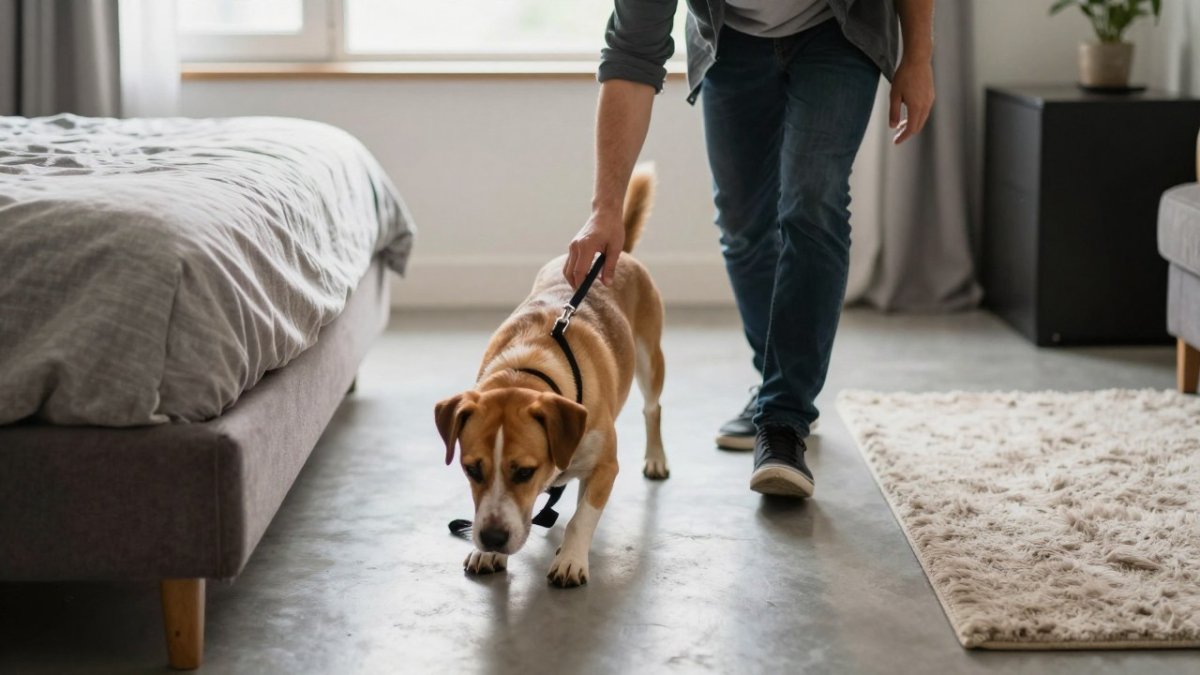
For guidance on preventing licking and chewing at the incision, see how to check a dog incision for infection and how to monitor pet breathing after surgery.
Dog Orthopedic Surgery Recovery Complications to Watch For
Contact your veterinarian promptly if the incision opens, becomes hot or produces pus, if the dog stops eating, or if the limb suddenly cannot bear weight. Uncontrolled pain also warrants a call. Learn to recognize signs your pet is in pain after surgery so you can act early.
Frequently Asked Questions
How long does it take a dog to recover from orthopedic surgery?
Recovery length depends on the procedure, the dog’s age, and its general health. Activity restriction and healing periods vary, so ask your veterinarian for a timeline suited to your dog. Your veterinarian can give you a timeline based on your dog’s specific surgery and will schedule rechecks to track healing. Follow the activity limits and medication schedule you are given, and call your veterinarian if progress seems slower than expected.
What are warning signs of complications after orthopedic surgery in dogs?
Contact your veterinarian promptly if the incision becomes red, swollen, warm, or leaks fluid, or if your dog licks or chews at the site. Other concerns include fever, loss of appetite, vomiting, lethargy, a limb that suddenly becomes less usable, or pain that seems to worsen rather than improve. Any sudden change in how your dog stands, walks, or behaves warrants a call to your veterinary team. Do not wait for a scheduled recheck if you are worried.