Table of Contents
Last Updated: June 14, 2026
There is a quiet crisis happening inside your pet’s mouth right now, and most owners have no idea. Here are 5 reasons to choose professional pet dental care that go far beyond fresh breath: periodontal disease, left untreated, can damage your pet’s heart, kidneys, and liver. This guide from CorePet, a surgery center in Manchester, New Hampshire focused exclusively on dental and spay/neuter procedures, breaks down exactly why home care alone is not enough and what you can do about it today.
5 Reasons to Choose Professional Pet Dental Care Over Home Care Alone
Professional pet dental care is the only method that removes calculus (hardened tartar) from below the gumline, where bacteria cause the most damage. No toothbrush, dental chew, or water additive reaches subgingival deposits.
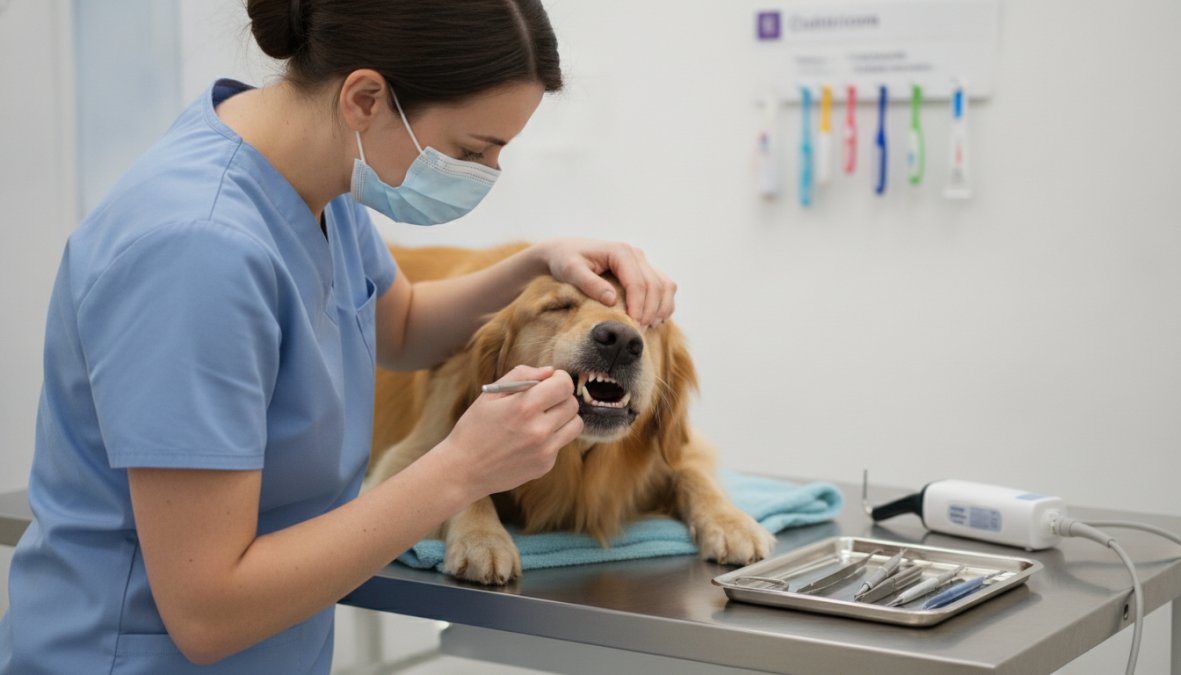
Reason 1: Periodontal disease is almost universal in adult pets
By age three, most pets show some degree of gingivitis or early periodontitis, according to the American Veterinary Dental College’s overview of periodontal disease. Professional prophylaxis catches and reverses early-stage disease before it becomes irreversible bone loss.
Reason 2: Bacteremia is a real systemic threat
Bacteria from infected gum tissue can enter the bloodstream and attach to heart valves, reduce kidney function, and compromise liver health, a well-documented pathway from oral infection to systemic disease.
Reason 3: Subgingival cleaning requires anesthesia
Thorough cleaning below the gumline requires the pet to be completely still. Anesthesia-free dental cleanings remove visible tartar but leave the subgingival zone untouched, a gap the American Veterinary Dental College explicitly opposes.
Reason 4: Professionals catch what owners cannot see
Tooth resorption, stomatitis, and early-stage oral tumors are invisible to the untrained eye. During a professional cleaning, the veterinarian probes each tooth and documents pocket depths, a diagnostic step no home routine can replicate.
Reason 5: Extractions and treatment happen in one visit
If a tooth needs extraction, it can be addressed immediately under the same anesthesia event. Delaying treatment turns a routine procedure into an emergency, harder on the pet and significantly more expensive.
Signs of Dental Disease in Pets You Should Never Ignore
The most recognizable signs of dental disease include halitosis, drooling, appetite loss, pawing at the mouth, and discolored teeth with yellow or brown deposits at the gumline. The problem is that pets are wired to hide discomfort, many with advanced periodontal disease continue eating normally, masking how far the disease has progressed.
Watch for these specific warning signals:
-
Halitosis that does not resolve after a few days
-
Drooling more than usual, sometimes tinged with blood
-
Appetite loss or dropping food while chewing
-
Brown calculus deposits near the gumline
-
Swelling along the jaw or under the eye (a classic sign of a tooth root abscess)
-
Behavioral changes: reluctance to have the face touched, irritability
Breed predisposition matters. Small and brachycephalic breeds, Chihuahuas, Pugs, Shih Tzus, and Persian cats, are significantly more prone to dental disease because their teeth are crowded into a smaller jaw. For these breeds, annual professional cleanings are essential, not optional.
How to Brush Dog Teeth: A Step-by-Step Guide for Home Care
Home brushing is the single most effective tool owners have to slow plaque accumulation between professional cleanings. Plaque forms within hours of eating; left 24-48 hours it begins to mineralize into calculus that only professional cleaning can remove.
What you will need:
-
A pet-safe enzymatic toothpaste (never human toothpaste, which contains xylitol)
-
A soft-bristle toothbrush or finger brush
Step 1: Start with taste, not brushing
For the first three to five days, let your dog lick toothpaste off your finger. Virbac C.E.T. Enzymatic Toothpaste comes in poultry and beef flavors most dogs accept readily.
Step 2: Introduce the brush or finger brush
Once your dog is comfortable with the paste, introduce the tool. The Jasper 360 Degree Finger Toothbrush fits over your fingertip and gives better control for anxious dogs.
Step 3: Start at the canines and work back
Place the brush at a 45-degree angle to the gumline. Begin at the canine teeth and work toward the back molars using small circular motions, focusing on outer surfaces where tartar accumulates fastest.
Step 4: Keep sessions short
Thirty seconds per side is a realistic target. Consistency matters far more than duration.
Step 5: Reward immediately
Pair every session with a reward your dog genuinely values to condition a positive response and make the next session easier.
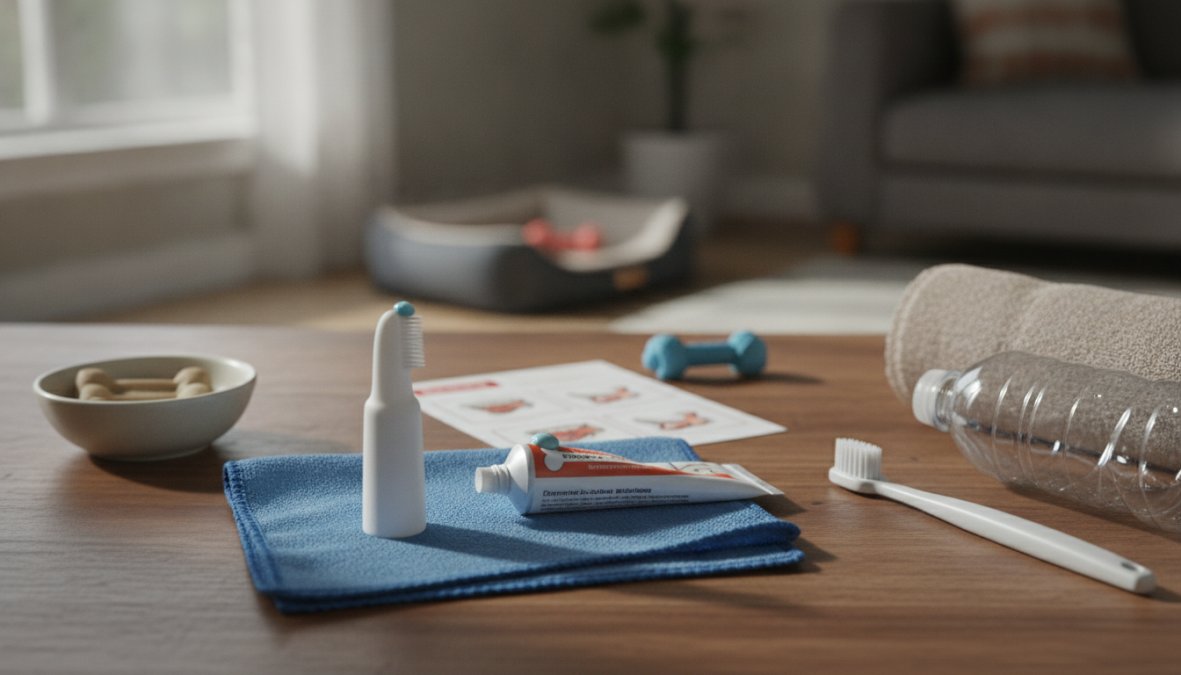
For dogs that refuse a brush, dental wipes like MAXI/GUARD Oral Cleansing Wipes offer a lower-resistance alternative, less effective than brushing, but far better than nothing.
As documented in the Veterinary Oral Health Council’s product acceptance criteria, products carrying the VOHC seal have met defined standards for plaque or tartar reduction in controlled trials. Look for the seal when choosing toothpastes, chews, or water additives.
Understanding Pet Dental Cleaning Cost and What Affects It
Pet dental cleaning cost varies depending on procedure complexity, pet size, and what the oral examination reveals. A routine cleaning typically includes pre-anesthetic bloodwork, anesthesia, scaling above and below the gumline, polishing, and a full oral examination. Extractions increase cost based on number and complexity.
|
Cost Factor |
Lower End |
Higher End |
|---|---|---|
|
Pet size |
Small breed |
Large breed |
|
Pre-anesthetic bloodwork |
Included |
Added separately |
|
Extractions required |
None |
Multiple complex teeth |
|
Dental radiographs |
Not taken |
Full-mouth X-rays |
|
Severity of disease |
Stage 1-2 |
Stage 3-4 periodontitis |
A routine annual cleaning is significantly less expensive than emergency extraction of multiple infected teeth, and systemic infection risk compounds that cost further. According to the American Animal Hospital Association’s dental care guidelines, annual oral examinations are recommended for all dogs and cats, with professional cleanings scheduled based on breed, age, and home care compliance.
CorePet’s Spay Neuter Dental procedures in Bedford, New Hampshire are priced transparently on the pricing page. The clinic focuses exclusively on dental and spay/neuter procedures, performing them at high volume with modern equipment. Senior pets require specific attention: pre-anesthetic bloodwork screens for kidney and liver impairment, and a qualified team will adjust drug protocols and monitor vitals continuously throughout the procedure.
For Greater New Hampshire pet owners searching for professional dental care near me, the key question to ask any clinic is whether they take full-mouth dental radiographs. Radiographs reveal subgingival bone loss, tooth resorption, and root pathology invisible on visual examination. As noted by the American Veterinary Medical Association’s pet dental health resources, dental radiography is the standard of care for companion animal dentistry. A cleaning performed without it is an incomplete cleaning.
Frequently Asked Questions
Is professional pet dental cleaning really necessary if my pet seems fine?
Yes. Periodontal disease often has no obvious symptoms in its early stages — pets instinctively hide pain. By the time halitosis, drooling, or appetite loss appear, disease may already be advanced. A professional oral examination under anesthesia allows veterinarians to detect subgingival tartar, gingivitis, and tooth resorption that owners and even awake exams cannot reveal. Choosing professional pet dental care early is the most reliable way to protect your pet's oral and overall health.
What are the most common signs of dental disease in pets?
Key signs of dental disease in pets include persistent bad breath (halitosis), discolored or yellowed teeth, visible tartar buildup along the gumline, red or swollen gums, drooling more than usual, pawing at the mouth, and appetite loss or difficulty chewing. Cats may also develop stomatitis, a severe inflammatory condition. If you notice any of these signs, schedule a veterinary dentistry consultation promptly — early intervention prevents more serious systemic complications.
How much does a professional pet dental cleaning typically cost?
Pet dental cleaning cost varies based on the pet's size, the severity of disease, whether extractions are needed, and the clinic's location. Routine prophylaxis at a specialized center like CorePet is generally more affordable than at a full-service hospital. Costs rise significantly when tooth extraction or treatment of advanced periodontal disease is required. Visiting CorePet's pricing page gives you transparent figures so you can plan preventative care before it becomes a costly emergency.
Can I clean my pet's teeth at home instead of going to the vet?
Home care — daily brushing with enzymatic toothpaste, dental chews, and water additives — meaningfully slows plaque and tartar buildup and is strongly encouraged. However, it cannot remove calculus already hardened below the gumline, detect tooth resorption, or treat active periodontal disease. Think of home brushing as maintenance between professional cleanings, not a replacement. Most veterinarians recommend a professional dental prophylaxis at least once a year alongside a consistent home routine.
Is anesthesia safe for my senior pet during a dental cleaning?
Anesthesia carries manageable risk at any age when proper protocols are followed. For senior pets, responsible veterinary dentistry clinics perform pre-anesthetic bloodwork to assess kidney function and liver health, use tailored drug protocols, and monitor vital signs continuously throughout the procedure. The American Veterinary Dental College supports anesthesia as the only way to perform a thorough, safe cleaning. Untreated dental disease poses a far greater long-term risk to an older pet than a well-monitored anesthetic event.
How often should my pet have a professional dental cleaning?
Most veterinarians recommend an annual professional dental cleaning for the average adult dog or cat, though some pets — particularly small breeds, brachycephalic dogs, and cats prone to stomatitis — may need cleanings every six months. Your veterinarian will assess plaque accumulation, gum health, and overall oral condition during a routine exam to recommend the right frequency for your individual pet. Consistent home care between visits can help extend the interval between professional cleanings.
This article was written using GrandRanker