Table of Contents
- What Happens During a Pet Dental Exam, Step by Step
- Why Veterinary Dental X-Rays Matter During the Exam
- Signs of Dental Disease in Pets to Watch Before the Exam
- Pet Dental Anesthesia Risks, Costs, and What to Expect After
Last Updated: June 11, 2026
Knowing what happens during a pet dental exam is something most owners put off until a problem forces the issue. This guide from CorePet covers the full process, from pre-exam bloodwork to post-operative recovery, so you can walk into your next appointment in Manchester, New Hampshire with confidence.
What Happens During a Pet Dental Exam, Step by Step
A pet dental exam is a structured oral health assessment combining physical inspection, dental radiographs, scaling, polishing, and charting under general anesthesia to evaluate structures invisible to the naked eye.
The process follows this sequence:
- Pre-anesthetic bloodwork: Blood is drawn to confirm the liver and kidneys can safely process anesthetic agents.
- Anesthesia induction: Your pet receives a sedative, then a general anesthetic. A breathing tube protects the airway, this is what separates a real dental prophylaxis from anesthesia-free groomer cleanings.
- Oral examination: With your pet fully anesthetized, the veterinarian examines every tooth, gum, tongue, palate, and soft tissue. A dental probe measures periodontal pocket depth around each tooth.
- Dental radiographs: Full-mouth X-rays are taken. According to the American Veterinary Dental College’s clinical guidelines, the majority of dental pathology in dogs and cats exists below the gumline where no visual inspection can reach.
- Scaling: An ultrasonic scaler removes tartar and plaque from tooth surfaces, including subgingival deposits where periodontal disease actually lives.
- Polishing: Tooth surfaces are polished to smooth microscopic etchings left by the scaler. A rough surface re-accumulates plaque faster, polishing is functional, not cosmetic.
- Dental charting: Every finding is recorded: pocket depths, tooth mobility, fractures, root exposure, and gum recession. This chart becomes the baseline for future exams.
- Treatment decisions: If extractions are necessary, they’re completed during the same anesthetic event.
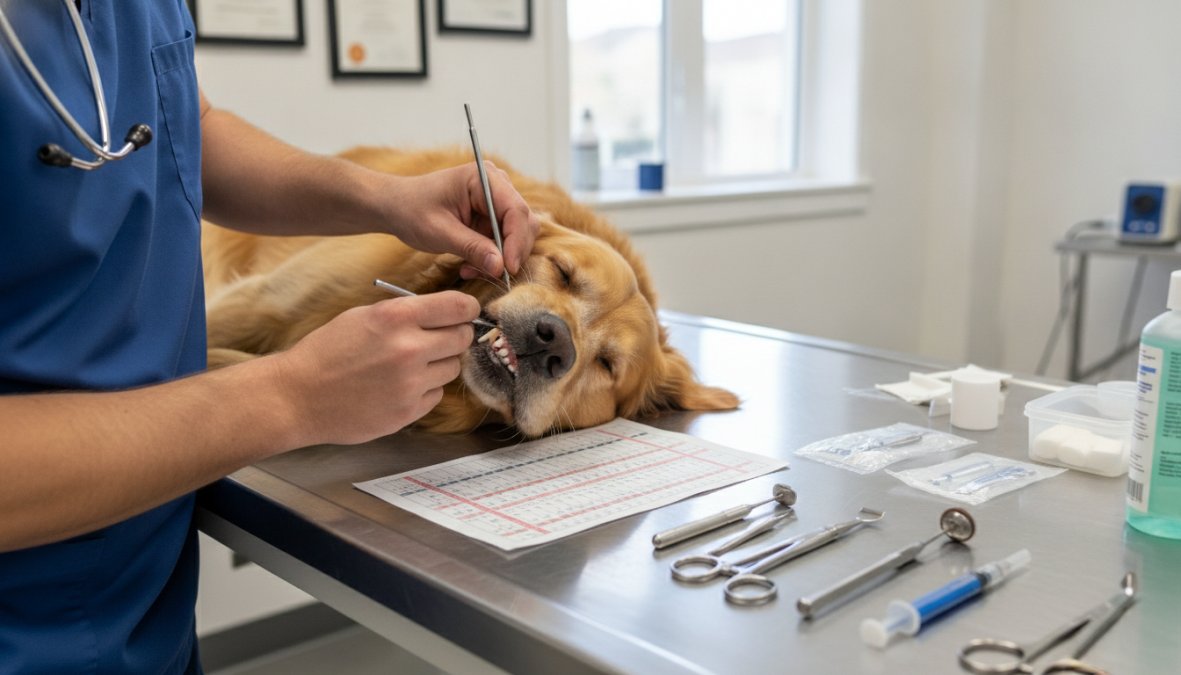
Ask your clinic to share the dental chart after the procedure. A good veterinary dentistry team will walk you through every finding so you understand what was treated and what to watch for at home.
Why Veterinary Dental X-Rays Matter During the Exam
Dental radiographs are not optional, they are the single most important diagnostic tool in veterinary dentistry. The crown you can see represents roughly one-third of the tooth’s total structure. Periodontal disease, tooth root abscesses, bone loss, and resorptive lesions are all invisible without X-rays.
As documented in veterinary oral health guidance from the Veterinary Oral Health Council, periodontal disease is the most common clinical condition in adult dogs and cats, progressing silently below the gumline long before visible symptoms appear.
What dental radiographs reveal that a visual exam cannot:
- Tooth root fractures not visible at the crown
- Root resorption, particularly common in cats
- Bone loss indicating advanced periodontal pockets
- Retained deciduous roots after baby teeth fall out
- Evidence of oral masses near the root structures
If a clinic offers cleaning without X-rays, ask specifically why, the answer will tell you a great deal about their standard of care.
Anesthesia-free dental cleanings remove visible tartar but do nothing for subgingival disease. They can give owners a false sense that their pet’s oral health is being managed when the real problem is progressing unseen below the gumline.
Signs of Dental Disease in Pets to Watch Before the Exam
The signs of dental disease are often subtle until the condition is advanced. By the time a pet shows obvious discomfort, periodontal disease has typically been progressing for months.
Watch for these indicators before your next visit:
- Halitosis: Persistent bad breath suggests bacterial load from tartar buildup and infected gum tissue.
- Reluctance to eat hard food or chew toys: Usually means chewing is painful, not that your pet is picky.
- Pawing at the mouth or face: A behavioral signal of oral discomfort.
- Visible tartar or discoloration: Yellow or brown deposits along the gumline indicate active periodontal disease is likely occurring below.
- Gum recession or bleeding gums: Signs of gingivitis advancing toward periodontitis.
- Loose or missing teeth: Significant bone loss has already occurred by this stage.
- Drooling or dropping food: Particularly in cats, this often signals oral pain or a fractured tooth.
Animals are instinctively good at masking pain, and dental discomfort is one of the most underreported conditions in companion animal medicine. Pet owners in Manchester and across New Hampshire should aim for annual professional exams, with twice-yearly visits for breeds at elevated risk.
Pet Dental Anesthesia Risks, Costs, and What to Expect After
Anesthesia in a pet dental exam is a clinical requirement, not a convenience. It allows the veterinarian to probe every periodontal pocket, take full-mouth radiographs, scale subgingival surfaces, and perform extractions safely.
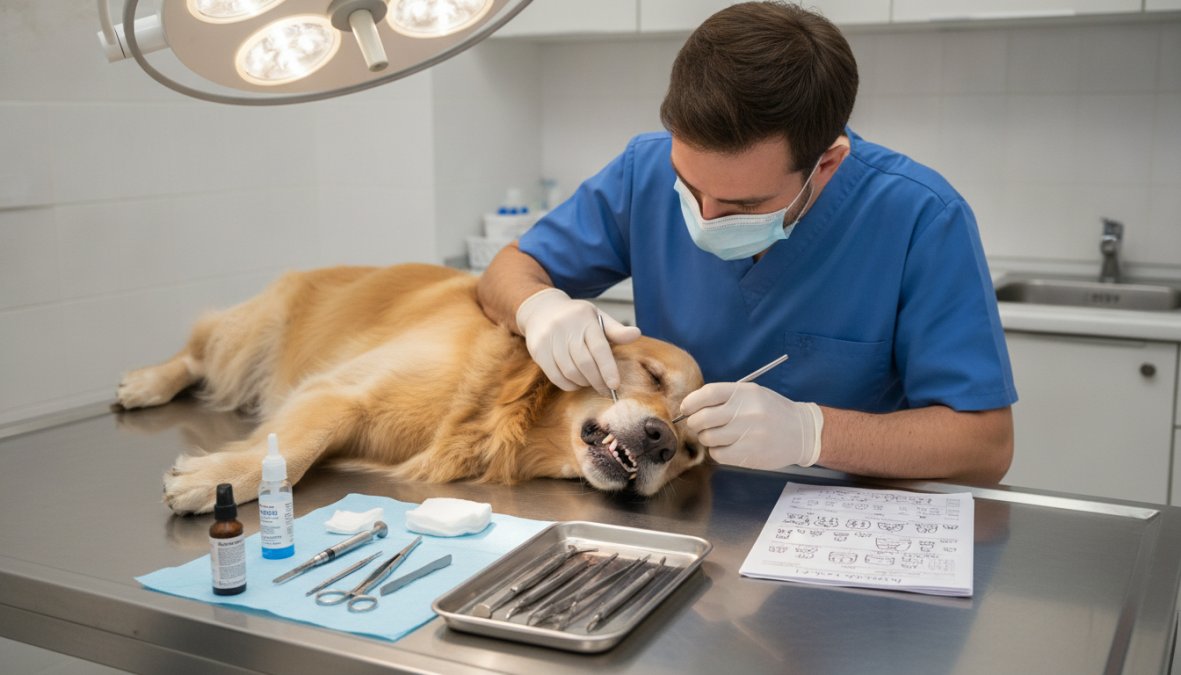
Anesthetic safety has improved substantially with modern monitoring and pre-anesthetic bloodwork protocols. According to anesthesia safety data from the American Animal Hospital Association, complications in healthy adult patients are uncommon when proper monitoring is followed. Risk increases with age, obesity, and underlying organ disease.
Breed-specific dental risks matter. Brachycephalic breeds (bulldogs, pugs, Persian cats, French bulldogs) face elevated anesthesia risk and crowded teeth that accelerate tartar buildup. Small breeds like Yorkshire terriers and Chihuahuas are disproportionately affected by early-onset periodontal disease.
Post-operative care is simpler than most owners expect:
- Day of procedure: Your pet will be groggy for several hours. Offer water and soft food only; keep activity minimal.
- Days 1-3: Mild swelling and reluctance to eat hard food is normal. If extractions were performed, continue soft food for 7-10 days.
- Days 7-14: Most pets are fully back to normal. A follow-up call or visit confirms healing is on track.
- Ongoing: Daily tooth brushing with pet-safe toothpaste is the single most effective preventive measure between professional cleanings.
On cost: CorePet maintains transparent pricing at its Manchester facility through its Spay Neuter Dental service, which focuses exclusively on spay, neuter, and dental procedures, meaning high volume, modern equipment, and consistent protocols.
The total cost of a pet dental exam under anesthesia reflects a full clinical process: bloodwork, monitoring, scaling, polishing, radiographs, and charting. Procedures that cost significantly less are almost always omitting one or more of these components.
Owner checklist before booking a dental exam near you:
- Confirm the clinic includes pre-anesthetic bloodwork
- Ask whether full-mouth dental radiographs are standard
- Verify the team uses a dental probe and records findings on a dental chart
- Check that anesthetic monitoring (pulse oximetry, blood pressure, temperature) is in place throughout the procedure
- Ask about the post-operative care protocol and whether a follow-up is included
- Confirm the clinic can perform extractions during the same anesthetic event if needed
- Review pricing before the appointment so there are no surprises
For pet owners searching for a dental exam for dogs or cats near me in Manchester, New Hampshire, CorePet offers this complete standard of care at a locally owned facility focused on doing a small number of procedures exceptionally well.
Frequently Asked Questions
Do pets need to be put under anesthesia for a dental exam?
Yes, a thorough pet dental exam requires general anesthesia. Anesthesia allows the veterinarian to safely use a dental probe to measure periodontal pockets, perform scaling below the gumline, take dental radiographs, and evaluate every oral structure without causing stress or pain. Anesthesia-free cleaning only addresses visible surfaces and cannot detect subgingival disease, fractured teeth, or bone loss. Pre-anesthetic bloodwork is typically performed beforehand to confirm your pet is a safe candidate for the procedure.
How often should my pet have a professional dental exam?
Most veterinarians recommend a professional dental exam and prophylaxis once a year for the average adult dog or cat. Pets with a history of periodontal disease, gingivitis, or significant tartar buildup may need exams every six months. Small and brachycephalic breeds, which face higher breed-specific dental risks, often benefit from more frequent visits. Regular exams catch early signs of dental disease in pets before they progress to painful tooth extraction or bone loss.
What is the difference between a dental cleaning and a dental exam?
A dental exam is the full assessment: the veterinarian evaluates oral structures, probes for periodontal pockets, checks for malocclusion, halitosis, gum recession, and fractured teeth, and takes dental radiographs for a complete root evaluation. A dental cleaning, or prophylaxis, refers specifically to the scaling and polishing steps that remove plaque and tartar buildup. In veterinary dentistry, both happen together during the same anesthetized appointment, making what happens during a pet dental exam a comprehensive oral health event.
How much does a pet dental cleaning typically cost?
Pet dental cleaning cost varies by location, pet size, and the complexity of care needed. A routine prophylaxis generally ranges from a few hundred dollars to over a thousand when dental radiographs and pre-anesthetic bloodwork are included. Tooth extraction or treatment for advanced periodontal disease adds to the total. Some pet insurance plans cover a portion of dental procedures. CorePet offers transparent pricing, visit the CorePet pricing page for current rates on dental services in Manchester, New Hampshire.
Are pet dental cleanings safe for senior pets?
Senior pets can safely undergo dental exams and cleanings when properly evaluated beforehand. Pre-anesthetic bloodwork is especially important for older animals, as it screens for kidney, liver, or heart conditions that could affect anesthetic safety. Modern anesthesia monitoring equipment and individualized anesthetic protocols make the procedure manageable for most senior dogs and cats. Delaying dental care in older pets often leads to worse outcomes from untreated periodontal disease, so the risk of inaction typically outweighs the risk of a well-monitored procedure.
Dental disease is one of the most common and most preventable health conditions in companion animals, yet many pets go years without a professional oral health assessment. CorePet’s Manchester facility focuses exclusively on dental procedures alongside spay and neuter, using modern equipment and experienced teams to deliver safe, individualized care at transparent costs. Book an appointment with CorePet and give your pet the thorough dental exam their long-term health depends on.
This article was written using GrandRanker