Table of Contents
- Why Small Dog Breeds Face Unique Dental Challenges
- Best Dental Chews for Small Dogs
- How to Brush a Small Dog’s Teeth at Home
- Anesthesia-Free Dental Cleaning for Dogs: What Works and What Doesn’t
Last Updated: August 13, 2026
Small dog breeds face distinct dental challenges. Their crowded teeth, smaller mouths, and predisposition to periodontal disease make oral care more complex than for larger breeds. Traditional professional cleanings under anesthesia remain the gold standard for serious dental disease, but many pet owners in Bedford, New Hampshire are exploring alternatives that can be safer, more affordable, and less stressful for their animals. This guide breaks down what works, what falls short, and how to build a sustainable home care routine that prevents problems before they start.
Why Small Dog Breeds Face Unique Dental Challenges
Small dog breeds are genetically predisposed to dental problems that larger dogs rarely encounter. Their teeth crowd into smaller jaw space, creating tight contacts where plaque accumulates faster. Breeds like Chihuahuas, Yorkies, and Pomeranians often have malocclusion, misaligned teeth that prevent proper self-cleaning through chewing. Without intervention, periodontal disease develops earlier and progresses more aggressively in small breeds.
What starts as soft plaque hardens into calculus within weeks. Once calculus forms below the gumline, home care alone cannot remove it; only professional scaling addresses subgingival disease. Gingivitis is reversible with consistent home care, but periodontitis, which involves bone loss, is not. Small breeds reach the periodontitis stage faster than larger dogs, making early intervention essential.
Best Dental Chews for Small Dogs
Dental chews work through mechanical abrasion and enzymatic action. Greenies Dental Chews (Petite) are designed for dogs weighing 15-25 pounds and are accepted by the Veterinary Oral Health Council (VOHC) for plaque and tartar reduction. Ark Naturals Breath-Less Brushless Toothpaste chews offer a 4-in-1 approach with outer ridges for mechanical cleaning and an inner toothpaste center for enzymatic action. Oratene Brushless Oral Care Gel dissolves plaque biofilm directly without brushing, making it ideal for dogs with sensitive mouths.
Combine methods for best results: use dental chews as a daily treat, add an enzymatic gel 3-4 times weekly, and brush when your dog tolerates it.
How to Brush a Small Dog’s Teeth at Home
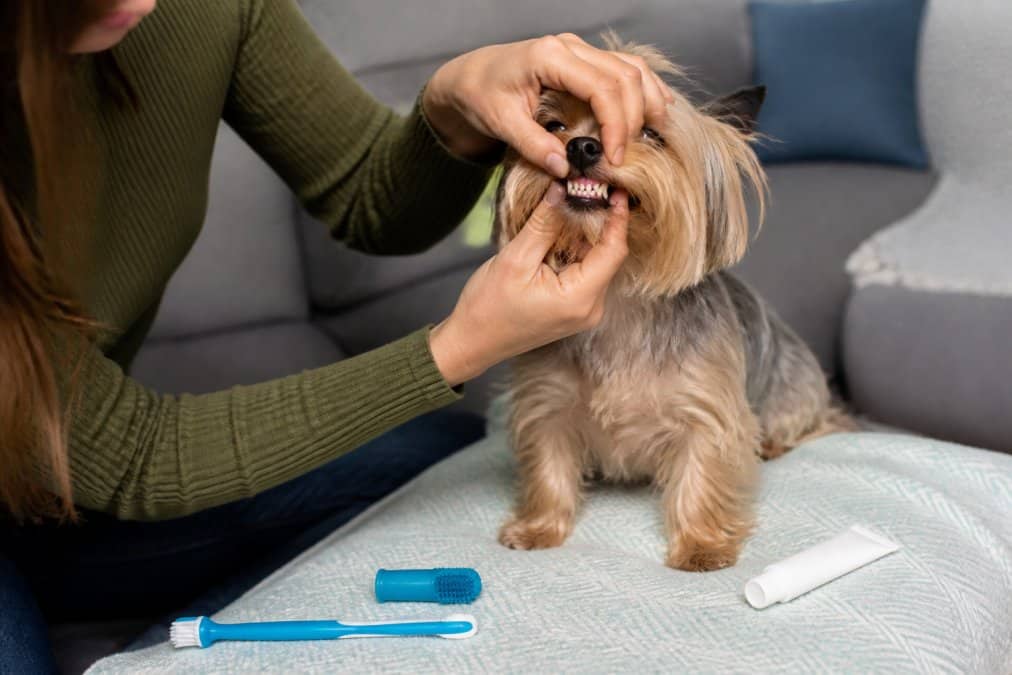
Brushing is the most effective home care method but requires desensitization and patience with small dogs.
Week 1-2: Mouth Desensitization
Gently lift your dog’s lip for 2-3 seconds, then reward with treats. Do this 3-4 times daily to make mouth contact feel normal.
Week 3-4: Toothpaste Introduction
Apply enzymatic toothpaste to your finger and let your dog lick it off. Most formulations taste like poultry or vanilla. Do this daily to build positive association.
Week 5-6: Gentle Brushing Begins
Use a soft-bristled toothbrush or finger brush designed for dogs. Apply enzymatic toothpaste and gently brush outer tooth surfaces in small circular motions, focusing on the gumline where plaque accumulates most. Aim for 30-60 seconds initially, working up to 2 minutes.
Ongoing Protocol
Brush 3-4 times weekly minimum; daily is ideal. Virbac C.E.T. Enzymatic Toothpaste is specifically formulated for dogs and contains enzymes that work even without vigorous brushing.
Anesthesia-Free Dental Cleaning for Dogs: What Works and What Doesn’t
Anesthesia-free cleaning generates strong opinions, but the reality is nuanced. It cannot access areas below the gumline where the most damaging bacteria live, and a conscious dog cannot tolerate the discomfort of ultrasonic scaling. It addresses only visible plaque and tartar on tooth surfaces and cannot provide the thorough oral examination that happens during professional procedures under anesthesia.
For dogs with early plaque accumulation and no signs of periodontal disease, anesthesia-free cleaning removes visible tartar and freshens breath. It may delay the need for professional cleaning in some cases and is lower-stress than anesthesia. However, anesthesia-free cleaning is a maintenance tool, not a treatment. Once periodontal disease develops, professional cleaning under anesthesia becomes necessary.
Dental Water Additives and Supplements
Water additives offer the easiest intervention for small dogs that resist direct oral care. Oxyfresh Premium Pet Dental Water Additive uses an oxygen-based formula with zinc to neutralize odor-causing bacteria. TropiClean Fresh Breath Dental Health Solution carries the VOHC Seal of Acceptance for plaque and tartar reduction. ProDen PlaqueOff Dental Powder is made from a specific seaweed and is sprinkled on food daily.
All supplement-based approaches address plaque formation but not existing tartar. They’re best used preventatively, starting early in a small dog’s life.
Signs of Periodontal Disease in Small Dogs
Early detection stops disease progression. Stage 1: Gingivitis shows red or swollen gums, especially at the gumline, with mild bad breath. Gingivitis is reversible with aggressive home care and professional cleaning if needed.
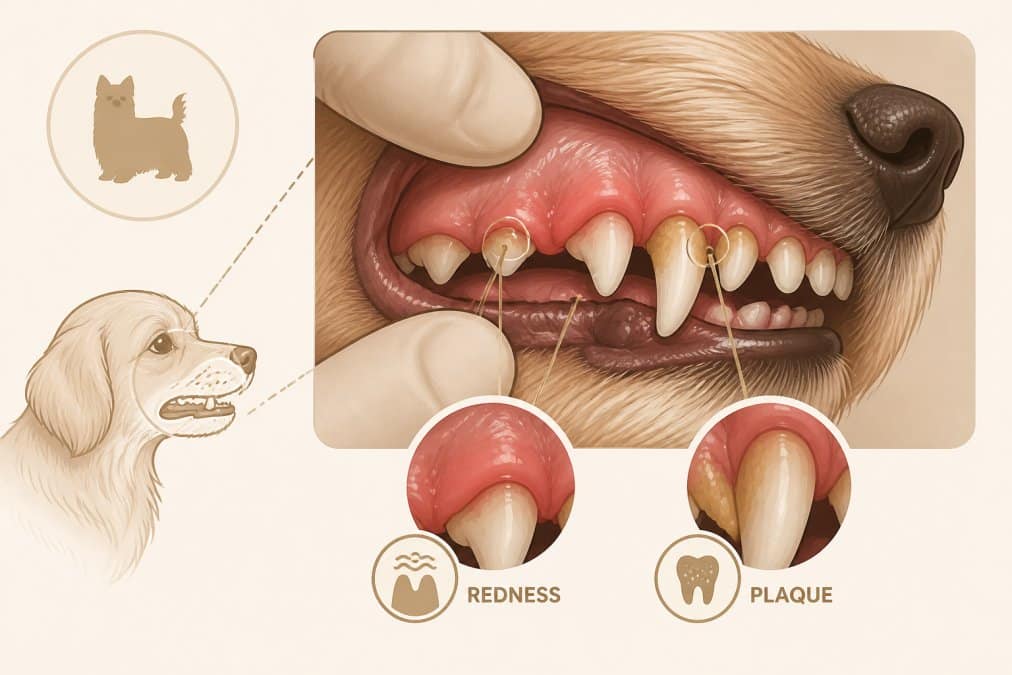
Stage 2: Early Periodontitis brings noticeably worse bad breath, bleeding when your dog chews, visible gum recession, and difficulty eating. Stage 3: Advanced Periodontitis shows tooth mobility, facial swelling, and behavioral changes related to mouth pain. Stage 4: Severe Periodontal Disease involves multiple loose or missing teeth and systemic infection affecting the heart, kidneys, and liver.
Stages 1 and 2 are where home care makes the biggest difference. Check your small dog’s mouth weekly by lifting the lip and looking at the gumline. Healthy gums are pink, not red.
Building a Sustainable Home Care Routine
Consistency matters more than perfection. A small dog receiving daily plaque-removal efforts will maintain better oral health than one receiving intensive but sporadic care.
| Care Method | Frequency | Time Required | Best For |
|---|---|---|---|
| Enzymatic toothpaste brushing | 3-4x weekly minimum | 2 minutes | Active plaque removal |
| Dental chews | Daily | 5-10 minutes | Mechanical cleaning + treat |
| Water additives | Daily | 0 minutes | Passive plaque prevention |
| Oral gel application | 3-4x weekly | 1 minute | Enzymatic action on gumline |
| Anesthesia-free cleaning | As recommended by vet | Varies | Surface maintenance |
| Professional cleaning | Every 1-2 years (or as needed) | 30-60 minutes under anesthesia | Treatment of existing disease |
Start with what your dog will tolerate. A dog that accepts brushing needs less supplemental care. A dog that resists brushing benefits from daily chews plus water additives. For small dogs in Bedford, New Hampshire, the ideal approach combines home prevention with professional assessment every 1-2 years.
Small dog dental health doesn’t require choosing between expensive professional cleanings and hoping for the best. CorePet’s dental surgery team understands the unique challenges small breeds face: crowded teeth, faster disease progression, and anxiety around veterinary procedures. If your small dog develops periodontal disease that home care cannot manage, professional cleaning under anesthesia becomes necessary. When comprehensive dental treatment is needed, including procedures like Spay Neuter Dental, CorePet focuses on safe, individualized dental procedures using advanced surgical techniques and modern equipment. For dogs in Bedford, New Hampshire needing comprehensive dental treatment, book an appointment to discuss your dog’s specific needs and create a plan that combines professional care with your home care routine.
Frequently Asked Questions
Can dental chews actually replace professional cleanings for small dogs?
Dental chews help reduce plaque and tartar buildup and freshen breath, but they cannot remove calculus that has already hardened below the gumline. Products like Greenies Dental Chews are VOHC-accepted for plaque reduction, making them valuable for daily maintenance. However, once periodontal disease develops, professional cleaning becomes necessary to prevent tooth loss and infection. Think of dental chews as preventative maintenance, not a complete substitute for professional care when disease is present.
What are the risks of anesthesia-free dental cleaning for dogs?
Anesthesia-free cleanings cannot access the subgingival areas where the most damaging plaque and tartar accumulate. Without anesthesia, dogs cannot remain still enough for thorough cleaning, and the procedure causes stress and discomfort. The American Veterinary Medical Association cautions that anesthesia-free cleanings may give owners false confidence that dental disease has been addressed, delaying necessary professional treatment. For small dogs with crowded teeth and malocclusion, this risk is even higher.
How long does it take to see results from home dental care alternatives?
Results vary by method. Enzymatic toothpaste and dental chews can reduce visible plaque within 2-4 weeks of daily use. Water additives and natural supplements like seaweed-based powders may take 4-8 weeks to show noticeable breath improvement and tartar softening. Ultrasonic toothbrushes can show faster results in 1-2 weeks for plaque reduction. Consistency is critical; sporadic use significantly delays visible improvements in oral hygiene.
What should I do if my small dog resists brushing or dental care?
Start with desensitization training: allow your dog to lick enzymatic toothpaste off your finger for several days before attempting any brushing. Finger wipes are gentler than toothbrushes and often better tolerated. Water additives and seaweed-based powders require no direct mouth contact. For dogs with severe anxiety, brushless gels applied directly to the gums may work better. If home care remains impossible, discuss options with a veterinary professional focused on dental health.
When should I consider professional dental cleaning instead of home alternatives?
Professional cleaning becomes necessary when you notice halitosis, bleeding gums, loose teeth, or visible tartar buildup that home care hasn't resolved. Small dog breeds prone to gingivitis and periodontal disease often need professional intervention earlier than larger breeds. If your dog shows signs of periodontal disease, home alternatives alone cannot reverse the condition. A veterinary professional can assess whether professional cleaning with anesthesia is needed to prevent tooth loss and systemic infection.
This article was written using GrandRanker