Table of Contents
- Why Dental Health Is Critical for Your Dog’s Overall Wellbeing
- 10 Signs Your Dog Needs Dental Surgery
- 1. Persistent Bad Breath (Halitosis)
- 2. Visible Tartar Buildup or Discolored Teeth
- 3. Red, Swollen, or Bleeding Gums
- 4. Difficulty Eating or Dropping Food
- 5. Pawing at the Mouth or Face
- 6. Loose or Missing Teeth
- 7. Facial Swelling or Discharge Near the Eye or Jaw
- 8. Retained Baby Teeth or Visible Malocclusion
- 9. Excessive Drooling or Blood in Saliva
- 10. Behavioral Changes Like Irritability or Lethargy
- How to Check Your Dog’s Teeth for Infection at Home
- What Happens During a Professional Dog Dental Cleaning and Surgery
- Risks of Untreated Dental Disease in Dogs
- Cost of Dog Dental Cleaning and Extraction: What to Expect
- Dog Dental Surgery Recovery Time and Post-Op Care
- When These 10 Signs Appear, It’s Time to See a Veterinarian
Last Updated: June 4, 2026
Knowing the 10 signs your dog needs dental surgery could be the difference between a simple cleaning and a life-threatening systemic infection. This guide from CorePet covers every warning sign pet owners in Manchester, New Hampshire should recognize, along with what to do when those signs appear. Most guides stop at "bad breath." This one goes further, addressing financial realities, breed-specific risks, and recovery that other resources skip.
Here’s what most people get wrong: dental disease in dogs is not a cosmetic problem. According to the American Veterinary Medical Association’s pet dental health resources, periodontal disease is the most commonly diagnosed health condition in adult dogs. Many dogs show no obvious discomfort even when disease is advanced, which is why learning to read physical signs matters so much.
Why Dental Health Is Critical for Your Dog’s Overall Wellbeing
Periodontal disease is not localized. Once oral bacteria breach the gumline and enter the bloodstream, they can travel to the heart, kidneys, and liver, causing systemic infection far more costly and dangerous than the original dental issue. A neglected tooth can become a cardiac risk.
The progression is predictable: plaque forms daily, mineralizes into tartar within days, triggers gingivitis, then deepens into periodontal pockets where bacteria destroy the bone and connective tissue holding teeth in place. This entire process is largely preventable. When surgery becomes necessary, it is almost always because earlier intervention was delayed.
Dental disease progresses silently. A dog can have advanced periodontal disease without showing obvious pain, because dogs instinctively hide discomfort. Regular veterinary dental exams catch problems before they require surgical intervention.
10 Signs Your Dog Needs Dental Surgery
Recognizing the signs your dog needs dental care is the first step toward protecting their health. The following ten indicators range from early warnings to urgent red flags.

1. Persistent Bad Breath (Halitosis)
Halitosis in dogs is not normal. A persistent, foul, or unusually sweet smell is a clinical sign of bacterial activity, often indicating active periodontal disease or tooth decay. A sweet or fruity odor, in particular, can signal tissue breakdown around the roots.
2. Visible Tartar Buildup or Discolored Teeth
Healthy dog teeth are white to off-white. Yellow or brown discoloration near the gumline signals significant tartar that cannot be removed with at-home brushing alone. Professional dental scaling under general anesthesia is required to remove mineralized deposits without damaging enamel.
3. Red, Swollen, or Bleeding Gums
Healthy gums are pink and firm. Redness, swelling, or bleeding when your dog chews is the hallmark of gingivitis. Caught early, gingivitis is reversible with a professional cleaning. Ignored, it progresses to irreversible periodontal disease.
4. Difficulty Eating or Dropping Food
A dog that drops food, chews on one side, or hesitates with hard kibble is communicating pain. Tooth decay, a fractured tooth, or a dental abscess can make eating genuinely agonizing. This sign warrants immediate veterinary examination.
5. Pawing at the Mouth or Face
Dogs paw at their mouths when something hurts. Combined with drooling or reluctance to eat, this behavior strongly suggests oral pain. It is easy to misread as a quirk. It is rarely either.
6. Loose or Missing Teeth
Adult dog teeth should not move. A loose tooth indicates that periodontal structures have been significantly compromised. Extraction is almost always necessary to relieve pain and prevent infection from spreading to adjacent teeth and bone.
7. Facial Swelling or Discharge Near the Eye or Jaw
Swelling below the eye or along the jaw often indicates a tooth root abscess. Discharge that drains and returns suggests a fistula connected to an infected root. This is a dental emergency requiring prompt veterinary care.
8. Retained Baby Teeth or Visible Malocclusion
Some dogs, particularly small breeds, retain baby teeth past the point when adult teeth should have erupted, creating crowded conditions where plaque accumulates rapidly. Malocclusion can cause teeth to traumatize soft tissue. Both conditions typically require surgical correction.
9. Excessive Drooling or Blood in Saliva
Blood in saliva is never normal. It indicates tissue damage from advanced gingivitis, a fractured tooth, or an oral growth. Increased drooling without obvious cause also points to active oral pathology.
10. Behavioral Changes Like Irritability or Lethargy
Chronic oral pain changes dogs. A previously social dog may become withdrawn, irritable when touched near the face, or lethargic, changes often attributed to aging when the real cause is unmanaged dental pain. If your dog’s personality has shifted, the mouth is one of the first places to look.
How to Check Your Dog’s Teeth for Infection at Home
Checking your dog’s teeth at home does not replace veterinary examination, but it helps you catch changes between professional visits.
Step-by-Step: Examining Your Dog’s Mouth
Start when your dog is calm, in a well-lit area. Follow these steps:
- Sit beside your dog rather than looming over them. Keep your body language relaxed.
- Gently lift the upper lip to expose the back teeth (carnassials), the most common site for fractures and tartar buildup.
- Check the gumline for redness, swelling, or a dark tartar line between tooth and gum.
- Look at tooth surfaces for discoloration, chips, or cracks.
- Smell your dog’s breath directly and note any unusual odors.
- Check front teeth and canines for looseness by applying minimal pressure.
- Repeat on the other side.
Do this monthly and keep brief notes. Changes between checks are more informative than any single observation.
Never probe deeply into periodontal pockets at home. Attempting to remove tartar with household tools can fracture teeth, damage gum tissue, and drive bacteria deeper. Leave scaling to a veterinarian with proper instruments.
Breed-Specific Dental Predispositions to Watch For
Breed matters enormously in canine oral health. Brachycephalic breeds, Bulldogs, Pugs, Shih Tzus, and French Bulldogs, have compressed skulls that crowd teeth, creating ideal conditions for plaque and malocclusion. Small breeds like Chihuahuas, Yorkshire Terriers, and Dachshunds are genetically predisposed to retained baby teeth and early-onset periodontal disease. Greyhounds and Whippets have notably thin enamel and high susceptibility to decay despite their larger size. If you own any of these breeds in the Manchester, New Hampshire area, a proactive dental care schedule is not optional, it is the single most effective way to avoid surgical intervention later.
What Happens During a Professional Dog Dental Cleaning and Surgery
Professional dog dental cleaning is categorically different from a human teeth cleaning in scope, equipment, and safety requirements.
The Role of General Anesthesia and Why It’s Non-Negotiable
General anesthesia is required for every professional dog dental procedure, not as a liability hedge, but as a medical necessity. A dog cannot hold still for periodontal probing, dental radiographs, or subgingival scaling. Attempting these on a conscious dog causes injury and produces incomplete results.
Anesthesia-free dental cleanings only clean visible tooth surfaces. According to the American Animal Hospital Association’s dental care guidelines, these procedures are considered inadequate and potentially harmful because they create the appearance of dental care without addressing underlying disease. Modern veterinary anesthesia includes pre-anesthetic bloodwork, IV fluids, continuous monitoring, and individualized pain management. The risk is real but manageable, and far smaller than the risk of untreated dental disease.
Dental Scaling, Polishing, and Tooth Extraction Explained
A complete dental procedure typically includes:
- Supragingival scaling: Removing tartar above the gumline using ultrasonic instruments
- Subgingival scaling: Cleaning below the gumline where periodontal disease lives
- Dental radiographs: X-rays revealing root resorption, bone loss, and abscesses invisible to the naked eye
- Periodontal probing: Measuring pocket depth around each tooth to assess disease severity
- Dental polishing: Smoothing enamel after scaling to slow future plaque accumulation
- Tooth extraction: Removing non-salvageable teeth due to disease, fracture, or root damage
Tooth extraction sounds drastic, but dogs adapt remarkably well to missing teeth. Most eat normally within days of surgery.
Risks of Untreated Dental Disease in Dogs
Untreated dental disease does not plateau, it progresses, and the consequences extend well beyond the mouth. Bacteria from periodontal pockets enter the bloodstream continuously, creating inflammatory burden on the heart valves, kidneys, and liver. Veterinary cardiologists have documented associations between severe periodontal disease and valvular heart disease, particularly in small breeds.
Locally, untreated disease leads to oronasal fistulas, where infection erodes the bone separating oral and nasal cavities. In small dogs, bone loss can weaken the mandible to the point where normal chewing causes jaw fracture. These are not rare worst-case scenarios, they are the predictable endpoint of neglected oral disease. The cost of treating these complications dwarfs the cost of preventative care and timely surgical intervention.
Cost of Dog Dental Cleaning and Extraction: What to Expect
The cost of dog dental cleaning and extraction varies based on disease severity, number of extractions, geographic location, and the facility. General anesthesia, pre-operative bloodwork, dental radiographs, and post-operative medications all factor into the final figure.
CorePet, Manchester’s locally owned veterinary surgery center, specializes exclusively in dental and spay/neuter procedures. This focus allows the practice to offer dental services at reasonable costs without sacrificing modern surgical techniques. Specific pricing is available on the CorePet pricing page, and the team provides transparent cost information before any procedure begins.
| Procedure Component | What It Covers |
|---|---|
| Pre-anesthetic bloodwork | Assesses organ function before anesthesia |
| General anesthesia | Includes monitoring, IV fluids, pain management |
| Dental radiographs | Full-mouth X-rays for complete assessment |
| Dental scaling and polishing | Above and below gumline cleaning |
| Tooth extraction (per tooth) | Removal of non-salvageable teeth |
| Post-operative medications | Antibiotics and pain management at home |
Does Pet Insurance Cover Dental Surgery?
Pet insurance coverage for dental surgery varies significantly by policy. Many wellness plans cover routine cleanings but exclude surgery classified as treatment for pre-existing conditions. Accident and illness policies from providers like Trupanion, Healthy Paws, and Embrace may cover extractions depending on when the policy was purchased relative to when the condition developed. Review your policy’s dental coverage section before assuming coverage exists. Purchasing a policy before problems develop gives you the best chance of coverage for future dental surgery.
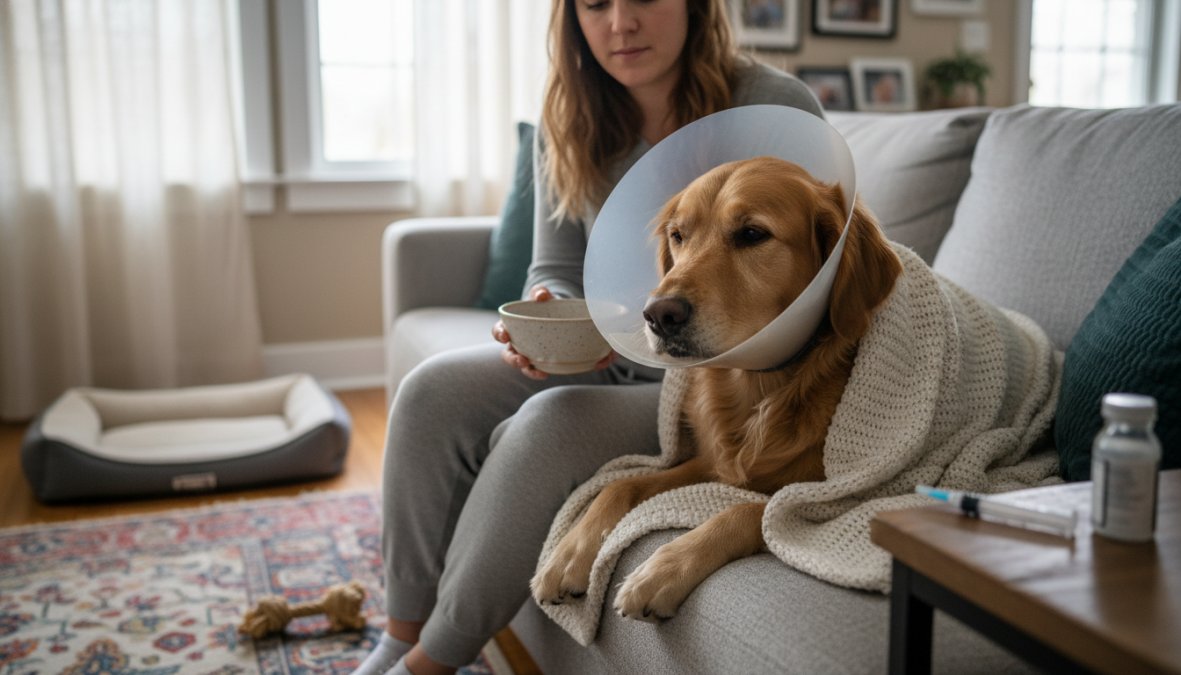
Dog Dental Surgery Recovery Time and Post-Op Care
Recovery time depends on the extent of the procedure. A routine cleaning with no extractions carries minimal recovery. Multiple extractions, particularly of large teeth like the carnassials, require more careful post-operative management.
(/blog/why-pet-dental-surgery-costs-vary/) Recovery Time and Post-Op Care]
What to Expect in the First 48 Hours After Surgery
Most dogs are discharged the same day, once fully recovered from anesthesia. Expect the following:
- Grogginess and disorientation for several hours after discharge, a normal effect of anesthesia wearing off
- Reduced appetite on the day of surgery; offer soft food rather than hard kibble for 7-14 days, or as directed
- Mild swelling at extraction sites, peaking at 24-48 hours then resolving
- Slight bleeding or pink-tinged saliva in the first 12-24 hours after extractions, normal in small amounts
- Behavioral quietness for 24-48 hours as pain medication takes effect
Administer all prescribed medications on schedule. Do not skip pain medication doses because your dog seems comfortable, consistent pain management in the first 48 hours prevents the pain cycle from establishing itself.
Slightly warming wet food or softened kibble to just below body temperature often encourages dogs to eat when their appetite is reduced post-surgery.
At-Home Dental Care Products to Support Recovery
Once fully healed, typically 2-4 weeks post-surgery, maintaining oral hygiene becomes the priority to prevent disease recurrence.
Virbac C.E.T. Enzymatic Toothpaste is the gold standard for daily brushing. Its enzymatic formula actively reduces plaque and carries Veterinary Oral Health Council (VOHC) acceptance, meaning efficacy has been independently verified. For dogs that resist brushing, Virbac C.E.T. Aquadent FR3SH water additive supports gum health with zero manual effort. Greenies Original Dental Treats and Whimzees Dental Treats both carry VOHC acceptance for plaque and tartar control; Whimzees’ vegetable-based formula suits dogs with food sensitivities. The Bogadent Anti-Plaque Finger offers a tactile alternative to a traditional toothbrush for precise gumline cleaning.
No at-home product replaces professional dental scaling. The goal of home care is to extend the interval between professional cleanings, not eliminate the need for them.
When These 10 Signs Appear, It’s Time to See a Veterinarian Near You
The 10 signs your dog needs dental surgery are not a checklist to monitor indefinitely, each one is a prompt to act. Halitosis, tartar buildup, gum inflammation, difficulty eating, facial swelling, loose teeth, retained baby teeth, bloody saliva, pawing at the mouth, and behavioral changes all indicate disease is already present and progressing. Waiting makes every condition more expensive and more dangerous to treat.
According to the Cornell University College of Veterinary Medicine’s dental health resources, annual professional dental examinations are recommended for all dogs, with more frequent visits for high-risk breeds. For Manchester, New Hampshire pet owners, CorePet’s specialization in veterinary dentistry means every procedure is performed with modern surgical techniques and individualized attention, not as an afterthought alongside a general wellness visit.
Dental disease in dogs is progressive, painful, and largely preventable, but once surgery becomes necessary, the quality of the facility performing it matters. CorePet is a locally owned surgery center in Manchester, New Hampshire that specializes exclusively in dental procedures, using modern surgical techniques and equipment to deliver safe, individualized care at reasonable costs. If your dog is showing any of the signs covered in this guide, book an appointment with CorePet and get a clear picture of what your dog’s mouth actually looks like beneath the surface.
Frequently Asked Questions
How do I know if my dog needs dental surgery versus a routine cleaning?
If your dog shows signs like loose teeth, facial swelling, deep periodontal pockets, or tooth root exposure, surgery, such as a tooth extraction, is likely needed beyond a standard cleaning. A routine dental cleaning addresses plaque and tartar buildup on the surface, while dental surgery treats structural damage. A veterinary examination with dental radiographs is the only reliable way to determine which procedure your dog needs.
How much does dog dental cleaning and extraction cost?
The cost of dog dental cleaning and extraction varies depending on the number of teeth involved, your location, and the facility. Basic cleanings can range from a few hundred dollars, while extractions add to that cost per tooth. Specialized surgery centers like CorePet in Manchester, NH are often more affordable than general veterinary practices. Check CorePet's pricing page for transparent, up-to-date costs without hidden fees.
What is the typical dog dental surgery recovery time?
Most dogs recover from dental surgery within 48 to 72 hours for basic procedures, though full healing after tooth extraction can take one to two weeks. During recovery, dogs should eat soft food, avoid hard chew toys, and receive any prescribed pain management medication. Signs of complications, such as continued bleeding, refusal to eat, or facial swelling, should prompt an immediate call to your veterinarian.
Can a dog live with bad teeth if surgery is too expensive?
While a dog can survive with dental disease, untreated periodontal disease causes chronic pain, tooth loss, and can lead to systemic infection affecting the heart, kidneys, and liver. Delaying treatment typically makes the problem, and the cost, worse over time. Affordable options, including low-cost surgery centers and pet insurance, can help make necessary dental care accessible before the condition becomes an emergency.
Are certain dog breeds more prone to needing dental surgery?
Yes. Small and brachycephalic breeds, including Chihuahuas, Dachshunds, Pugs, and Shih Tzus, are significantly more prone to periodontal disease, retained baby teeth, and malocclusion due to crowded or misaligned teeth. Owners of these breeds should schedule veterinary dental examinations more frequently and watch closely for the early signs your dog needs dental surgery, such as tartar buildup and gum inflammation.
This article was written using GrandRanker