Last Updated: November 6, 2026
Quick Summary
Diet affects cat dental health, but it is one input alongside chewing behavior and routine care. A 2025 study of 41 cats found dry food led to less tooth calculus than wet food, while wet-fed cats had higher gingivitis scores. Dental diets help through texture and composition but cannot resolve periodontal disease or tooth resorption.
- Some cats swallow kibble whole, so food never scrapes tooth surfaces.
- A 2015 study linked dry diets to better incisor health in young or adult cats.
- Choose dental food that is complete and balanced with an evidence-backed dental claim.
- A dental diet alone will not resolve periodontal disease or tooth resorption.
- Softening dry food can keep a sore-mouthed cat eating until a dental exam.
Table of Contents
- How Diet Affects Your Cat’s Dental Health
- Does Dry Food Help Cats’ Teeth?
- Best Cat Food for Dental Problems and Dental Cat Food
- Frequently Asked Questions
How Diet Affects Your Cat’s Dental Health
What a cat eats shapes what happens on the tooth surface, and the research is more nuanced than most owners expect. In a 2025 study of 41 client-owned cats, those eating dry food had lower tooth-calculus coverage and thickness than cats eating wet food, while gingivitis scores were higher in the wet-food group (Frontiers in Veterinary Science study on dry and wet diets). This guide explains cat dental health, where the evidence on diet is strong, and where it runs out.
Cat dental health is the condition of a cat’s teeth, gums, and supporting tissues, and it depends on diet, chewing behavior, and routine care together. Diet is one input, not a substitute for brushing or veterinary dental care. How to Identify Tooth Resorption in Cats explains a common and painful diet-related condition.
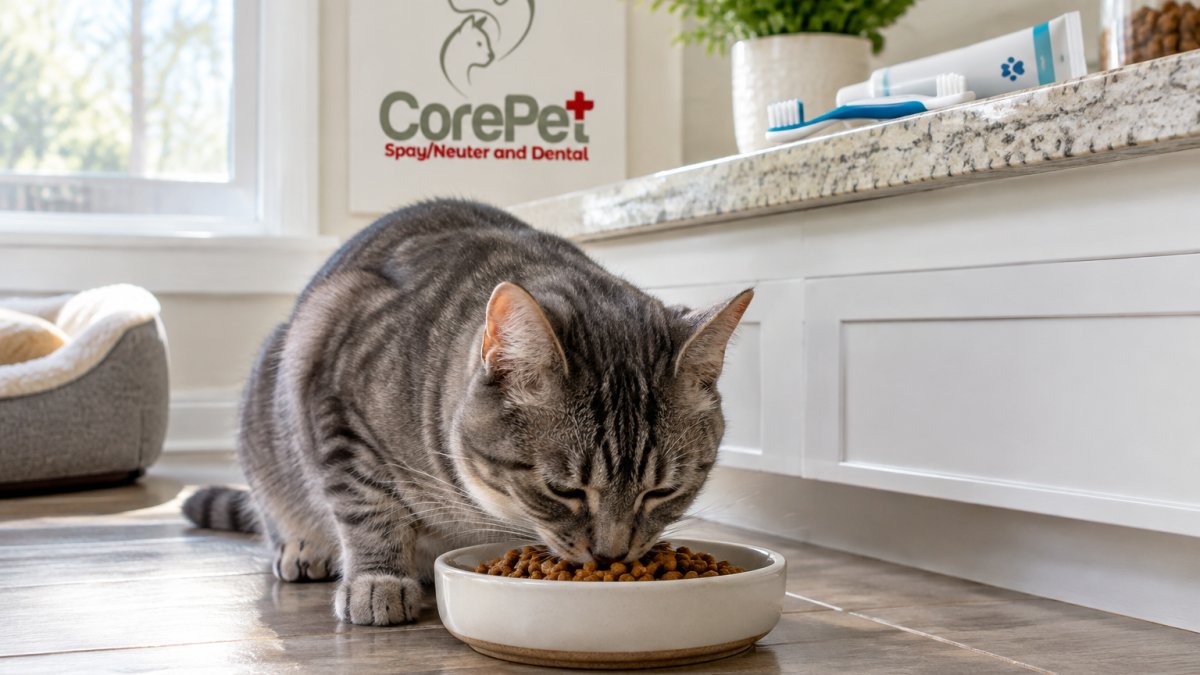
Here is what the research cited in this guide says about diet and cat dental health.
| Factor | Finding | Note |
|---|---|---|
| Dry food vs wet food | Lower calculus coverage and thickness with dry food | 2025 study of 41 client-owned cats |
| Gingivitis | Higher scores in the wet-food group | Same 2025 study |
| Dry diet and incisors | Lower probability of poor oral health | Young or adult cats, 2015 study |
| Kibble texture | Some cats swallow pieces whole | Food never scrapes tooth surfaces |
| Dental diets | Work through texture and composition | Mechanical cleaning and oral bacteria support |
| Complete and balanced dental diets | Can serve as lifelong nutrition when appropriate | According to AAHA |
| Dental diet alone | Will not resolve periodontal disease or tooth resorption | Needs a veterinary oral examination |
Does Dry Food Help Cats’ Teeth?
Dry food may help, but the effect is smaller and less predictable than many owners assume. A 2015 study found a lower probability of poor oral health in the incisors of young or adult cats fed a dry diet, compared with the cheek teeth of older cats (The Choice of Diet Affects the Oral Health of the Domestic Cat). That is a narrow finding, not proof that kibble protects every tooth.
Kibble texture matters: some cats swallow pieces whole, so the food never scrapes the tooth surfaces, and tartar builds along the gumline where kibble does little mechanical cleaning. If your cat has a sore mouth, softening dry food can keep them eating while you arrange a dental exam.
Best Cat Food for Dental Problems and Dental Cat Food
The best food for a cat with dental problems is one that fits the cat’s overall health and carries a dental claim backed by evidence. Veterinary guidance describes dental diets as working through texture and composition, including mechanical cleaning of tooth surfaces and support for healthy oral bacteria (VCA Animal Hospitals on cats, nutrition, and periodontal disease).
The American Animal Hospital Association notes that complete and balanced dental diets can serve as lifelong nutrition when appropriate (AAHA dental care guidelines). Ask three questions before switching:
- Does the label state a complete and balanced nutritional profile?
- Is the dental claim supported by studies, not just marketing?
- Does the kibble size suit your cat’s mouth and chewing style?
Watch out: a dental diet alone will not resolve existing periodontal disease or tooth resorption. Those need a veterinary oral examination.
Changing a cat’s food takes patience, and dental disease rarely reverses on its own. If your cat shows signs like bad breath, drooling, or trouble eating, a veterinary dental exam is the next step. CorePet is a locally owned surgery center in New Hampshire focused on spay, neuter, and dental procedures for dogs, cats, and rabbits, using modern surgical techniques and individualized care. Get started with CorePet and arrange a dental assessment for your cat.
Frequently Asked Questions
Does kibble actually clean cats’ teeth?
Kibble can help scrape some plaque from tooth surfaces as a cat chews, but it is not a substitute for brushing or professional cleaning. Research comparing dry and wet diets has found differences in tartar and gum health, though the findings are not conclusive. Texture, kibble size, and how your cat chews all affect how much mechanical cleaning actually happens. For real protection against periodontal disease, pair diet with tooth brushing and regular veterinary dental exams.
What is the best cat food for dental problems?
Look for a dental cat food that is labeled as complete and balanced, and check whether any dental claim is backed by testing. Complete and balanced dental diets may serve as a cat’s main nutrition when appropriate. If your cat already has periodontal disease, ask your vet whether a dental diet fits your cat’s stage and health needs before switching foods.
Is wet food bad for cats’ teeth?
Wet food is not automatically bad, but it offers less mechanical scraping than dry kibble. Some research suggests cats eating wet food may show higher gum inflammation scores, though findings vary. Wet food still has a place for cats with urinary, kidney, or dental issues that make chewing difficult. The key is pairing any diet with brushing and veterinary checkups.