Last Updated: November 10, 2026
Quick Summary
The best dental chews reduce plaque through mechanical action and carry the Veterinary Oral Health Council (VOHC) seal on the packaging. Choose a size and texture suited to your dog’s mouth, and supervise every chew session. Dental chews support, but do not replace, professional dental care.
- Look for the VOHC seal on the packaging before buying.
- Check the VOHC accepted products list for plaque and tartar reduction standards.
- Pick a size and texture suited to your dog’s mouth and chewing style.
- Small and sensitive-stomach dogs need smaller chews with fewer ingredients.
- Chewing cannot reach below the gumline, so pair chews with professional care.
Table of Contents
- What to Look for in Dog Dental Chews, Including Vet Recommended Options
- Best Dental Chews for Small Dogs and Dogs with Sensitive Stomachs
- Choosing Dental Chews That Help Remove Plaque and Plan Your Dog’s Next Dental Check
- Frequently Asked Questions
What to Look for in Dog Dental Chews, Including Vet Recommended Options
The best dental chews reduce plaque through mechanical action and carry the Veterinary Oral Health Council (VOHC) seal.
Look for the VOHC seal on the packaging, and be cautious of chews that make broad oral health claims without it. Veterinary Oral Health Council accepted products list lists the products that have met its standards for plaque and tartar reduction.
Dental chews are generally chosen for texture, size and ingredients.
Use this quick guide to compare the key things to check before buying a dental chew.
| Check | What it means | Where to look |
|---|---|---|
| VOHC seal | Product has met plaque and tartar standards | Product packaging |
| Mechanical action | Chew reduces plaque through texture | Product description |
| Size and texture | Suited to your dog’s mouth and chewing style | Product packaging |
| Ingredients | Fewer ingredients suit sensitive stomachs | Ingredient list |
Best Dental Chews for Small Dogs and Dogs with Sensitive Stomachs
Small dogs and sensitive-stomach dogs need chews sized for their mouths and made from fewer ingredients, since oversized or hard chews can fracture teeth.
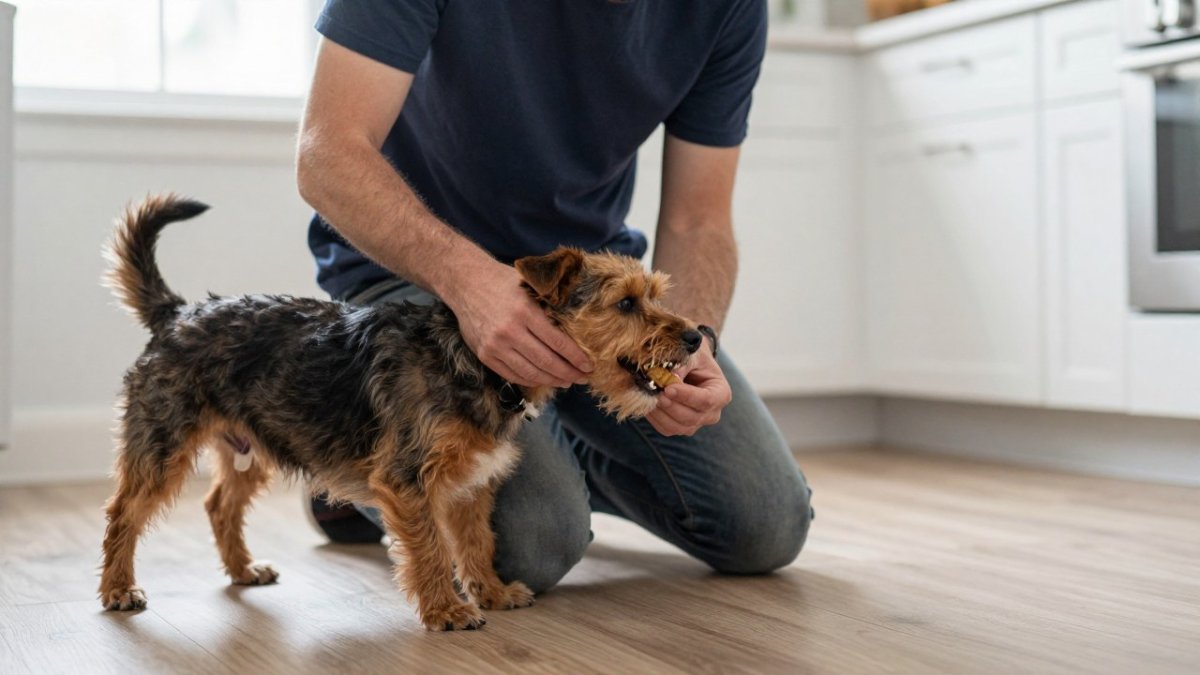
Small and sensitive-stomach dogs need appropriately sized chews with fewer ingredients, since oversized or hard chews can fracture teeth.
Gentler options are covered in natural ways to freshen small dog breath.
Choosing Dental Chews That Help Remove Plaque and Plan Your Dog’s Next Dental Check
Dental chews work best as one part of a daily routine, not a replacement for professional care, since chewing cannot reach below the gumline.
If your dog shows tartar, bad breath or sore gums, a chew alone may not be enough. A pet toothpaste guide can help build a brushing routine.
Review what is included in pet dental quotes and signs your dog may need dental surgery with your vet. is professional pet dental cleaning worth it weighs costs and benefits.
CorePet offers dental procedures for dogs, cats and rabbits. Visit its website for current pricing and to request a quote.
Best for: owners wanting a daily plaque-control habit between professional visits.
Skip if: your dog has signs of advanced dental disease, since chews are not a treatment for it; ask your veterinarian for an evaluation.
Ready to talk about your dog’s dental care? Visit CorePet to book an appointment or request a quote.
Frequently Asked Questions
Are dental chews for dogs actually effective?
Dental chews can reduce plaque through mechanical abrasion as the dog chews, but they work best alongside regular brushing and veterinary dental checkups. The Veterinary Oral Health Council (VOHC) accepts only a small number of chews for plaque and tartar control, so look for that seal on the packaging. No chew replaces professional dental care when disease is already present. Ask your veterinarian which option fits your dog’s age, size and oral health.
Are dental chews safe for dogs with sensitive stomachs?
Some dogs with sensitive stomachs react to common ingredients such as wheat, beef or artificial additives in dental treats. Check the ingredient list and introduce any new chew gradually, one at a time, so you can identify a trigger. Choose simpler formulas with fewer ingredients when possible. If your dog has vomiting, diarrhea or ongoing digestive issues, consult your veterinarian before offering a new chew.
What are the safest dental chews for dogs?
The safest dental chews are sized for your dog’s weight and chewing style, and are chewed under supervision when first introduced. Avoid hard items that can crack teeth, and discard any chew that splinters or becomes small enough to swallow whole. Products with the VOHC seal and clear feeding guidelines give you a more reliable starting point. Remember that dental chews add calories, so factor them into your dog’s daily food intake.