Last Updated: November 2, 2026
Quick Summary
After dog dental surgery, expect your dog to be groggy, wobbly, and sleepy for 12 to 24 hours as anesthesia wears off, so provide a warm, quiet, confined space to rest. Offer small sips of water and skip food until your vet says it is safe, and never let a sedated dog jump off furniture or climb stairs.
- Mild swelling and soft food only are typical during days 1 to 3 of early healing.
- Gum tissue healing takes 1 to 2 weeks, with less soreness and a gradual return to normal.
- Feed small, frequent meals of wet food, softened kibble, or plain shredded chicken, and avoid hard kibble, bones, and crunchy treats.
- Never give human pain medicine, since some common drugs are toxic to dogs.
- Call your vet promptly if bleeding continues, swelling worsens, or your dog stops eating and drinking.
Table of Contents
- The First 24 Hours After Dog Dental Surgery
- Your Dog Tooth Extraction Recovery Timeline
- A Soft Food Diet for Dogs After Dental Surgery
- Managing Pain and Medication After Dental Surgery
- Activity Restrictions and Behavioral Changes
- When to Contact Your Veterinarian
- Frequently Asked Questions
The First 24 Hours After Dog Dental Surgery
The first 24 hours after dog dental surgery are the most important window for monitoring. Your dog will likely be groggy, wobbly, and sleepy as anesthesia wears off, and most need only a calm, quiet space to recover.
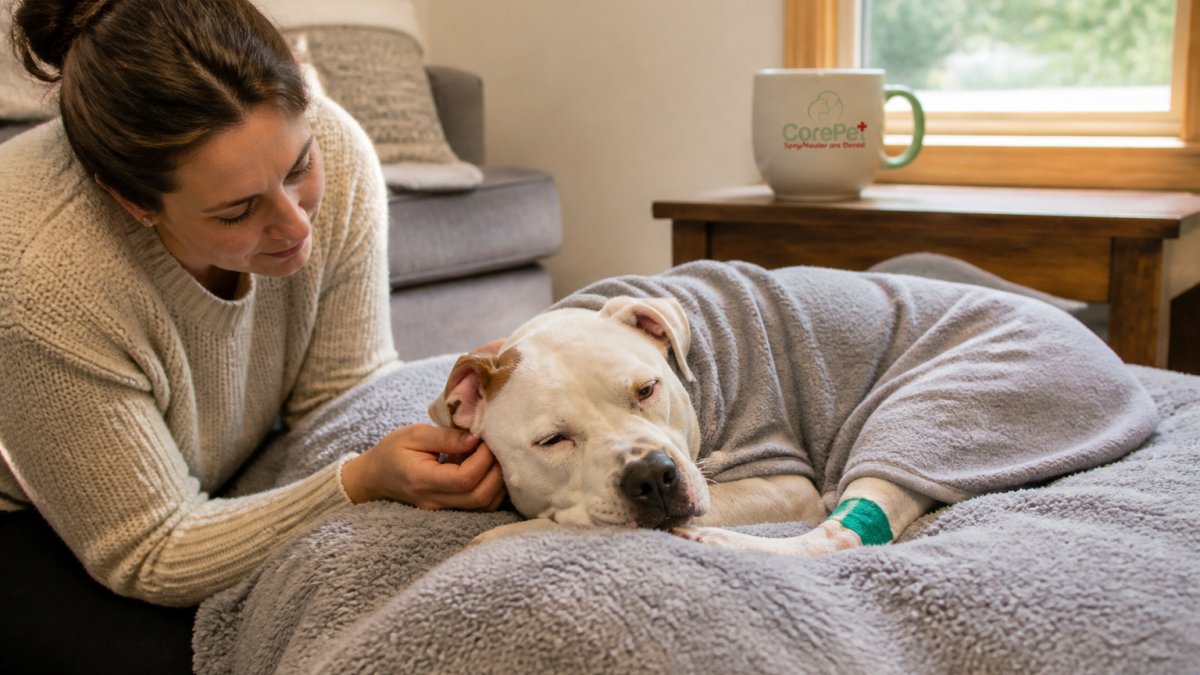
Dog dental surgery recovery starts with rest. Keep your dog warm and confined, offer small sips of water, and skip food until your vet says it is safe.
Never let a sedated dog jump off furniture or climb stairs, since a fall during anesthesia recovery can cause injury. Signs your dog is in pain are also worth watching for during these early hours.
Your Dog Tooth Extraction Recovery Timeline
A dog tooth extraction recovery timeline varies by procedure and by dog, but your veterinarian’s instructions matter most. Preparing your pet for dental surgery ahead of time can make each stage of recovery easier.
| Stage | Timeframe | What to Expect |
|---|---|---|
| Anesthesia wear-off | 12-24 hours | Groggy, wobbly, sleepy |
| Early healing | Days 1-3 | Mild swelling, soft food only |
| Gum tissue healing | 1-2 weeks | Less soreness, gradual return to normal |
Dissolvable sutures usually dissolve on their own; check the mouth only if your vet asks.
Signs of infection after dog dental surgery deserve a call to your vet: bleeding that does not stop, foul odor, pus, worsening swelling, refusing all food and water for more than a day, or extreme lethargy. Recovery guidance varies, so follow your own vet’s plan.
Recovery guidance varies. Some providers advise avoiding hard food for at least a week, while others say normal dental routines can resume after two weeks, as noted by Apex Veterinary Specialty Services aftercare guidance. Follow your own vet’s plan.
A Soft Food Diet for Dogs After Dental Surgery
A soft food diet for dogs after dental surgery protects healing gum tissue and reduces soreness. Feed small, frequent meals and skip hard kibble, bones, and crunchy treats until your vet clears them. If you plan to keep feeding dry food, learn how to soften dry food safely during recovery.
Good options include wet canned food mashed smooth, softened kibble, plain shredded chicken, and vet-approved recovery diets. Avoid dairy, spicy foods, and anything with small hard pieces. Keep fresh water available at all times, since some dogs drink less after anesthesia.
Managing Pain and Medication After Dental Surgery
Your vet may send home analgesics made for dogs. Never give human pain medicine, since some common drugs are toxic to dogs.
Signs your dog is in pain include whining, pawing at the mouth, restlessness, or refusing food. If pain seems poorly controlled, call your vet rather than adjusting doses yourself.
Activity Restrictions and Behavioral Changes
Keep your dog leashed for walks and skip rough play, fetch, and dog parks for the period your vet recommends.
Behavioral changes are common: some dogs become clingy, others hide, and a few grow irritable from mouth soreness. In multi-pet households, feed recovering dogs separately and supervise interactions so a curious housemate cannot bump a tender mouth.
When to Contact Your Veterinarian
Call your vet promptly if bleeding continues, swelling worsens, or your dog stops eating and drinking.
A 2026 study in Frontiers in Veterinary Science on wound healing after tooth extraction in dogs found that wound dehiscence, the reopening of the surgical site, was the most common postoperative complication. Knowing this helps owners watch the incision closely during the first ten days.
Frequently Asked Questions
How long are dogs in pain after dental surgery?
Most dogs show noticeable mouth soreness for 24 to 72 hours after dental surgery, with gradual improvement over the first week. Wound reopening is a recognized complication after extraction, which is why monitoring matters. Your veterinarian will advise on pain management for your dog’s procedure. Contact the clinic if pain seems to worsen after day three rather than improve.
What are the signs of infection after dog dental surgery?
Watch for swelling that increases after the first two days, bleeding that restarts, pus or foul odor from the mouth, and a dog that stops eating or becomes lethargic. Wound reopening is one of the complications veterinarians watch for after extraction. Any of these signs warrants a call to your veterinarian. Early follow-up is far easier than treating an established infection, so do not wait for a scheduled recheck if something looks wrong.
Can I leave my dog home alone after dental surgery?
Not on the day of surgery. Anesthesia and sedation can leave dogs wobbly and groggy for some time after surgery, so keep them supervised in a quiet, confined space. After the first day, short periods alone are usually fine once your dog is steady on their feet and eating. Restrict stairs and furniture jumping for the first week to protect the surgical site, and follow your veterinarian’s specific instructions for your dog’s procedure.
Recovery after dental surgery takes patience and close attention. If your dog needs a dental procedure, CorePet offers focused dental care for dogs, cats, and rabbits at its New Hampshire surgery center, with modern techniques and clear aftercare guidance. Book an appointment with CorePet and give your pet a calmer, well-supported recovery.